
Illustration · 9 min read
How I illustrate a book - my step-by-step process
The whole book illustration process in my studio - from the first conversation with the author, through sketches and revisions, to print-ready files.
· Anna Karwala
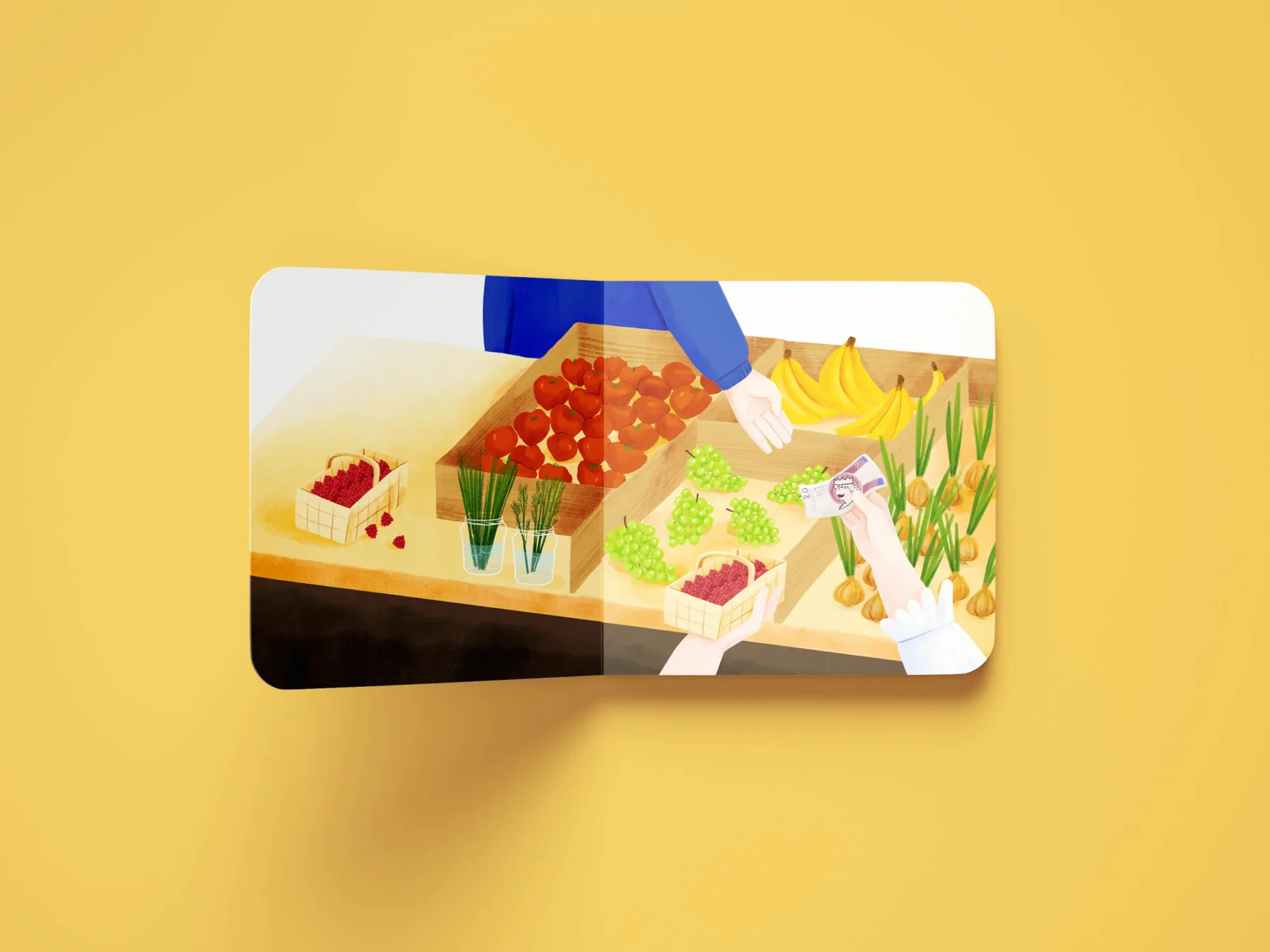
For several years now I’ve illustrated books in full - layout and cover included. Over that time I’ve refined a system of collaboration that keeps things orderly, on schedule and clear in communication. In my work the illustration process is never detached from the author of the text - at every stage I try to take their needs, intentions and sensitivity into account.
I’ll show you how the collaboration works with me step by step, so you know what to expect. It’s a long process, but clearly divided into stages - so each side knows where we are and what comes next.
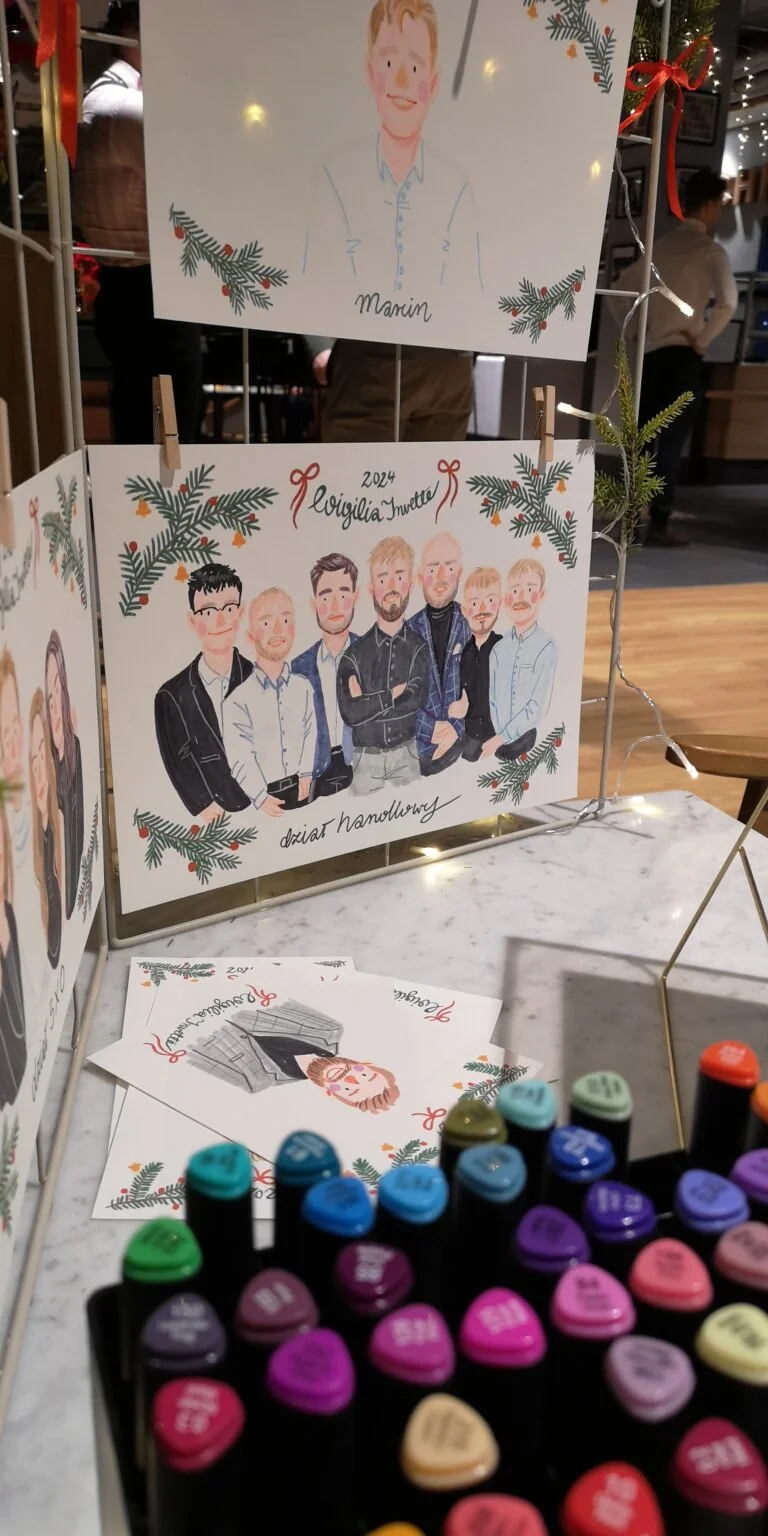
The conversation - the starting point
The whole process begins with initial arrangements. I prefer an email exchange at this stage - that way all the important decisions and questions are written down and we can come back to them at any moment. A phone call or meeting is useful too, but I prefer to have the foundation in writing.
What we settle at the start
The most important thing at the start is to establish whether both sides are able to take on the collaboration. A blocker can be too low an assumed budget or too little time for the work. For me the key things are the assumed number of pages and illustrations and their level of detail. Then I can estimate which bracket the project falls into and when it can realistically be ready.
The key elements settled in this phase:
- confirming the budget (always an individual quote)
- the feasibility of the project timeline
- the number of pages and illustrations
- the level of detail of the artwork
- the total cost of the project
In the meantime I get to know the text - its mood, theme, target group. I read carefully to see how best to illustrate it. When we agree on the shared assumptions and a positive decision is made, we discuss the contract and set the schedule.
Sketches - the foundation of the whole project
I don’t like surprises in my work and I think clients don’t either. That’s why I always start by sketching out the whole concept and planning the text layout in the book. I also propose the dimensions and the final number of pages.
I call this the book skeleton - you could also call it a mock-up or a design. At this stage we see the book as a whole as a PDF file, but in rough form. It’s easy to imagine the final result. Usually this is where we finalise the budget.
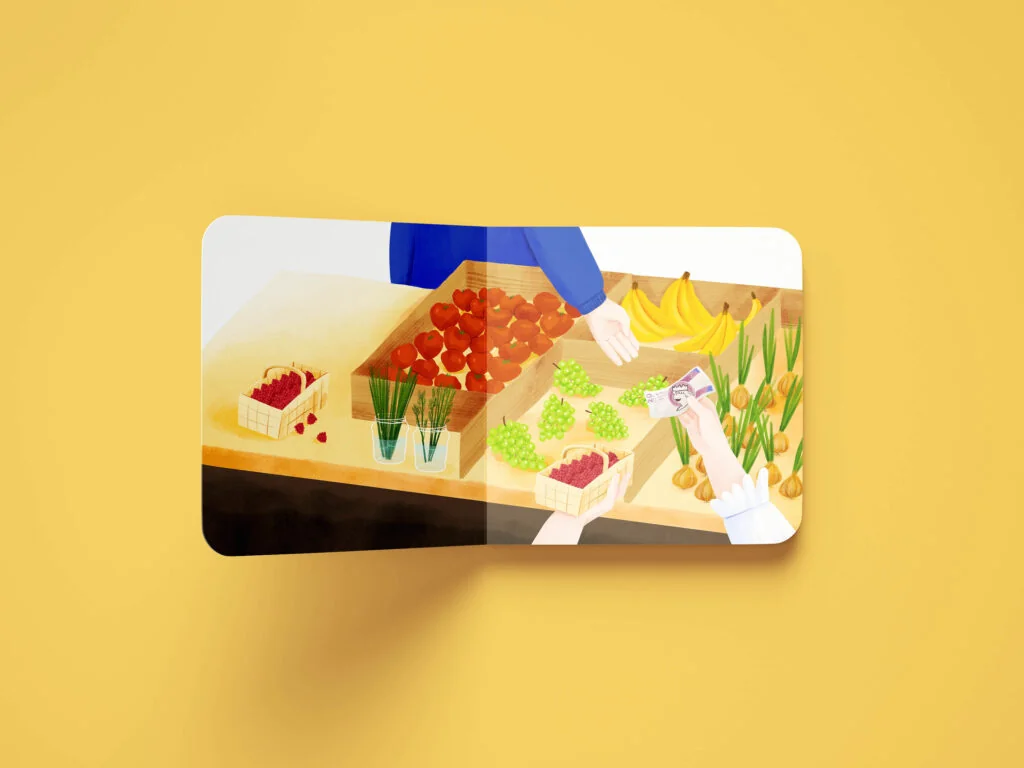
The characteristics of the sketches
A sketch is a roughed-out darker outline and a delicate underpainting of the background in colour. A very illustrative stage - it serves to give a first look at:
- the character design - how they look, what personality their facial expression has
- the colour scheme - the palette of dominant tones
- the layout of elements on the page - the composition, the arrangement of frames
Even though this is the most creative stage, making the sketches themselves takes relatively little time. It’s the ideal way to reach an understanding without ambiguities and surprises.
If the book is aimed at a younger reader, I additionally check whether the skeleton matches the dynamics of children’s illustration - a different page rhythm, a different density of frames, more breathing room for a child’s eye.
Revisions - a normal and safe part of the work
Revisions in the illustration process don’t scare me. I work on the assumption that a book is a shared work of the author and the artist. With children’s publications, who are special readers, I’m especially open to the knowledge and experience of clients - parents, publishers, educators.
After presenting the skeleton we can together introduce any necessary changes:
- the book format (from A4 to square, from standard to smaller)
- the layout of elements on the page
- a change of colours - warmer, cooler, more muted
- a complete change of one illustration
- adding or removing drawings
- regrouping the order of scenes
Why working on sketches is safe for both sides
Working on sketches is safe for both sides, because changes to finished illustrations are a big waste of time. On sketches we can quickly note ideas, and dropping a whole page doesn’t hurt that much. This is the place for experiments and doubts - at a later stage there’s no room for them.
Clean painting - the longest stage
After the final plan is approved, we no longer change the key elements. I move calmly to clean painting. If there are many illustrations, halfway or a third of the way through the work I get in touch with a presentation of the results - we can introduce cosmetic corrections on the go, but only subtle ones.
This is of course the longest stage. It requires hours, days, most often many weeks of focus. With me everything is created on the tablet in Procreate - such is the nature of contemporary book illustration. I work in layers, refine the details, take care of stylistic consistency between the illustrations.
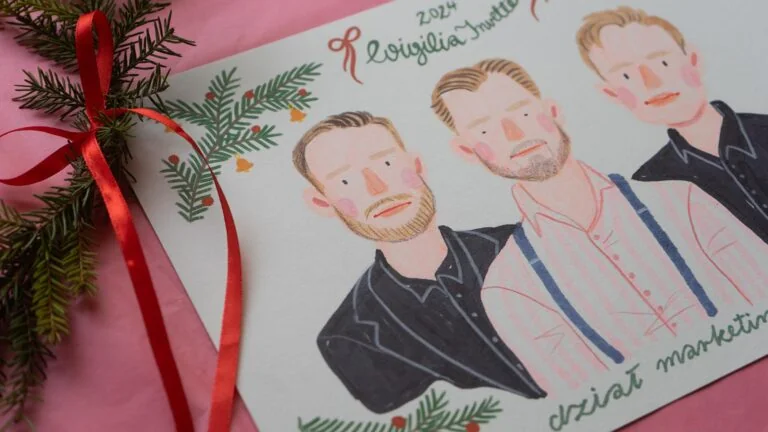
How I maintain quality across hundreds of hours of work
Stylistic consistency is one of the biggest challenges in a long project. Every illustration has to match the others - in colour, technique, in the way detail is handled. That’s why I work methodically: first the characters, then the backgrounds, then refining the layers. This order helps avoid mismatches.
Illustrations finished - cover and layout
I never start the illustrations with the cover. I leave this stage for the end or almost the end, for a simple reason: the cover is a summary of the whole content and should be consistent with the rest. If we have nothing drawn, it’s hard to create something that’s meant to represent the whole.
If the cover has to be created first for marketing reasons, I’ll refer back to it during the work on the interior - so that the whole project keeps a single aesthetic.
Layout and graphic design
A book is not ready without layout and a refined graphic design. These elements decide whether the whole thing looks professional:
- footers and colophons
- title pages
- page numbering
- the choice of typeface and its size
- bleeds and technical margins
- preparing the production files
The choice of typeface, size and correct layout is an important stage - it only emphasises the illustrative part. I offer full project handling, including layout, within graphic design - one team, one aesthetic, no ping-pong between the illustrator and the designer.
Book finished - finalisation
We have a beautiful, finished, approved book. Every detail is refined, both of us are proud of the result. The illustration process ends with preparing the files for preview and for print - in the right resolution, in CMYK, with bleeds, with embedded fonts.
Preparing for print
If the book is printed in a small run, I offer help or mediation in contact with the printer. I know which printers work reliably with small runs, which files they prefer, how to negotiate the deadline. Every book intended for sale should also have an ISBN - in Poland it’s assigned free of charge by the National Library. After receiving the copies, all that’s left is to congratulate yourself.
What this structuring of the process gives you
The whole illustration process is a long journey full of collaboration, communication and creative decisions. From the first conversation, through the phases of sketching and revising, to the final layout - every step matters.
My approach, which puts emphasis on transparency and the author’s involvement at every stage, guarantees that the final product is a shared work. Both sides put their experience, vision and creativity into it.
Key takeaways for authors
From my experience, a successful collaboration requires:
- clear communication about budgets and deadlines from the first conversation
- shared thinking about the project between the author and the illustrator
- using the opportunity for corrections at the sketch stage
- professional attention to typography and layout
- systematic project management through all phases
This way of working minimises the risk of surprises and lets both sides take satisfaction from the process. For me it’s not just a profession - it’s the shared creation of something that will stay with the reader for years.
Planning an illustrated book? Write to me - I reply within 48 hours.
More in illustration
All illustration →
Illustration
How to publish a children's book - the complete guide
What you need to know to publish a children's book - publisher vs self-publishing, editing, illustrations, print, ISBN, distribution and promotion. Step by step.
Illustration
How to prepare a brief for an illustrator - a guide for authors
The brief is the foundation of working with an illustrator. What it should contain, what to avoid, how to describe characters and scenes - a practical guide for children's book authors.
Illustration
The psychology of colour in children's illustration
How colours affect children's reception of illustrations. Warm and cool tones, contrasts, a palette by age - a practical guide for authors.
Start a project
Got a project? Let's talk.
I make art that stays - with emotion and attention in every project. Children's book illustration delivered worldwide, wedding and B2B event live painting across Poland - every project starts the same way: an inquiry, a conversation, a decision. Write to me directly. The Bujnowłosa studio is me and a decade-plus of practice.