
Illustration · 11 min read
How to prepare a brief for an illustrator - a guide for authors
The brief is the foundation of working with an illustrator. What it should contain, what to avoid, how to describe characters and scenes - a practical guide for children's book authors.
· Anna Karwala
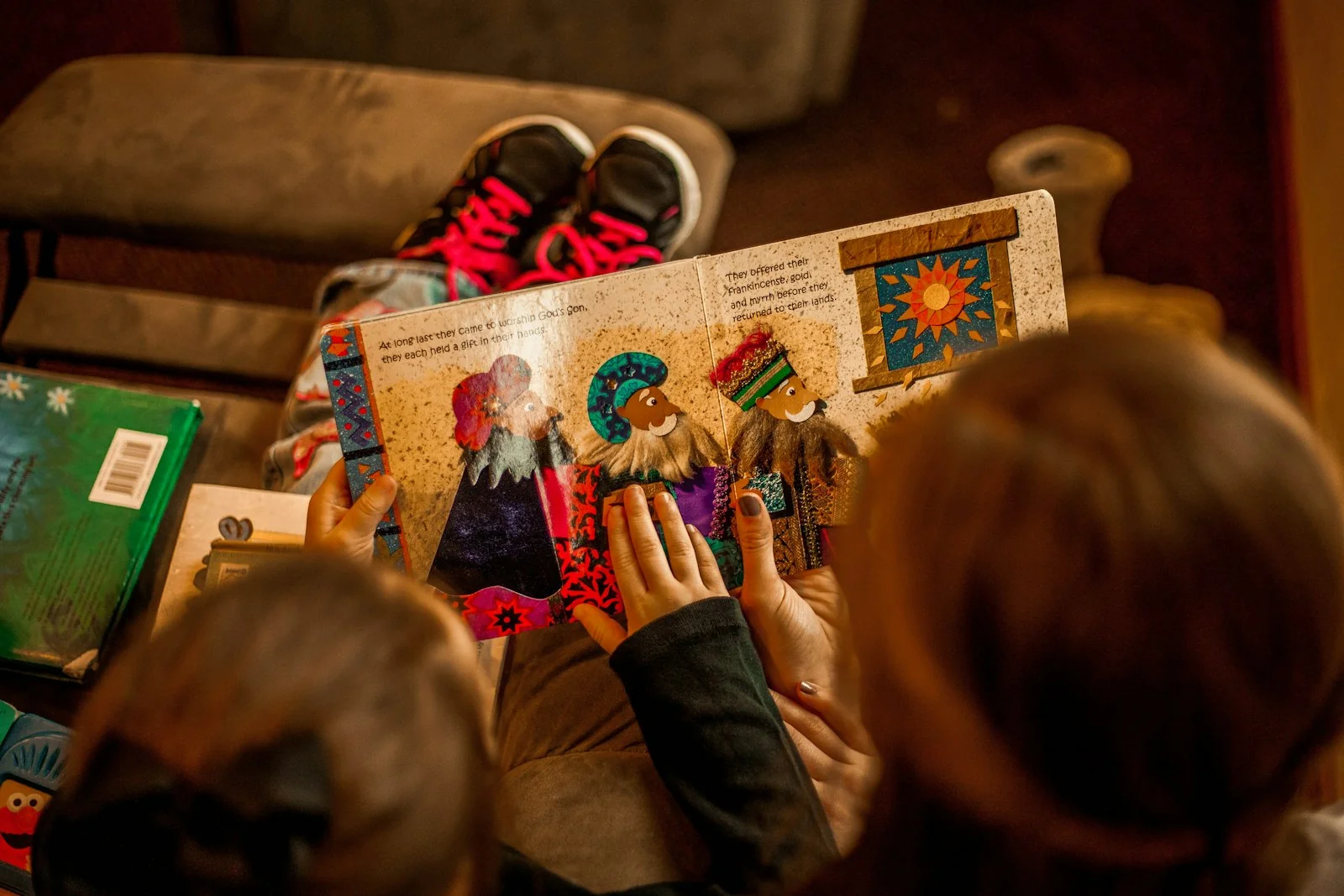
You’re facing the challenge of conveying your vision of the book to the illustrator. The brief is the foundation of the whole collaboration - it’s a document that affects how the work proceeds and the final quality of the book. The better prepared it is, the fewer surprises along the way, fewer revisions, fewer hours of nervous phone calls.
I’ve worked as a children’s book illustrator for years. I see clearly that the quality of the brief has a huge impact on how the whole collaboration goes. Projects that run smoothly always have one thing in common - the author prepared a thoughtful starting document. In this article I’ll show you how to strike the balance between precision and leaving space for artistic creativity.
Why a good brief is so important
A well-prepared brief saves both sides time and minimises the number of revisions. The brief acts as a map leading both sides to a shared goal. It lets me understand not only what to draw, but also why a given scene is important and what mood it should evoke.
An illustrator who understands the author’s intent can bring in their own artistic sensitivity - and then something more is created than a dry execution of a description. A children’s book is created that resonates with the young reader. That’s the difference between work done correctly and work that stays in the memory.
The brief is the foundation, but it’s not a contract - it’s the start of a conversation. The best illustrations are created when the author and illustrator work as a team, complementing each other.
What the brief should contain
Information about the project
This is the starting point of every brief. Without these details I can’t even roughly quote the project or plan the work.
- working title, genre, age group (e.g. a fairy tale for three-year-olds, an adventure novel for school age)
- the number of pages and the expected number of illustrations (whether it’s ten full-page pictures or fifty smaller ones)
- the timeframe - when you need files ready for the printer
- the budget or budget range
Timeframe and budget right away
A fixed publication deadline or a limited budget are things I need to know to propose realistic solutions or adjust the complexity of the work. The earlier I know these constraints, the better I can tailor the proposal - instead of dreaming up a project that has no chance of coming to life.
Visual style
Instead of describing it in words (“warm but not sugary, a bit retro”) - show examples. Send links to books you like. Send specific illustrations whose aesthetic you want to achieve. Show illustrations you don’t like too - and explain why.
Such visual references save hours of conversation. They give me a real reference point, and you the certainty that we’re talking about the same thing. One specific illustration says more than a paragraph of adjectives.
Describing characters - how much detail is too much
Instead of a detailed physical description (“red hair in a braid, freckles, blue eyes, a red dress”) - describe the characteristic traits that define the character. What’s their personality? What sets them apart? What are they afraid of, what do they love?
Personality over appearance
Instead of “shoulder-length hair, chestnut, slightly wavy, with a side fringe” it’s better to write about personality: “a girl of about eight, curious and brave, always on the move”. With a good description of personality I’ll create a living character that expresses a personality. With a purely physical description you only get a passport portrait.
When appearance does matter
If the character’s appearance matters to the plot - it has to be emphasised. A characteristic red fringe by which others recognise her, or a favourite backpack always worn - such elements have to be in the brief. If the hair colour doesn’t affect the story, it’s better to let me decide.
I remember a project where the main character’s outfit, described in detail, didn’t match the historical era described in the book. Luckily a flexible brief let us work out a better solution together.
Descriptions of scenes and composition
Start with the purpose. What is this illustration meant to do? Reinforce the text? Introduce a new element? Show the character’s emotion? Every illustration serves a specific function - it sets a mood, shows a key moment, adds humour.
Instead of a technical description (“the girl stands on the left, the cat under the table, the lamp on the right”) - say more about the mood and meaning of the scene. What should the child feel when they see this frame?
Instead of “the children sit at the table and eat breakfast” write: “an important scene where the family meets at the table and grandpa tells his story for the first time”. The first version is a technical description, the second an emotional one - and only the second lets me build a scene that carries meaning.
If you can, throw in a simple sketch - even lines on paper are enough. No artistic skill is required, just the basic idea of how the elements are arranged. I can propose a better solution, but the starting point is gold.
What not to write
Many details seem important to authors but, from the point of view of the illustration, may be irrelevant. Is the cat ginger or black? Is there a jug or a glass on the table? If these elements aren’t key to the plot, they shouldn’t burden the brief.
The world of the story and visual consistency
Help me understand the world of your story. The story happens in a specific world - a contemporary city, a village of the past or a fantasy land. The brief should help illustrate this world consistently.
For real places
Provide historical or contemporary information. Reference photos help. If the action happens in a specific era, give exact dates - otherwise the buildings, clothes and equipment may be from another moment.
For fantasy worlds
Describe the main features: what the architecture looks like, what the dominant colours are, whether there are any recognisable elements that should recur in many scenes. Is the technology medieval, steampunk, is the nature wild or tame?
Recurring locations
Mark the locations that recur in many scenes - the heroine’s home, a favourite spot in the park, the school classroom. I have to draw them consistently throughout the book. This is especially important in children’s illustration, where the young reader returns to the same world many times and loves finding familiar places and details on successive pages. This phenomenon is also valued by IBBY (International Board on Books for Young People), which has for decades studied what really works in books for young readers.
Cultural context
If the story concerns a specific culture, share reference materials - photos, articles, links. The illustrations should be authentic and full of respect for the culture represented.
Mood and atmosphere
This is the hardest element to describe, and at the same time one of the most important. The mood of an illustration often has a greater impact on how the book is received than the accuracy of rendering described details.
Use words describing emotions and sensory impressions instead of purely technical descriptions. “Cosy, like a warm evening with tea” works better than “dark background, orange light, warm contrast”. “A warm summer evening, calm and safety” conveys more than “sunset, family in the garden”.
References from other media
Musical, film or literary references can help surprisingly well:
- “an atmosphere like in Studio Ghibli films” - one line that precisely communicates a palette of emotions
- “a mood gloomy like the Brothers Grimm tales, but with a hint of humour”
- “magic in the everyday, like in Miyazaki”
Moodboards
Moodboards - sets of photos, fragments of illustrations, colour palettes - together convey the intended mood. I remember a project in which the author created a music playlist for each chapter. It turned out unexpectedly helpful - I listened to it while working on specific scenes.
Technical aspects
The brief should contain basic technical information, because it affects the way of working from the first sketch:
- the book format (A4, square, smaller, non-standard)
- whether the book will be full colour or monochrome
- digital, paper or both editions (e-book illustrations sometimes require a different approach to detail and contrast)
- the printer, if already chosen - this affects the production files
- preferences for paper and binding (sometimes affects saturation)
What to avoid in a brief
Too vague: “I want a children’s book about friendship” - that’s too little. A brief like “draw something nice” gives no foothold at all.
Too restrictive: described scene by scene, every character in every frame - this kills the creative space. “The character stands exactly in the centre, turned three-quarters to the left” - that’s not a brief, it’s a technical instruction that kills spontaneity.
Through negatives: “I don’t want it sugary, I don’t want it banal, I don’t want it too dark” - this doesn’t inform what you want, only what you don’t want. It’s hard to build an illustration from that. It’s better to say outright what you like.
Assuming mind-reading: “If a given plot element is important for the illustration - write about it in the brief, even if it’s in the text.” Don’t assume I’ll remember all the details from the text. The brief should be a self-contained document.
Also settle the feedback system at the start - who receives the sketches, in what form you submit comments, how many revision rounds the budget includes.
A simple brief template
You don’t have to know everything at once. The brief is a living document that can be filled in during the conversations. Here’s a minimal version that’s enough to start the conversation:
What is your book about? - a short summary (3-5 sentences) focusing on the emotions and essence of the story, not a technical plot summary.
Who are you writing for? - the age of the target readers. I adapt the style to the audience’s age.
How many illustrations do you need? - the number of pages and quantity requirements. Most books for young children have an illustration on every spread.
Show what you like - 3-5 examples of illustrations, covers or photos with notes like “I like the muted colours”, “I love this way of drawing animals”.
Who are the main characters? - name, age, a few personality traits. If something about the appearance is important to the plot - add it.
Which scenes do you want to show? - a bulleted list with short descriptions of each scene and its function in the story.
Do you have a deadline and budget? - clear statements about the real constraints.
That’s really enough to start. The rest we’ll work out together. If you feel lost, most illustrators happily help discover the vision through questions and proposals.
Communication during the project
The brief is the beginning, not the end of the conversation. Even the best-prepared document needs clarifications during the work. Sometimes only when you see the first sketches do you realise you imagined something differently.
Openness to suggestions
Be open to the illustrator’s proposals - suggestions often come out of the drawing process and turn out better than your original vision. An experienced illustrator knows what works visually, how to lead the viewer’s eye, how to build dynamics. Their idea may be better than the author’s, even if it seems surprising at first.
The feedback system
Settle the feedback system. For example: the author checks the sketches, but only they communicate with the illustrator. Scattered feedback from several people (author, publisher, the author’s mum, a neighbour, a designer friend) is a straight road to chaos.
Remember that a reasonable number of revisions is a normal part of the work - but the illustrator should know in advance how many rounds are included in the price. Minor corrections after the first sketches are natural. Repeatedly reworking finished illustrations points to problems that could have been avoided with a better brief.
The brief as a foundation
The brief is not a tool of control, but a tool of communication. Its goal is not to force the illustrator to follow your vision point by point, but to create a shared understanding.
The best illustrations are created when the author and illustrator work as a team - you bring the vision and knowledge of the text, I bring the craft and visual sensitivity. Illustration brings to a book something the text alone can’t express - emotions, atmosphere, additional layers of meaning.
A well-prepared brief is an investment of time that pays off many times over. It saves hours of explanation, reduces the number of revisions, increases satisfaction with the result.
Ultimately - the illustrator’s work will be on the bookshop shelf next to your name, so it’s worth trusting them and giving them space to use their artistic power.
Have a question about the brief or a book project? Write to me - I reply within 48 hours.
More in illustration
All illustration →
Illustration
How to publish a children's book - the complete guide
What you need to know to publish a children's book - publisher vs self-publishing, editing, illustrations, print, ISBN, distribution and promotion. Step by step.

Illustration
The psychology of colour in children's illustration
How colours affect children's reception of illustrations. Warm and cool tones, contrasts, a palette by age - a practical guide for authors.
Illustration
The 5 most common mistakes when commissioning book illustrations
Commissioning illustrations is a process full of traps. The 5 most common author mistakes and concrete solutions - from the perspective of a children's book illustrator.
Start a project
Got a project? Let's talk.
I make art that stays - with emotion and attention in every project. Children's book illustration delivered worldwide, wedding and B2B event live painting across Poland - every project starts the same way: an inquiry, a conversation, a decision. Write to me directly. The Bujnowłosa studio is me and a decade-plus of practice.