
Illustration · 12 min read
How to publish a children's book - the complete guide
What you need to know to publish a children's book - publisher vs self-publishing, editing, illustrations, print, ISBN, distribution and promotion. Step by step.
· Anna Karwala
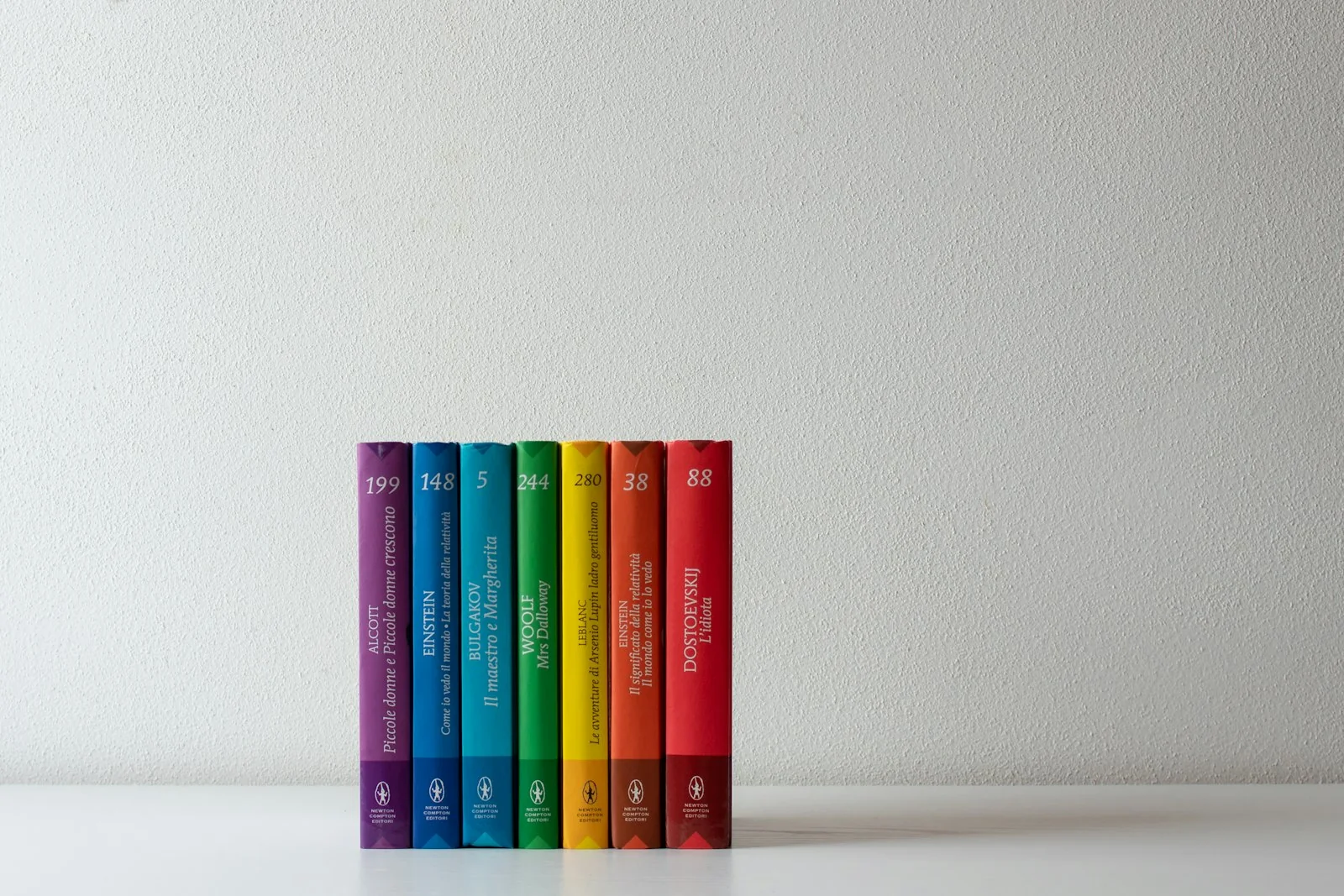
“I have a finished text of a fairy tale for children. What now?” - I hear this question very often. It carries a mix of excitement and uncertainty. Writing a book is only the beginning - ahead of you lies a complex publishing process that can take from a few months to a year. As an illustrator working with many authors, I’ve seen this process from every angle - the triumphs and frustrations of those who didn’t know what they were getting into. This guide leads you through every stage so you don’t get stuck halfway.
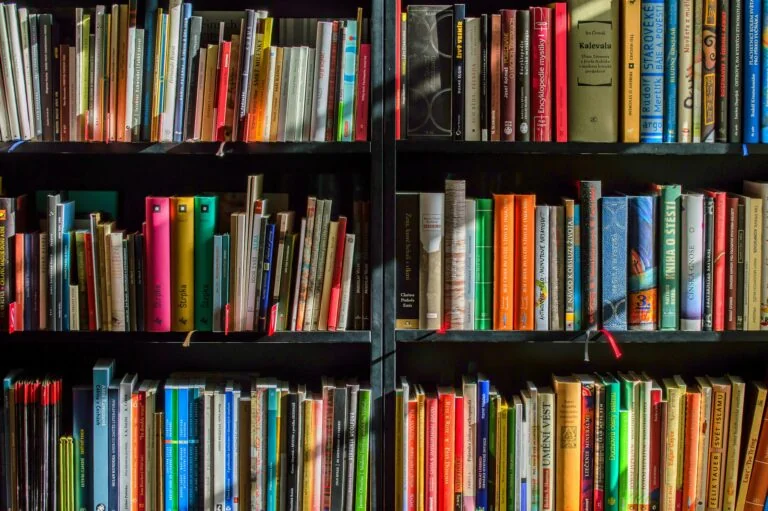
Two roads - a traditional publisher or self-publishing
The fundamental decision at the start is the choice between working with a publisher and publishing on your own. Each path has its passionate defenders and equally passionate critics - because each serves different goals and different types of authors.
A traditional publisher. The publisher invests and takes responsibility for editing, illustrations, print and distribution. The author bears no costs, but has limited control and receives a percentage of sales - usually 5-15 percent of the net cover price. In return they get a professional team, distribution channels and the credibility of a publishing brand.
Self-publishing. The author makes all the decisions and covers the costs, but gets all the profit and full creative control. They choose the editor, illustrator and printer themselves. They manage the marketing, distribution and order handling. It’s running a small business, not just writing a book.
Polish children’s and young adult bestsellers practically never include works by widely unknown authors. For debut authors a traditional publisher is hard - most submissions land in the bin unread, and even after a project is accepted you have to wait 12-18 months for launch. Self-publishing gives a faster route, but requires project management, market knowledge and financial readiness.
Preparing the book for publication
Regardless of the path, the book has to go through several technical stages. Each of them requires a specialist and each builds the final quality of the product.
Editing and proofreading
Editing checks the substance, structure and style. Proofreading eliminates spelling and grammar errors. In children’s books editing is especially important - the text has to be adapted to the readers’ age in terms of vocabulary, sentence length and narrative structure.
A good children’s book editor pays attention not only to language correctness. They check whether the characters are consistent, whether the plot has a logical flow, whether the punchline is clear to a child of the target age. They often suggest shortening scenes that an adult author considers essential and that a three-year-old simply won’t sit through.
Proofreading costs for short children’s texts are quoted individually - despite the small length, professional proofreading takes time to get inside the author’s style and the specifics of a children’s text.
Layout and typesetting
In children’s books each page requires an individual approach to integrating text with illustrations. The cost is counted per page, not per publishing sheet. The specifics of children’s layout is that the text rarely flows in columns - it interweaves with images, surrounds them, sometimes becomes part of the illustration.
Layout requires knowledge of children’s typography. The choice of typeface, letter size, spacing - everything has to support the beginning reader who is only just learning to recognise letters. Text that’s too small discourages, too large is childish.
Illustrations and layout - comprehensive handling
Illustrations are crucial - they often decide whether a child reaches for the book. In the bookshop the adult looks at the price and title, the child looks at the picture. Illustrators’ quotes are individual and depend on the number of book illustrations, their complexity and the deadline.
Choosing the illustrator is a critical decision. The illustrations have to:
- match the mood of the text - a different style for a fairy tale about dragons, a different one for a book about emotions
- be appropriate for the age group - a two-year-old and a seven-year-old are drawn to different aesthetics
- maintain stylistic consistency throughout the book
- work both in large format and in a shop thumbnail
Check the illustrator’s portfolio carefully, not just the best work. See how they handle different subjects, whether they have experience with children’s books, whether their style is flexible enough to fit your text.
A comprehensive approach
Some illustrators (including me) offer comprehensive handling - illustrations, layout, print preparation within graphic design. This means one partner responsible for the whole visual side. The advantages:
- a better understanding of the project - the illustrator knows every graphic decision inside out
- easier communication - one contact instead of coordinating three people
- graphic consistency - illustrations, typography and layout work together as a coherent system
- saving time - you don’t have to explain to each specialist what you expect
An important note. Colour illustrations significantly raise print costs - it’s worth factoring into the budget. A full-colour book can cost twice as much to print as a book with single-colour illustrations.
Cover design
The cover is the first impression - its quote is individual. It has to attract both the child (colours, pictures) and the parent (professionalism). It also has to look good in a thumbnail - this is important especially for online sales, where the potential customer sees the cover at postage-stamp size.
A good cover communicates the genre (fairy tale, education, adventure), the target age and the mood of the book in a single glance. The title has to be legible at a small size, the colours stand out on the shelf, the composition catch the eye.
A cover commission usually concerns a different file than the inside illustrations - the cover has different technical requirements (larger format with bleed, sturdier graphics, sometimes embossing or varnish). Some publishers treat it as a separate commission even with the same illustrator.
Printing the book
Costs depend mainly on the print run and the type of binding. The higher the run, the lower the unit price. You’ll get an exact quote at the printer - it’s worth asking a few and comparing. Printers specialising in children’s books know the typical requirements (non-tearing paper, saliva-resistant print, rounded corners in books for the youngest) and are often cheaper than general-purpose printers.
Types of binding:
- softcover, glued - the cheapest, the most popular for books for older children
- hardcover, glued - sturdier, a higher price, withstands repeated reading better
- hardcover, sewn - the most durable, the most expensive, used in premium editions
- spiral or saddle stitching - for the youngest or for activity books
Print on demand. This is an option with no need for warehousing - flexible, but a higher unit price. It works well with unpredictable demand or when the author doesn’t want to invest in a large run at the start.
ISBN and formalities
Every book intended for sale requires an ISBN - a unique identifier that goes on the imprint page and the back cover. It’s required by distributors and enables sales with a preferential VAT rate (5 percent instead of 23).
The ISBN is assigned by the National Library - it’s a free procedure, but it requires registering as a publisher. A traditional publisher handles this for the author. In self-publishing the author has to apply for the number themselves, which means running their own publishing activity.
Other formal requirements:
- mandatory copies for libraries (the National Library, the Jagiellonian and others)
- registration in the publication database
- copyright and contracts with the illustrator
Distribution
With a publisher. They handle distribution to bookshop chains (Empik, Świat Książki) and online stores. The book reaches shelves across Poland automatically, though sometimes you have to wait months before it surfaces in local bookshops.
Self-publishing. You have several options:
- shipping yourself - labour-intensive, but a high margin, contact with the reader
- outsourcing warehousing - a company holds the stock and ships on your behalf
- platforms like Empik Selfpublishing or Amazon Kindle Direct Publishing
- sales through your own website with a payment system
- author meetings, workshops, direct sales
Each option has its own economics. Selling yourself gives a 100 percent margin, but requires time. Empik takes 30-40 percent, but gives reach. Amazon KDP gives a global market, but a lot of competition.
Promoting the book
Even the best book won’t sell itself. Possible actions:
- social media (organically or paid) - Instagram, TikTok, Facebook
- Facebook and Instagram ads - cheap test campaigns, then scaling
- parenting bloggers, reviews in the press for parents
- book fairs, author meetings in libraries and schools
- a newsletter to your audience base
- collaboration with other authors and illustrators
- reviews on Lubimyczytać, Goodreads, on blogs
The best results come from building a community before the release. Posting on Instagram about the process, showing sketches, involving readers in decisions - all of this builds a group of people ready to buy the book at launch.
How much does all this cost
The total cost of publishing a children’s book depends on many factors. The main budget items are:
- proofreading the text
- layout and typesetting
- cover design
- illustrations (usually the biggest item)
- print (dependent on the run)
- ISBN and mandatory copies
- promotion at the start
The quote for each of these items is individual - it’s worth asking a few people for offers and comparing. You can lower costs by choosing a less experienced illustrator or fewer illustrations, but not below a certain minimum of quality. A children’s book is a product in which visual quality determines success.
How long does publishing take
The technical time alone for 15-20 pages is:
- proofreading - 2-3 days
- layout with illustrations - 5-7 days
- corrections - 2-3 days
- print - 5-10 days
Technical minimum: 3-4 weeks.

With illustrations, negotiations and promotion - realistically 3-6 months or more. The illustrations alone for a 20-page book are usually 6-12 weeks of an illustrator’s work - and that’s assuming there are no other projects in the queue. Ordering well in advance gives you a better choice of illustrators and lower rush rates.
Practical tips
Before the publishing process:
- make sure the text is really ready - read aloud, checked by several people
- ask for opinions from a few people in the target group - parents, educators, the children themselves
- define the age group clearly - “a children’s book” is too broad
- consider what problem your book solves or what emotion it evokes
Choosing an illustrator:
- check the portfolio in detail, not just the best work
- make sure the style fits the mood and age group in terms of children’s illustration
- settle the terms clearly - the number of illustrations, deadlines, costs, copyright
- consider a collaboration offering comprehensive handling
- don’t choose the cheapest offer, but don’t automatically choose the most expensive either
Planning the budget:
- be realistic about costs - most authors underestimate
- account for all stages, including promotion and logistics
- leave a 20-30 percent buffer for unforeseen expenses
- don’t save on quality in key places (illustrations, cover)
Choosing the model:
- debut authors - try a publisher first, even if it rejects you
- self-publishing - remember it’s running a small business, not just writing
- consider a hybrid model - a small local publisher that shares costs and decisions
A road worth taking
Publishing a children’s book is a complex process requiring time, money and commitment. For authors with genuine value to convey - it’s worth taking.
The most important thing is to approach it consciously, understand the stages, realistically assess your means and choose the right model. You don’t have to do it alone. Publishers, illustrators, editors exist to help. The key is finding the right partners and building a team that will deliver the project to the end.
A book that helps a child get through a hard emotion, teaches something new or simply makes them laugh before bed - that’s a value that stays for years. It’s worth putting time and care into it.
Planning to publish a children’s book? Write to me - I reply within 48 hours.
More in illustration
All illustration →
Illustration
How to prepare a brief for an illustrator - a guide for authors
The brief is the foundation of working with an illustrator. What it should contain, what to avoid, how to describe characters and scenes - a practical guide for children's book authors.

Illustration
The psychology of colour in children's illustration
How colours affect children's reception of illustrations. Warm and cool tones, contrasts, a palette by age - a practical guide for authors.
Illustration
The 5 most common mistakes when commissioning book illustrations
Commissioning illustrations is a process full of traps. The 5 most common author mistakes and concrete solutions - from the perspective of a children's book illustrator.
Start a project
Got a project? Let's talk.
I make art that stays - with emotion and attention in every project. Children's book illustration delivered worldwide, wedding and B2B event live painting across Poland - every project starts the same way: an inquiry, a conversation, a decision. Write to me directly. The Bujnowłosa studio is me and a decade-plus of practice.