
Illustration · 9 min read
How a book is illustrated
The stages of illustrating a book in my studio - conversation, sketches, revisions, clean painting, cover and print preparation. A practical guide.
· Anna Karwala
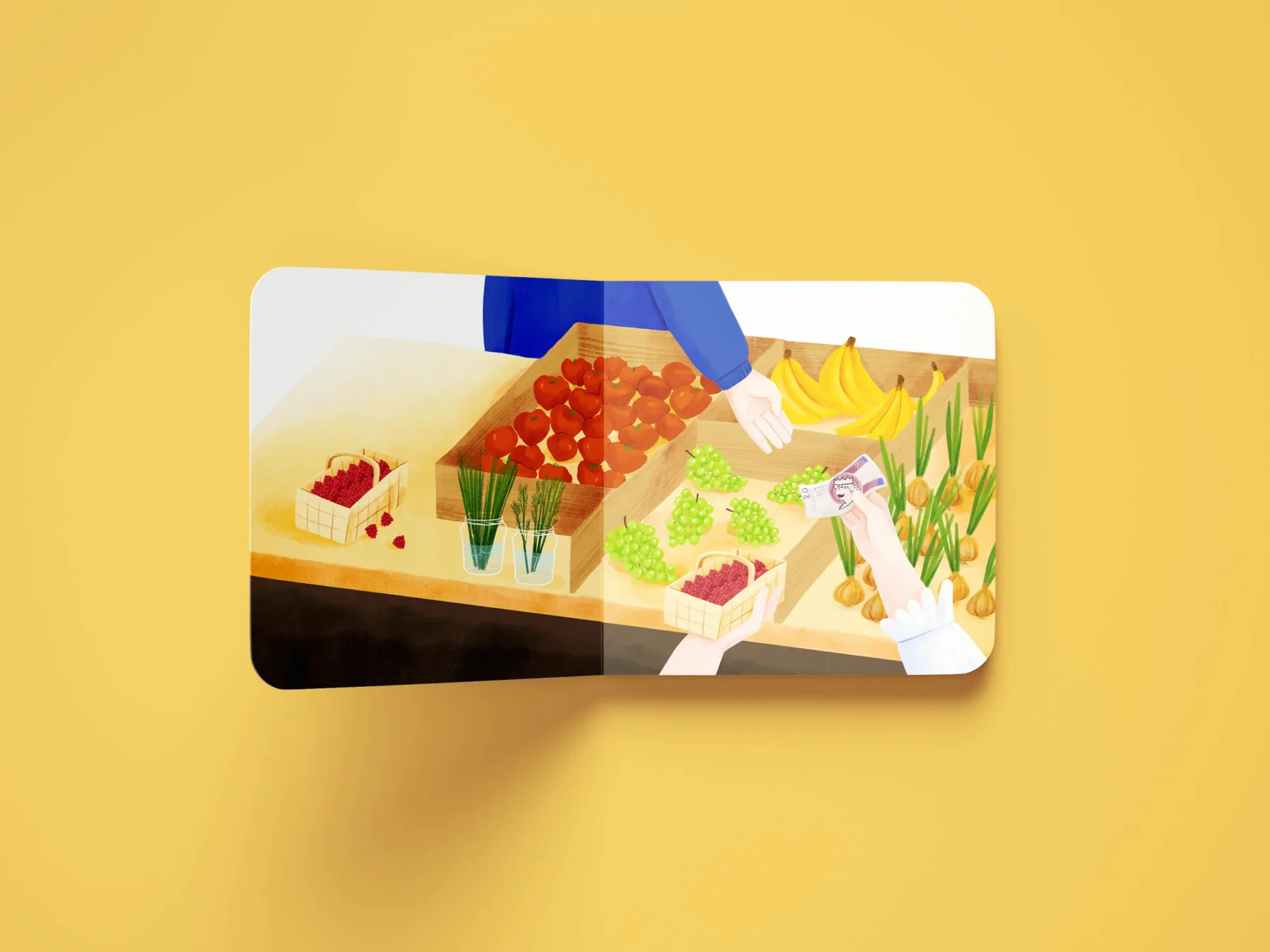
The whole process of illustrating a book has several clear stages. Planning how we’ll work together is just as important as the drawing itself - and often it’s the organisation that decides whether the project ends in satisfaction or frustration for both sides.
I’ve worked on books for several years - comprehensively, including layout and cover. In that time I’ve developed an effective system that guarantees order, meeting deadlines and clear communication. The illustration process is never carried out with me in isolation from the author of the text. At every stage I try to take their needs and intentions into account.
I’ll show you how this process looks with me - from the first email to the finished book.
The conversation - the starting point
It all begins with arrangements. I prefer an email exchange at this stage - that way all the important decisions and questions are written down and we can come back to them at any moment. Email leaves no room for “I thought we’d agreed” - everything is in black and white.
What we settle at the start
The most important thing at the start is to establish whether both sides are able to take on the collaboration. A blocker can be too low an assumed budget or too little time for the work. For me the key things are the assumed number of pages and illustrations together with the level of detail. Then I can determine which bracket the whole quote falls into (always individual) and by when the book can be ready.
The specific matters to settle:
- the number of pages and illustrations
- the level of detail of the artwork
- the book format (A4, square, smaller)
- full colour or monochrome
- the budget range and its flexibility
- deadlines - when you need the files for print
- the book’s target group
I do most projects in the area of children’s book illustration, so I quote such commissions fastest - I have certain benchmarks worked out in my head.
In the meantime I get to know the text - its mood, theme, target group. I read the text cover to cover, make notes, mark the scenes that move me visually. When we agree on the assumptions and a positive decision is made to start the collaboration, we discuss the contract and set the schedule of actions.
Sketches - time to begin
I don’t like surprises in my work, and clients don’t either. That’s why I always start by sketching out the whole concept and planning the text layout. I also propose the dimensions and the final number of pages.
I call this the book skeleton - you could also call it a mock-up or a design. At this stage we see the book as a whole as a PDF file, but in rough form. It’s easy to imagine the final result. This is usually where we finalise the budget.
What exactly the skeleton contains
Besides being the most creative stage, making the sketches themselves takes relatively little time. A sketch is a roughed-out darker outline and a delicate underpainting of the background in colour. Very illustrative, it serves to give a first look at:
- the character design - silhouettes, the character of the face, recognisability
- the colour scheme - which palette will dominate
- the layout of elements on the page - the composition, the density of frames
- the book format in action - how text coexists with image
It’s the ideal way to reach an understanding without ambiguities and surprises. The client sees the book in a raw version, but a true one - not just as single illustrations, but as a coherent object.
Revisions - a normal part of the process
Revisions in the book illustration process don’t scare me. I work on the assumption that a book is a shared work of the author and the artist. With children’s publications, who are special readers, I’m all the more open to the knowledge and experience of clients.
After presenting the initial skeleton we can together introduce any necessary changes - both in the format of the book itself and in the illustrations:
- the layout of elements on the page
- a change of colours - warmer, cooler, more saturated
- a complete change of one illustration
- adding or removing drawings
- regrouping the scenes
- modifying the character design
Why working on sketches is safe
Working on sketches is safe for both sides. Changes to finished illustrations are a big waste of time - sometimes tens of hours of work down the drain. On sketches we can quickly note new ideas, and dropping a whole page isn’t painful.
This is the place for “what if”, “maybe we’ll try it differently”, “actually, I think I’d like…”. At a later stage there are no such opportunities.
Clean painting
After corrections and approval of the final plan, we no longer change the key elements. I move calmly to clean painting. If there are many illustrations, halfway or a third of the way through the work I get in touch with a presentation of the results - we can introduce corrections on the go, but only cosmetic ones.
This is of course the longest stage. It requires hours, days, most often many weeks of focus. In my work I mainly use the tablet and Procreate - such is the nature of contemporary picturebook illustration. Digital work gives me full control over layers, easy corrections on single elements, the chance to experiment with colours without losing the original.
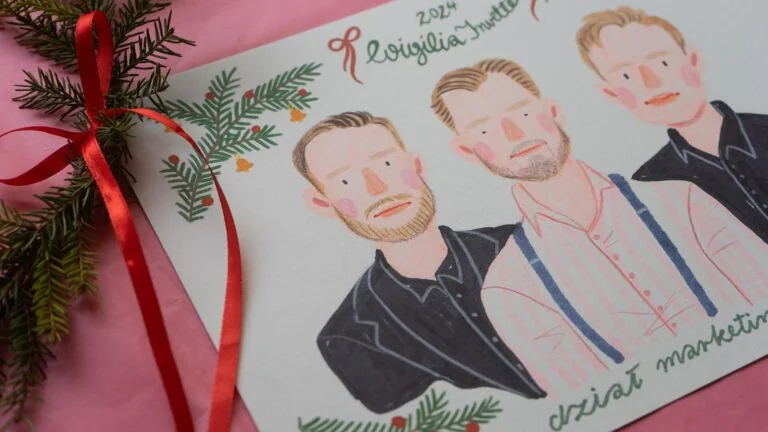
Stylistic consistency as a challenge
In a long project the biggest challenge is maintaining stylistic consistency between the first and the last illustration. I often draw them weeks apart - and in that time my craft develops, my eye shifts, my hand remembers something different.
That’s why I work methodically. First I design the characters - so they’re recognisable from every frame. Then the backgrounds and locations - so the same room looks the same on page 5 and page 47. And only then the atmosphere layer - light, colour, small details.
Illustrations finished - what next
I never start the book illustrations with the cover. I leave this stage for the end, for a simple reason - the cover is a summary of the whole content and should be consistent with the rest. If we have nothing drawn, it’s hard to create something that’s meant to represent the whole.
If the cover has to be created first for marketing reasons - I’ll refer back to it during the work on the interior. But I prefer the reverse order.
Layout and graphic design
A book can’t be ready without layout and a refined graphic design:
- footers, colophons, publishing data
- title and half-title pages
- page numbering
- table of contents
- the choice of typeface and size
- the choice of leading and margins
- preparing the print bleeds
Correct layout is a very important stage - it only emphasises the illustrative part. I do the whole layout together with the illustrations within graphic design - one aesthetic, one team, no ping-pong between different contractors.
Book finished
We have a beautiful, finished, approved book. Every detail is refined, both proud of the result. The illustration process ends with preparing the appropriate files for preview and for print.
What the client gets at the end
The standard set of files I hand over:
- full-resolution files for print (CMYK, with bleeds)
- lower-resolution files for preview and e-book
- the cover as a separate file with the spine and back
- single illustrations as separate files (useful for promotion)
- optionally social media versions
Help with printing
If the book is printed in a small run, I offer help or mediation in contact with the printer. I know which printers work reliably with small runs, which files they prefer, which mistakes to avoid. Every book going into distribution also needs an ISBN from the National Library. After receiving the copies, all that’s left is to congratulate yourself.
What this structuring of the process gives you
The whole process of illustrating a book is a long journey full of collaboration, communication and creative decisions. From the first conversation, through the phases of sketching and revising, to the final layout - every step matters.
My approach, which puts emphasis on transparency and the author’s involvement at every stage, guarantees that the final product is a shared work. The author brings the text, the vision and knowledge of the characters. I bring craft, visual sensitivity and experience from previous projects. It’s a partnership, not a service.
What I’ve learned over the years
The most important lessons from illustrating successive books:
- clear communication at the start saves weeks of work later
- working on sketches is not an auxiliary stage - it’s the foundation
- the cover last, not first
- stylistic consistency requires methodical work
- layout and typography are not an add-on - they’re an integral part of the book
Every new project is a little different, but the framework is similar. Thanks to this the author knows what to expect - and I can focus on the illustration itself, not on the organisation.
Planning an illustrated book? Write to me - I reply within 48 hours.
More in illustration
All illustration →
Illustration
How to publish a children's book - the complete guide
What you need to know to publish a children's book - publisher vs self-publishing, editing, illustrations, print, ISBN, distribution and promotion. Step by step.
Illustration
How to prepare a brief for an illustrator - a guide for authors
The brief is the foundation of working with an illustrator. What it should contain, what to avoid, how to describe characters and scenes - a practical guide for children's book authors.
Illustration
The psychology of colour in children's illustration
How colours affect children's reception of illustrations. Warm and cool tones, contrasts, a palette by age - a practical guide for authors.
Start a project
Got a project? Let's talk.
I make art that stays - with emotion and attention in every project. Children's book illustration delivered worldwide, wedding and B2B event live painting across Poland - every project starts the same way: an inquiry, a conversation, a decision. Write to me directly. The Bujnowłosa studio is me and a decade-plus of practice.