
Portrait · 9 min read
The best techniques for creating wedding portraits
Realism, impressionism, illustrative style - which wedding portrait style best captures the atmosphere of your day? A guide to the techniques and their uses.
· Anna Karwala
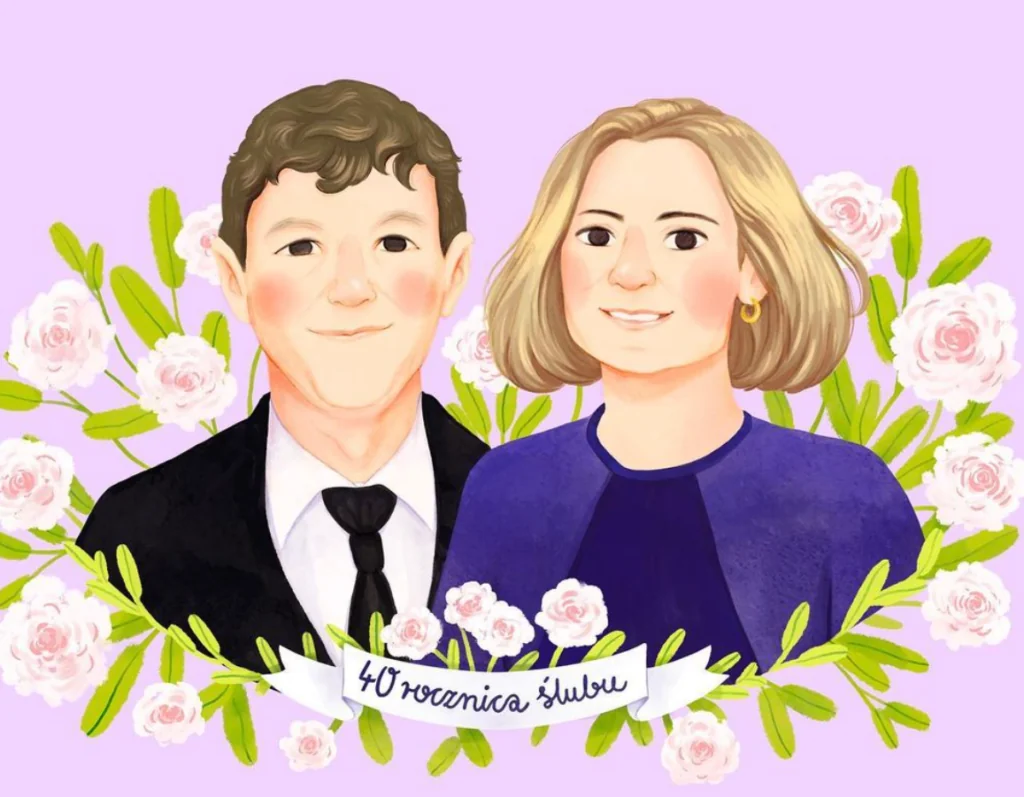
A wedding is one of the most important events in a couple’s life - full of emotion, deep feeling and unforgettable moments. To capture those moments forever, more and more people are deciding on a wedding portrait instead of (or alongside) classic photographs. A wedding portrait can look very different, depending on the chosen technique and style. Realism, impressionism, illustrative style, abstraction - each of these approaches tells your wedding day in a completely different way. In my studio I most often talk with clients about exactly this - which path they want to take.
Realism - like a photograph, only more lasting
Realism is one of the techniques most often chosen by couples. Thanks to its precision and care for detail, it can faithfully render not only the couple’s appearance but also the atmosphere of the whole day.
The artist works each element with care for detail - the features of the face, the texture of the wedding dress, the lace of the veil, the shine of the ring, the pattern of the tie. Light and shadow play the leading role here, because they give the work its depth. For artists working in this technique, the right use of chiaroscuro is essential - it’s what gives the figures life and makes the image “breathe”.
A great wedding portrait in the realistic style is a work that not only faithfully reproduces reality but also conveys the emotions that accompanied the couple during the ceremony. The look in the eyes, the slight smile, the way one person’s hand rests on the other’s shoulder - these are all elements that a good realist sees and carries onto the image.
Who do I recommend realism to? Couples who want a portrait “like the real thing” - something that twenty years on you can show the grandchildren and they’ll recognise you without hesitation. It’s a safe choice, a classic that won’t go out of fashion.
Realism needs good source photos. The more detail in the photo, the more I can draw out in the portrait. A small, hazy phone snapshot won’t do. It works best if you have a wedding session done by a professional photographer - from those photos you can later pull a portrait full of detail.
Impressionism - mood matters more than the ruler
For couples who want something more than a faithful rendering of appearance, impressionism is often the ideal option. This technique, known for its delicate brushstrokes and subtle patches of colour, perfectly captures the atmosphere and dynamism of a moment.
Impressionists focus on light and colours, which change depending on the time of day, the lighting, the mood. In wedding portraits, impressionism lets you convey the beauty of natural light falling on the couple, the soft afternoon light on a face, a tear in the bride’s eye, a light mist in the outdoor photos. All of this is meant to convey the emotion of the moment, not its documentation.
The advantages of impressionism in wedding portraits
- Delicate and subtle brushstrokes that give the image lightness
- An emphasis on colour and the play of light, which makes the image come alive
- Capturing the emotion of the moment, so important on this special day
- Atmosphere over detail - ideal for couples who prefer impression to document
Thanks to these qualities, an impressionist wedding portrait becomes not just an image but a story about the feelings and emotions that accompanied the couple on their wedding day. It’s a technique for people who prefer “impression” to “document”. You don’t stare at the detail of the lace - you look at the whole frame and you feel.
Illustrative style - your portrait with character
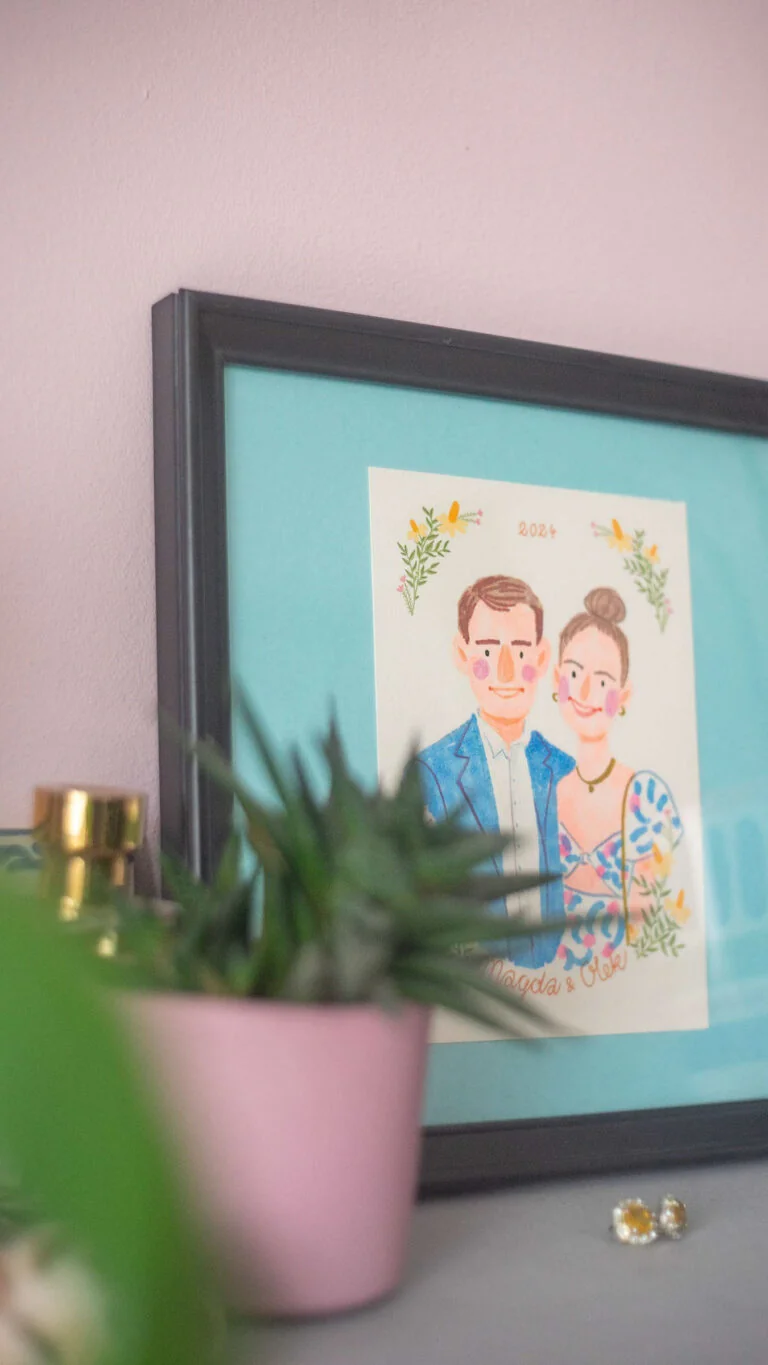
The illustrative style is my everyday. It relies on simplification - I select the most important features that define you as a couple and emphasise them. It might be a characteristic gesture, the colour of the dress, the hairstyle, the favourite flowers, an accessory that plays a special role on the day.
This isn’t caricature - I don’t exaggerate flaws, I emphasise what’s characteristic and positive. Clients often say this style “has more life in it” than the realistic approach. That’s because it leaves out what’s unimportant and keeps only the essence. Realism has to show everything - illustration can choose.
It works for couples who like modern interiors, minimalist frames, a light aesthetic. And for those who are characterful in themselves - if you have your own style, illustration will bring it out. It’s also the technique I paint in during live guest portraits at the reception, because it lets me quickly capture character within a single session.
Abstract style - for the bold
Abstraction in a wedding portrait is a rarity, but for some couples it’s the ideal choice. Although abstraction and a wedding may seem an unusual pairing, more and more people are deciding on a modern, artistic approach to the traditional portrait form.
In the abstract technique, the artist doesn’t have to stick to the rigid frame of reality. The portrait can consist of geometric forms, contrasting colours, expressive brushstrokes. What matters are the emotions and the mood the artist carries onto the image, often giving up literalness. What’s important is a symbolic capturing of the bond between the couple and an emphasis on the uniqueness of their wedding day.
Abstraction can be a reflection of a modern approach to art, but also a subtle expression of deep feeling. A portrait in this style can be both a bold accent in a modern interior and a unique keepsake that surprises guests and stirs emotion for many years.
It’s a good direction if your home is kept in a modern aesthetic and an ordinary figurative portrait wouldn’t fit there. I’ll warn you, though - this is not a portrait for parents and in-laws. They may not understand why “the two of you” look like three patches of colour and one line.
Digital vs traditional technique - what matters
Whatever the style, the next choice is the technique of execution. I work mostly digitally, in Procreate on a graphics tablet. This lets me experiment freely, make colour variants, introduce corrections without the risk of ruining the original. I can undo a mistake with one button, I can prepare three versions of the background and check which works better.
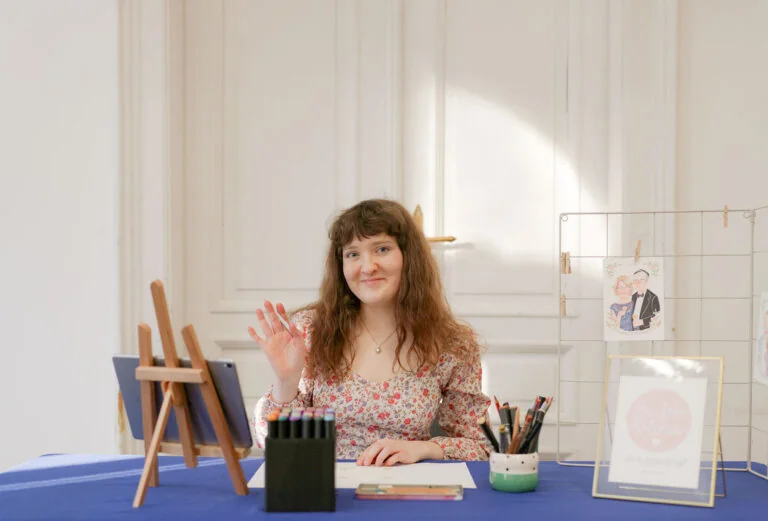
The client gets a custom portrait in the form of a file for printing in the chosen technology (canvas, art paper, fine-art print) plus a digital file for use online. For most couples that’s enough and even more convenient - the portrait can be enlarged, reformatted and printed as a wall poster in several sizes.
The traditional technique (watercolour, oil) gives an “original” - a single, unique object that has its own texture, its own brush marks, its own weight. For some people that matters emotionally - the portrait is one and hangs in the living room as a specific artefact. For others less so, because modern printing is so good that the naked eye won’t tell the difference. It’s a matter of preference, not the objective superiority of one technique over another.
How to choose between styles
Questions worth asking yourself before choosing:
- Where will the portrait hang? A modern living room, a classic bedroom, a hallway, an office?
- What should be most important - fidelity or mood?
- Are there other paintings in the home? Which ones? If you have a collection, the wedding portrait should sit well with it.
- Which wedding photos do you like best? Studio? An outdoor session? Candid reportage from the party?
- What do you want to keep in memory - your faces or the atmosphere of the day?
The answers to these questions usually point to a style. If you say “naturalness, warmth, everyday” - illustration or impressionism probably suits you. If “classic, elegant, gallery-like” - realism. If “distinctive, modern, with character” - abstraction or strong illustrative stylisation.
Format and presentation - small details that make a difference
Whatever the technique, the format affects how the portrait will look. A large piece in the living room above the sofa calls for a different style than a small one in the bedroom on a chest of drawers. Watercolour looks best in a light, simple frame. A realistic portrait in oil can carry an ornamented gilded frame. Illustration works wonderfully without a frame, on natural paper.
The quote is individual, because it depends on the format, the level of detail, the number of people in the portrait and the chosen technique. The more detail, the more time - and that translates into price.
What to choose in the end
Choosing a technique is a decision that depends not only on taste but on what emotions and memories you want to keep for years to come. Whether you prefer realism, impressionism or a more modern approach - each wedding portrait is unique, just like the moments it commemorates. It’s worth considering which elements matter most to you: fidelity to detail, capturing the light and mood, or vivid emotions carried onto the image symbolically.
And remember - there’s no “better” or “worse” choice here. There’s only the choice that best captures you and your day.
Want to discuss your portrait? Write to me - I reply within 48 hours.
More in portrait
All portrait →
Portrait
Famous artists who painted animals - the tradition of the animal portrait
George Stubbs, Rosa Bonheur, Sir Edwin Landseer - the artists who shaped the tradition of portraying animals. How their work inspires today's pet portraits.
Portrait
Animal portraits across cultures - symbolism and meaning
Lions in Egyptian art, dragons in Chinese, stags in medieval heraldry. How different cultures portrayed animals and what it tells us about their meaning.
Portrait
Animal portraits - the most popular techniques
Oil, watercolour, digital art - which technique to choose for a pet portrait? A comparison of techniques from the perspective of an artist who works with animal portraits.
Start a project
Got a project? Let's talk.
I make art that stays - with emotion and attention in every project. Children's book illustration delivered worldwide, wedding and B2B event live painting across Poland - every project starts the same way: an inquiry, a conversation, a decision. Write to me directly. The Bujnowłosa studio is me and a decade-plus of practice.