
Portrait · 8 min read
Famous artists who painted animals - the tradition of the animal portrait
George Stubbs, Rosa Bonheur, Sir Edwin Landseer - the artists who shaped the tradition of portraying animals. How their work inspires today's pet portraits.
· Anna Karwala
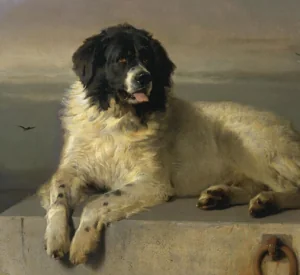
Throughout the history of art, animals have always played an important role as a subject of artistic representation. The contemporary pet portrait didn’t come from nowhere. It stands on the shoulders of many artists who, over the centuries, developed the art of portraying animals. Today we’re seeing a growing trend of commissioning pet portraits, which are a special way to commemorate the bond between an owner and their four-legged companion. Artistic depictions of animals combine anatomical precision with artistic sensibility, creating works that will survive for years. In this post I introduce a few masters whose work still inspires - including my own work.
George Stubbs - master of the horse
George Stubbs (1724-1806) is a British artist called the father of the modern animal portrait. He specialised in horses, though he also portrayed dogs, cats and wild animals. His works are marked by a remarkable precision in rendering anatomical detail, while also possessing an artistic sensibility that makes them exceptional.
What set him apart
Stubbs approached animals like a scientist. He dissected horses to understand their anatomy. He published a book, “The Anatomy of the Horse” - a work that is still a reference point today. Stubbs’s approach to painting was fundamentally different from his predecessors’. He aimed for a perfect rendering of anatomical structure, which required a deep understanding of how the animal body is built.
This allowed him to paint horses with a precision that astonishes. Every muscle, every vein, every tension of posture - all anatomically correct. But Stubbs didn’t stop at anatomy. In his portraits you can also see the character of the specific animal - its fire, its calm, its alertness.
Stubbs’s works were often commissioned by the aristocracy, who wanted portraits of their favourite horses and dogs on their walls. His technique demonstrates how an artist can convey not only an animal’s physical features but also its individual character.
What’s left of him
Contemporary custom horse and dog portraits still draw on Stubbs’s legacy. Anatomical precision combined with sensitivity to character - that’s a model still valid today. For contemporary artists creating portraits of dogs or other pets, Stubbs’s works remain an inspiring reference point.
Rosa Bonheur - a woman among animals
Rosa Bonheur (1822-1899) was a French painter specialising in animal portraits - above all horses, cattle, sheep. In an era when women were rarely artists recognised in the mainstream, Bonheur achieved enormous commercial and critical success. Her works, mainly depicting cattle, horses and other farm animals, won international acclaim and became an inspiration for many painters.
What set her apart
A particular feature of Bonheur’s work was her ability to convey movement and dynamics. Bonheur was marked by a remarkable ability to capture dynamics and movement in her paintings, which made her animals look extraordinarily realistic. This artistic achievement required not only technical skill but also deep observation of animal behaviour.
Her most famous painting, “The Horse Fair” (Le Marché aux Chevaux), is a huge, energetic work full of movement - completely unlike Stubbs’s static portraits. Bonheur spent hours at horse fairs, in stables, in pastures. She studied animal behaviour up close. This allowed her to convey not only appearance but also character, temperament, individuality.
A curious fact: Bonheur received an official permit from the Paris police to wear trousers so she could work in the field. In the 19th century that was revolutionary. It’s worth noting the social context of her work - Bonheur not only created wonderful works but also opened doors for future generations of women artists, showing that artistic talent knows no gender boundaries.
What’s left of her
Bonheur’s legacy is the conviction that an animal can be portrayed with the same emotional depth as a person. That “character” isn’t an exclusively human trait. That’s a foundation of the contemporary pet portrait. For those interested in ordering a portrait of their pet with a greater dose of energy and dynamism, Bonheur’s works offer inspiring examples.
Sir Edwin Landseer - royal dogs
Sir Edwin Landseer (1802-1873) is a British painter who became famous for his dog portraits. He worked for Queen Victoria, painting her dogs with courtly finesse. Sir Edwin Landseer is a figure who left a permanent mark on the history of animal painting. Best known for his realistic depictions of dogs, Landseer won recognition at the royal court.
What set him apart
Landseer could capture the human side of dogs. His portraits often show a dog in a pose that suggests a specific emotion - sadness, tenderness, loyalty. Victorian England fell in love with his work, because it fit the sentimental spirit of the era. Landseer’s career was marked by close collaboration with the social elite of the era - his works depicting hunting dogs, spaniels and other breeds are still considered masterpieces of animal art.
On the other hand, Landseer was also about technique - he rendered coat texture beautifully, the gleam of the eyes, the small details distinguishing a particular breed. A Newfoundland in his hands is specifically a Newfoundland, not “some big dog”. Every element - from coat texture to the expression of the eyes - received the artist’s special attention.
Landseer, like other artists of the time, often created a dog portrait from a photo on commission. His works stood out for their high level of detail and fidelity to the subject of the portrait. His working method involved intensive observation of animals in natural conditions - this approach allowed him to create portraits that were not merely a superficial depiction but a deep interpretation of the animal’s character.
Characteristic features of Landseer’s work
A realistic reproduction of dogs’ physical features and specific breed characteristics was a fundamental element of his artistic language. The emotional fidelity in conveying animals’ behaviour and temperament showed his deep understanding of the subject. The meticulous work on coat detail and anatomical structure is recognisable in every one of his works.
What’s left of him
The contemporary custom dog portrait owes a great deal to Landseer. The combination of emotion and precision, of a “human” expression and breed-specific detail - that’s a model that still works. His artistic legacy still influences contemporary creators working in the genre of the animal portrait.
Others worth mentioning
Albrecht Dürer
A German Renaissance artist whose study “Young Hare” (1502) is one of the most famous animal portraits in European art. Incredible precision, the rendering of the fur’s texture, the animal’s character in a single, static pose - an inspiration for anyone today creating animal illustrations for children’s books.
Franz Marc
A German expressionist of the early 20th century who painted animals in a very unconventional way. Blue horses, red deer - for him colour was a way to convey the spiritual essence of an animal, not its appearance. It’s a different pole of the animal portrait than Stubbs or Landseer, but equally valuable.
Andrzej Wajda as a collector
This is a curious fact - the Polish director Andrzej Wajda collected dog portraits. He wasn’t an animal artist himself, but his collection shows that the tradition of the pet portrait existed in Poland too.

The significance of artistic tradition in contemporary portraits
The tradition of animal painting, developing over the centuries, provides a rich source of inspiration for contemporary artists. Each of the masters discussed brought a unique perspective on how to depict animals in art. Stubbs’s anatomical precision, Bonheur’s dynamics of movement and Landseer’s realistic detail create a complete palette of artistic possibilities.
For someone considering ordering a portrait of their pet, understanding these traditions can help in choosing an artist whose style will best match their individual preferences. Some may prefer classic precision, others a more dynamic and expressive approach.
What I learn from these masters
Anatomy matters
As with Stubbs - knowledge of how an animal is built lets you paint it well. You don’t have to be a vet, but you should understand how a limb joint works, where the mass of muscle is, how the coat sits.
Character is more important than photographic fidelity
As with Bonheur - a good portrait isn’t a copy of a photo. It’s a capture of who the animal is. An energetic dog should be shown in a pose of energy, a dignified dog - in a pose of dignity.
Details make the difference
As with Landseer - the small details distinguishing the breed and the specific individual are the difference between a dog and Rex. These details have to be seen and chosen consciously.
The pet portrait today
The contemporary animal portrait is democratic. Anyone can order a portrait of their dog, not just the aristocracy as with Landseer. Every technique is available - from oil as with Stubbs, through watercolour, to digital art in Procreate, which is then framed as a fine-art wall poster.
But the foundations remain. Anatomy, character, details. Three pillars shaped by the great masters of the animal portrait. The contemporary portrait studio where I paint on a graphics tablet still rests on them.
Conclusions and contemporary perspectives
Ordering a custom animal portrait isn’t only a way to immortalise your pet but also to create a unique work of art that will please the eye for years. The history of animal painting shows that this form of artistic expression has held significance for both artists and audiences over the centuries.
The contemporary availability of custom portraits democratises access to animal art. Artists such as George Stubbs, Rosa Bonheur and Sir Edwin Landseer left a lasting mark on the history of animal art and remain an inspiration for contemporary creators to this day. Their works demonstrate the possibilities that open up for artists who take on the subject of animals.
If you dream of a pet portrait, it’s worth seeking out an artist whose style best conveys your animal’s character. Whatever the chosen artistic approach - whether realistic, expressionist or innovative - the result should be a work that immortalises the unique relationship between an owner and their animal companion.
Animal portraits are today a living tradition, combining respect for the history of painting with modern techniques and individual artistic visions. Whether you decide on an image of your dog in a realistic or a modern style, it will surely be a keepsake that survives for years and recalls the beautiful bond between you and your four-legged friend.
Want to order a portrait of your pet? Write to me - I reply within 48 hours.
More in portrait
All portrait →
Portrait
Animal portraits across cultures - symbolism and meaning
Lions in Egyptian art, dragons in Chinese, stags in medieval heraldry. How different cultures portrayed animals and what it tells us about their meaning.
Portrait
Animal portraits - the most popular techniques
Oil, watercolour, digital art - which technique to choose for a pet portrait? A comparison of techniques from the perspective of an artist who works with animal portraits.
Portrait
A custom pet portrait - how to capture an animal's character
A pet's character shows in the gaze, the pose and the details. What's worth thinking through before ordering a portrait so it truly reflects the animal's personality.
Start a project
Got a project? Let's talk.
I make art that stays - with emotion and attention in every project. Children's book illustration delivered worldwide, wedding and B2B event live painting across Poland - every project starts the same way: an inquiry, a conversation, a decision. Write to me directly. The Bujnowłosa studio is me and a decade-plus of practice.