
Portrait · 8 min read
A custom pet portrait - how to capture an animal's character
A pet's character shows in the gaze, the pose and the details. What's worth thinking through before ordering a portrait so it truly reflects the animal's personality.
· Anna Karwala
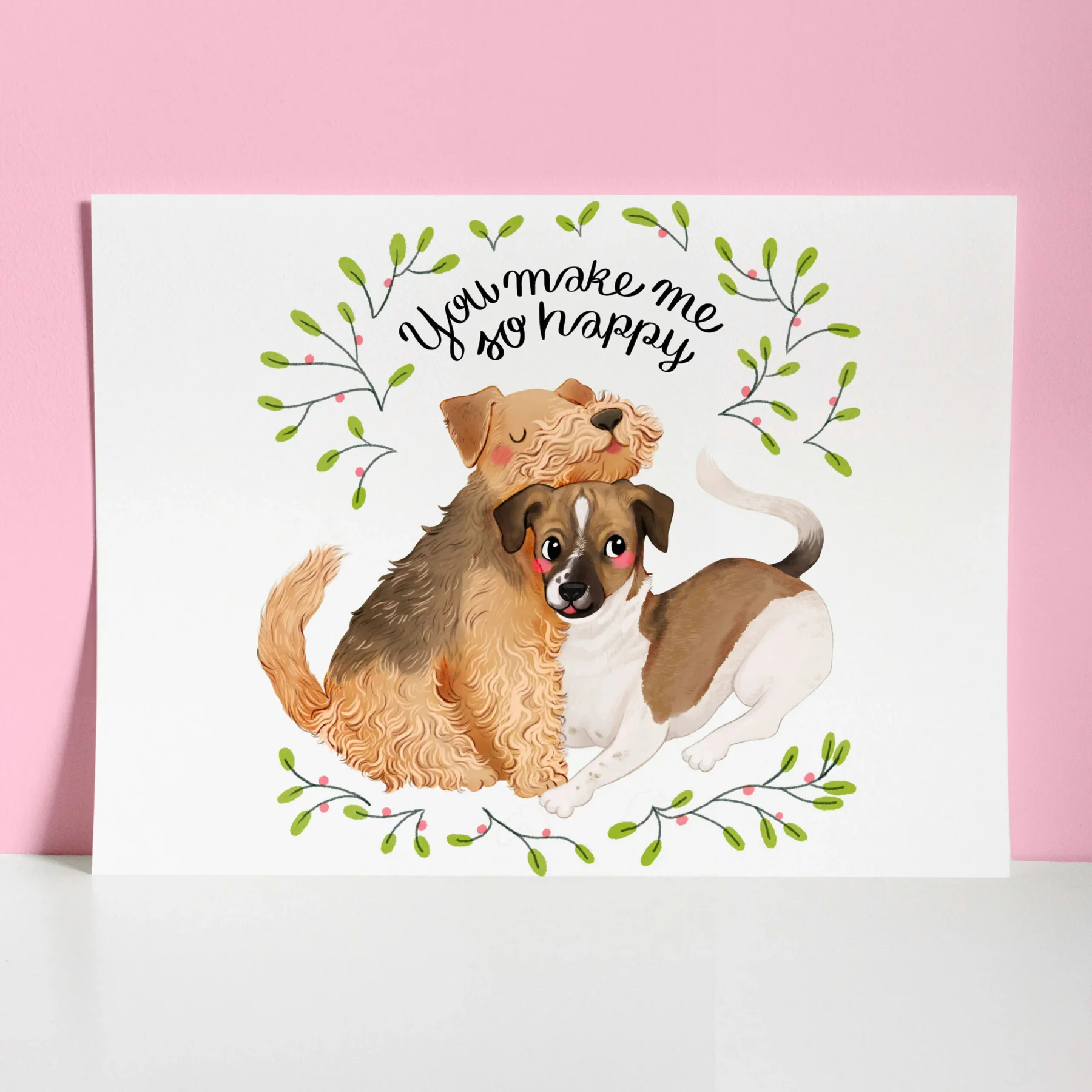
A good pet portrait doesn’t show “how the animal looks” - it shows “who it is”. That’s a difference every client feels when they receive the finished work. In this post I share what to pay attention to before ordering, so the portrait truly captures your pet’s character. These are the details that turn a portrait from “a generic dog or cat” into a portrait of a specific Rex, Whiskers or Felix.
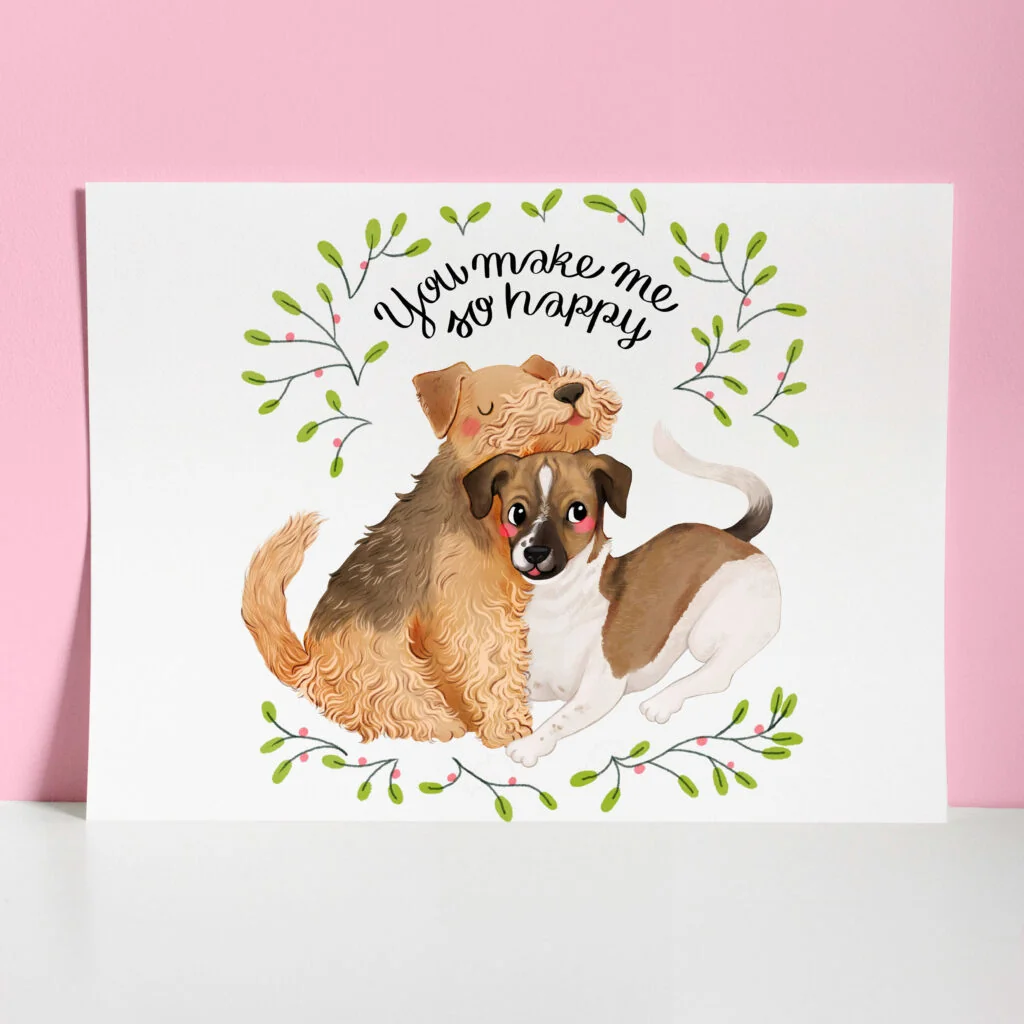
How to choose a photo for a pet portrait
Every portrait starts with the right photo. A dog portrait from a photo or a cat portrait should faithfully reflect not only the animal’s appearance but also its character. The photo you send me decides fifty percent of how the finished work turns out.
The first step is choosing a photograph that shows the animal in a natural pose - no forced shots, no “stiff” face of a dog that doesn’t know why you’re photographing it. The best photos are ones where the pet feels comfortable and behaves naturally. That ensures the image is authentic.
High photo quality also matters. The higher the resolution, the more detail I can carry over into the portrait. Sharp, well-lit photographs are the key to achieving the effect you want - whether realistic or stylized.
What I look for in references
- Natural poses - the animal in “its” state, not forced for the shot
- Characteristic gestures - if your dog always sits in a specific way, I want to see it
- The gaze - eyes towards the camera or some interesting point
- Clearly visible details - coat, markings, ear shape, nose colour
- Different angles - front, side, “portrait” view
What to avoid
- Blurry or overexposed photos
- “Bird’s-eye” shots (from above, very close)
- Studio sessions with an odd background that confuses
- Photos from beautifying apps - they distort proportions and introduce false details
- Very close phone shots - they deform the proportions of the muzzle
I usually ask for five to ten photos in different poses. I’ll choose the composition for the portrait from them. Better ten good ones than fifty random ones.
What really shows character
Every animal has a unique character that deserves to be captured. There are a few elements worth emphasising if you want the portrait to be “that” animal, not “some similar animal”.
The eyes
First and most important. You can see the whole animal in the eyes - the gentleness of an older dog, the alertness of a young cat, the curiosity of a parrot, the slight mischief of a labrador. They express the most emotion and “communicate” with the person looking at the portrait. If I paint the eyes wrong, the whole portrait is “off”. If the eyes are good, the rest can even be simplified.
In my work I spend the most time on the eyes. The client often doesn’t know exactly why the portrait “works” - and it’s the eyes. The shine, the colour, the set of the eyelids, the light reflection - it all adds up to “that” particular Rex.
The whole-body pose
A dog lying down, a cat curled up, a horse standing in profile - every pose says something. A firm pose (head held high, legs stiff) shows confidence. A relaxed one (half-lying, head on a paw) shows calm and security. A dog in motion with ears flying shows joy and energy.
Choose the pose where your pet looks “like itself”. If it always lies on its side - a portrait in that pose makes sense, even if you don’t “classically” paint a pet portrait sitting. These details add dynamism to the portrait and convey the real character.
The coat and its texture
A poodle has a completely different coat than a labrador. A Maine Coon has a different one than an Egyptian cat. The way I paint the coat says a lot about which pet this specifically is. Short strokes for a short-haired dog, longer, wavy ones for a golden retriever, dense tufts for a long-haired cat, smooth surfaces for a hairless breed.
It’s a detail that’s easy to skip, but it makes a huge difference. Without the right coat texture a portrait can look “generic” - like “a dog” instead of “your dog”.
Specific details
- Characteristic spots and markings - two white ears, a black ring round the eye, a white paw
- Accessories - a collar with a specific pattern, a favourite toy in the mouth, a leash in a specific colour
- A background that means something - the sofa the pet always lies on, the rug in its favourite corner, the windowsill overlooking the street
These are details you know but the artist can’t invent on their own. Tell me about them in the brief. Better to write “has a black dot on the left ear, none on the other” than to count on me pulling it from the photos.
Why a pet portrait is a great choice
A pet portrait isn’t only an aesthetic decoration for the home but also a way to honour a four-legged friend. A dog, a cat, a rabbit, a parrot - each of these animals leaves a specific mark on our life that’s worth commemorating.
The advantages of such a portrait:
- Durability - a professionally made work lasts for years without loss of quality
- Sentimental value - it captures the fleeting moments spent with your pet
- A keepsake - many owners order portraits as a memory of a beloved pet that has passed away
- A part of the family - a pet portrait hangs alongside portraits of people, underlining its status in the home
- A dialogue with a child - children find it easier to talk about an animal they see on the wall every day
The brief - what’s worth writing
A short brief helps me work fast and well. Send me:
- Your pet’s name - yes, I use the name while I work, it matters
- Breed, age, coat colour - the basics
- Character in three words - “calm, wise, gentle” or “crazy, curious, loves to run”
- What exactly you want to see in the portrait - pose, background, details, accessories
- Who the portrait is for - yourself, family, a gift, a keepsake of a pet that has passed
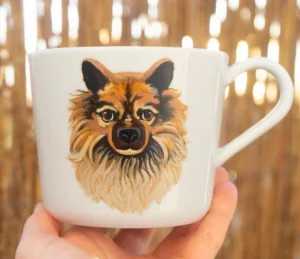
- What format - for the wall, for a chest of drawers, for a mug
The more detail, the fewer rounds of questions and the sooner we start. If you want the same portrait later on a mug with your pet’s portrait, it’s worth mentioning at the start - I’ll then adjust the composition so it looks good in both formats.
How to order a pet portrait - in practice
When choosing an artist, it’s worth:
- Checking their earlier work and style - whether their work moves you, whether it’s consistent, whether they also paint animals
- Choosing the photo that best captures your pet’s personality
- Deciding which elements should be emphasised (eyes, coat, posture, accessories)
- Setting a timeframe - a portrait usually takes 2-4 weeks from sketch approval
The choice of photo is crucial to the project’s success, and communication with the artist ensures the finished work meets your expectations. If you have everything ready, the fastest way to start is through the contact form.
My process
- Contact and sending photos
- An individual quote based on the scope of work
- A composition sketch to approve - this is where we choose the final pose and composition
- Painting the portrait (usually 2-4 weeks)
- A low-resolution preview to approve - minor corrections
- The final file or a finished print in your chosen format
I work digitally in Procreate. The client gets a high-quality file to print or a finished fine-art print - depending on what we agree.
What sets a “good” portrait apart from a “great” one
It’s always the details that go beyond technique. A great portrait has specificity - this isn’t “some golden retriever”, this is your Rex. You recognise it in a way that’s hard to explain but you feel it instantly. You look and you know - yes, that’s him.
You can’t do that with a shortcut. It takes good references, a good brief, time to work and an artist who genuinely cares. AI won’t generate it, though it tries. A ready-made template - “insert a photo of a dog, pick a style” - won’t do it. It’s done by a person who looks at the photos of your pet and sees a specific creature in them.
Custom pet portraits are a way to immortalise a beloved pet in the form of art. Thanks to professional work and well-chosen photos, a unique piece is created that conveys the animal’s character and remains a lasting keepsake for years.
Want to order a pet portrait? Write to me - I reply within 48 hours.
More in portrait
All portrait →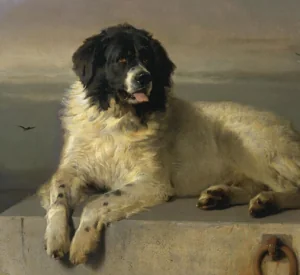
Portrait
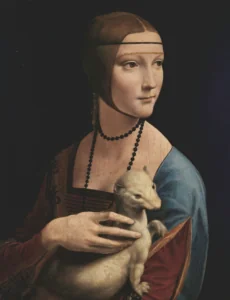
Famous artists who painted animals - the tradition of the animal portrait
George Stubbs, Rosa Bonheur, Sir Edwin Landseer - the artists who shaped the tradition of portraying animals. How their work inspires today's pet portraits.
Portrait
Animal portraits across cultures - symbolism and meaning
Lions in Egyptian art, dragons in Chinese, stags in medieval heraldry. How different cultures portrayed animals and what it tells us about their meaning.
Portrait
Animal portraits - the most popular techniques
Oil, watercolour, digital art - which technique to choose for a pet portrait? A comparison of techniques from the perspective of an artist who works with animal portraits.
Start a project
Got a project? Let's talk.
I make art that stays - with emotion and attention in every project. Children's book illustration delivered worldwide, wedding and B2B event live painting across Poland - every project starts the same way: an inquiry, a conversation, a decision. Write to me directly. The Bujnowłosa studio is me and a decade-plus of practice.