
Portrait · 9 min read
How to choose an artist for a wedding portrait - a guide for the couple
The choice of artist shapes how you'll remember your wedding day. What to look out for when choosing, what questions to ask and what to expect from a good portraitist.
· Anna Karwala
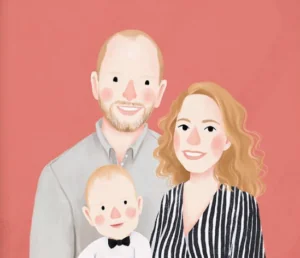
When planning a wedding, many couples decide to immortalise this special moment in the form of a portrait. It’s not only a beautiful keepsake but also an investment in a work of art that will be with you for years. To achieve the effect you imagine, though, finding the right artist is crucial. A portrait hanging in the living room will remind you of the wedding every day - either delighting you or irritating you, depending on how well the choice of artist was made.
Why the choice of artist is crucial
Every artist has their own individual style, which can differ significantly depending on technique and approach to the figure. One sticks to classic realism, another stylises, yet another moves into impressionist blur, and someone else prefers a minimalist line. The same portrait of you painted by three different portraitists would come out completely differently - and each could be beautiful, but only one of them would be “yours”.
In my studio I often hear: “I like everything you do”. That’s a kind compliment, but in practice it doesn’t help much. It’s worth narrowing the choice to a specific style even before we start talking about price and deadline. If you’re also considering painting guest portraits live during the reception, the process of choosing an artist looks a little different than for a classic commissioned portrait - there, speed and a sure hand matter, and a “studio” portfolio isn’t enough.
Beyond style, communication is also important. A good portraitist isn’t only a skilled craftsperson but also someone who can listen to expectations and translate them into an image. During the first conversation, it’s worth making sure they understand your needs and can take them into account in their work.
The artist’s experience in painting wedding portraits is no small matter either. Engagement, wedding and family portraits are a specific genre - you paint a couple in a dress and a suit differently than a child in a sandbox. As you browse the portfolio, check how many wedding portraits specifically this person has to their name.
How to find an artist who will meet your expectations
The search can be time-consuming, but there are a few proven methods that shorten the process.
Personal recommendations
Above all, it’s worth using referrals. Asking friends, family or other couples who have commissioned a portrait whether they can recommend a trusted artist is the most reliable way. Personal recommendations are often the best option, because they carry an element of trust you won’t build by scrolling Instagram. If a friend says “I was happy, they met the deadline, they painted us beautifully”, you know far more than you could read from a profile.
Searching online
If you don’t have any referrals to hand, it’s worth searching the internet. Most often people find me through:
- Instagram and Pinterest, where you can view a whole portfolio in one scroll
- Google searches, but here you have to be careful - rankings don’t always reflect quality
- Specialised forums and groups for couples preparing for a wedding
- Recommendations from wedding photographers, who often know who’s worth working with
I recommend starting with Instagram. It lets you quickly judge whether the artist’s aesthetic suits you, check how they communicate with their audience and whether they post new work regularly.
Art galleries and exhibitions
Another option is visiting local galleries. Many artists exhibit their work there, which gives you the chance to see the work in person and talk to them directly. It’s a different kind of contact than through a screen - you see the texture of the paper, the real colours, the scale.
What to look out for in a portfolio
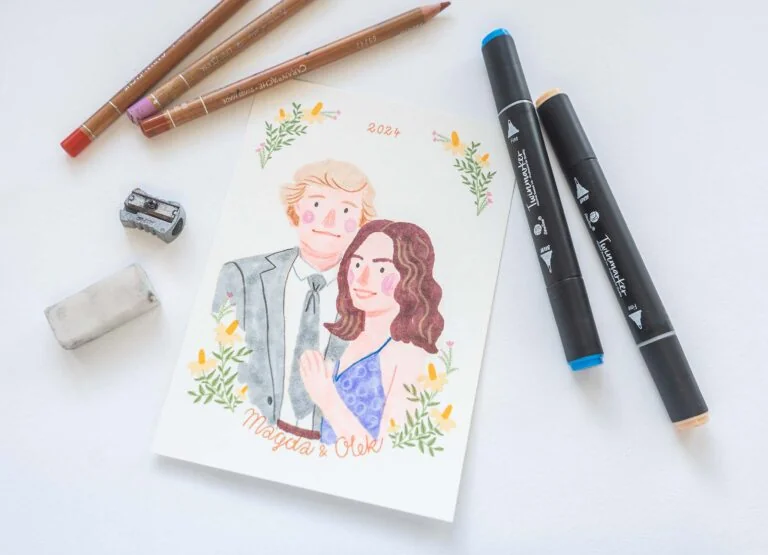
Consistency of style
A good portraitist has a recognisable “language”. If you see six portraits and each looks as if it were painted by someone else - that isn’t necessarily versatility, sometimes it’s a lack of their own vision. An artist with an established aesthetic gives you the assurance that your portrait won’t be an experiment.
Quality of detail
Check how the artist handles the difficult elements: the eyes, the lace of the dress, the flowers in the bouquet, the texture of the suit. That’s where the craft shows. It’s easy to paint a general outline of a figure - harder to render the fabric of the veil, the shine of the ring, the light reflected in the bride’s eye.
Emotion on the face
A technical, “photographic” portrait can be boring. A portrait that draws you in has a certain warmth - the look of an eye, a slight smile, a characteristic tilt of the head. You can’t fake that or generate it with AI. It’s the result of the artist actually having looked at people.
Experience with wedding portraits
Check how many wedding portraits specifically they have to their name. Some painters portray children beautifully but cope worse with a couple in elegant attire. It’s a completely different kind of work.
Questions worth asking
Before making a decision, it’s worth asking:
- How long will the work take from order to finished piece?
- Will I get a sketch to approve before the final painting?
- How many rounds of revisions are included in the quote?
- In what format will I receive the work (digital file, print, original)?
- Do we sign a contract and what exactly does it cover?
- How does payment work (deposit, deadlines, method)?
In my studio I answer each of these questions before the client asks - because I know these are exactly the matters that later cause misunderstandings. The more we settle at the start, the fewer problems later.
Red flags - what to watch for
You should be wary of:
- No portfolio or very few works - this could be a beginner practising on your wedding
- Unclear communication - if they don’t answer questions before the order, after the order it’ll be even worse
- No contract or terms - this protects both sides, not just the artist
- An unrealistic deadline - a good portrait takes time, if someone promises “a week”, something’s wrong
- No specific quote - a vague “it depends” with no price range is a sign the artist doesn’t know how much work it will cost them
- An inconsistent portfolio - if the works on the profile look as if they came from several different people
Communication - that’s a competence too
Talent is one thing. The other is the ability to listen. The best portraitists I know ask a lot of questions at the start of the conversation. What mood do you want to capture? Are you after realism or more of an “atmosphere”? Are there any details that absolutely must be on the portrait? What kind of relationship do you have - do you look at each other, or does each of you look into the lens?
If an artist says right away “leave it to me, I know how to do this” - that’s a red flag. Your portrait is your story, and the artist is the tool that tells that story. Not the other way around.
Price isn’t everything
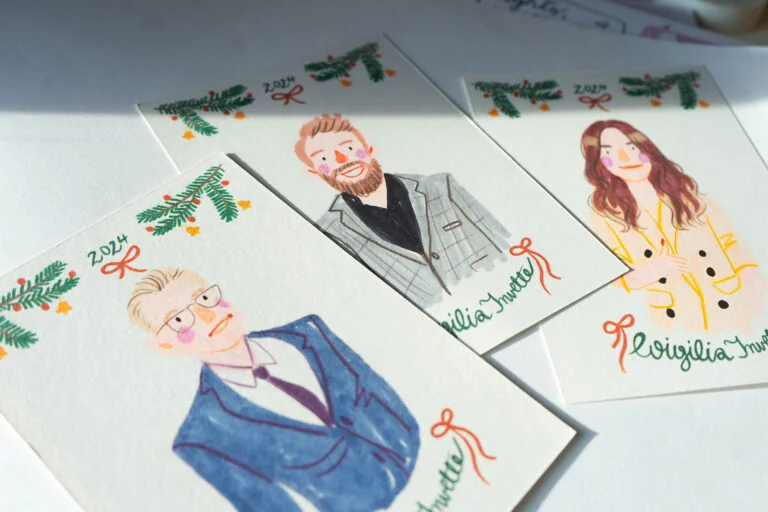
The most common mistake is choosing the cheapest offer. A wedding portrait will be with you for life. Saving money today can mean that in five years you’ll take the portrait off the wall because “it somehow doesn’t fit”.
With a good portraitist, the price reflects their experience, materials, time and reputation. The quote for a custom portrait is individual - because a lot depends on the format, technique, level of detail, number of people in the portrait and specific wishes. There’s no point asking for a “price list” the way you ask about the price of a pizza - the portrait is made for you, not by a fixed recipe.
Ask too about extra costs - the frame, framing, delivery, courier shipping. Sometimes the price of the portrait itself looks attractive, and then so many extras get added that the final amount is completely different.
Professionalism - a few specifics
A professional artist:
- Has a formal contract specifying the terms of cooperation, the deadline, the price and the scope of work
- Communicates clearly and replies within a reasonable time
- Shows a sketch to approve before starting the “clean” work
- Includes a round of revisions within the quote
- Has clear rules about copyright and licensing
The absence of any of these elements is a sign that you’ve landed not on a real portraitist but on someone who paints on the side.
The decision is yours
Choosing an artist is an emotional decision. Look at the portfolio, but also listen to your own intuition. If someone’s work “speaks” to you from the first glance - that’s a good sign. A wedding portrait should be yours, not “objectively good”. Better to have a portrait that moves you than one everyone praises but leaves you indifferent.
Trust yourself. If you feel “this is the person” - you’re probably right. And if you have doubts, it’s better to keep looking than to force it. The portrait will be with you a long time - it’s worth spending one extra week on the choice.
Want to commission a portrait? Write to me - I reply within 48 hours.
More in portrait
All portrait →
Portrait
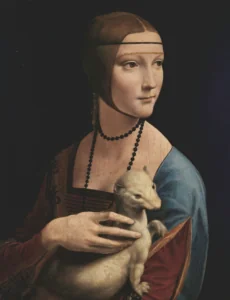
Famous artists who painted animals - the tradition of the animal portrait
George Stubbs, Rosa Bonheur, Sir Edwin Landseer - the artists who shaped the tradition of portraying animals. How their work inspires today's pet portraits.
Portrait
Animal portraits across cultures - symbolism and meaning
Lions in Egyptian art, dragons in Chinese, stags in medieval heraldry. How different cultures portrayed animals and what it tells us about their meaning.
Portrait
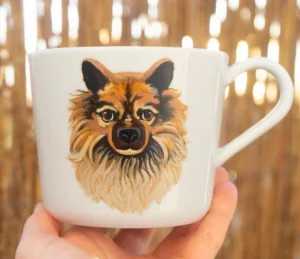
Animal portraits - the most popular techniques
Oil, watercolour, digital art - which technique to choose for a pet portrait? A comparison of techniques from the perspective of an artist who works with animal portraits.
Start a project
Got a project? Let's talk.
I make art that stays - with emotion and attention in every project. Children's book illustration delivered worldwide, wedding and B2B event live painting across Poland - every project starts the same way: an inquiry, a conversation, a decision. Write to me directly. The Bujnowłosa studio is me and a decade-plus of practice.