
Portrait · 9 min read
The history of animal portraits - from caves to today's studios
Animal portraits have been with us for thousands of years. How they evolved from cave paintings, through court art, all the way to today's custom pet portraits.
· Anna Karwala
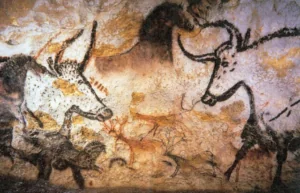
Animal portraits have fascinated people for thousands of years. From cave paintings, through the art of ancient Egypt, all the way to today’s custom dog and cat portraits - the way we depict animals says a lot about our relationship with them. When I paint someone’s pet in the studio, I always think about that long tradition, which begins deep in prehistory and reaches all the way to the tablet now lying in front of me.
The oldest traces - the animal as a symbol of power
The first images of animals appear already in prehistoric art, where wall paintings depicted scenes from the life of wild animals. They were not created only out of artistic impulse but, above all, as part of magical rituals - they were meant to ensure a successful hunt, to tame what was dangerous, to honour the creatures on which human survival depended. Bison, horses, mammoths, deer - all of them ended up on the walls of caves in Lascaux, in Altamira, in Chauvet, painted in red ochre and black charcoal.
In ancient Egypt, animal portraits took on religious meaning. Cats, crocodiles, ibises, bulls - all were depicted as incarnations of deities or sacred animals tied to specific cults. Bastet, the cat goddess, had her own sanctuaries. Anubis, the jackal-headed god, led the souls of the dead. This was sacred art, in which the animal was not a specific Rex or Whiskers but a universal symbol of power, protection, fertility or death.
In the Middle Ages, animals began to appear more often in religious art and heraldry. Images of lions, eagles and dragons adorned the coats of arms of noble families, and illuminated manuscripts contained scenes from animal life as symbols of moral values - the cunning fox, the humble sheep, the deer as an allegory of the soul seeking God. Portraits of household pets were rare. Animals at that time mostly served practical functions, not companionship. A dog was meant to hunt, a cat to catch mice, a horse to pull. The image of a specific, individual animal practically did not exist - unless it was a king’s favourite, and even then more likely in the background of the owner’s portrait.
The Renaissance and the Baroque - the animal enters the salon
The Renaissance brought a significant change. Artists such as Leonardo da Vinci were known for their interest in anatomy and nature, which shaped their realistic approach to depicting animals. Leonardo sketched horses, birds, cats in motion - trying to understand how their bodies worked. Animal painting gained in precision, and the pet portrait became more refined, with an emphasis on detail and emotion. The individuality of animals finally began to be appreciated - this is a specific dog, not a “dog in general”.
In the Baroque era, dominated by dynamism and drama, animals were often depicted in hunting scenes. The wealthy aristocracy commissioned portraits of their hunting dogs and horses - these were symbols of prestige and social status. Owning a purebred dog with a portrait on the wall testified to the owner’s position just as much as a portrait of his wife or son did. Rubens and Velazquez painted animals with the same attention they gave to people - with full expression in the eyes, an awareness of the mass and weight of the body, a care to capture a specific character.
It was in this era that the animal stopped being merely a symbol and became a model. The dog lying at a duchess’s feet had a specific face, specific ears, specific paws. You could recognise it. That was the first step toward what we now call the pet portrait.
The 19th century - the first true “animal portraitists”
In the 19th century, the genuine profession of animal portraitist was born. George Stubbs, an English painter, painted horses with anatomical precision - he studied them so closely that, before painting a thoroughbred stallion, he could spend weeks on observation and anatomical dissection. Rosa Bonheur, one of the best-known artists of the period, portrayed cattle herds and scenes from the life of horses with romantic sweep - her “The Horse Fair” still hangs in the Metropolitan Museum. Sir Edwin Landseer specialised in the dogs of the royal court - his portraits of Queen Victoria’s hunting dogs defined for decades the way the English think about their four-legged companions.
It was in this era that the animal stopped being an accessory in a person’s portrait and became the main protagonist. These works are classics of the genre today - and at the same time the mothers of the modern pet portrait.
The present day - the animal portrait as an expression of emotion
Today’s custom animal portraits draw on this rich history, but they also offer entirely new possibilities. In the 21st century, the animal portrait is no longer reserved for the elite. Anyone can order a portrait of their pet - a dog, a cat, a rabbit, a parrot, a ferret. Artists, using both traditional techniques and digital tools, can capture not only the appearance but also the character of an animal.
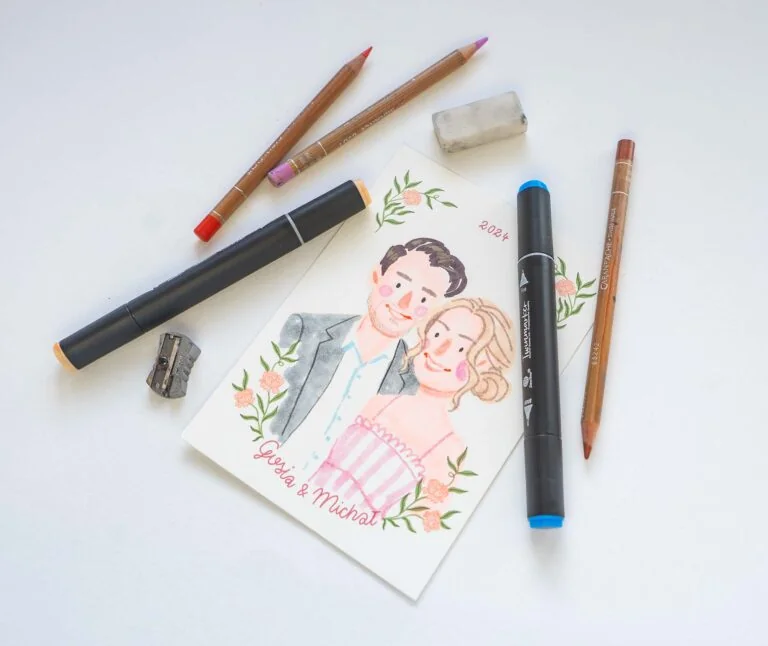
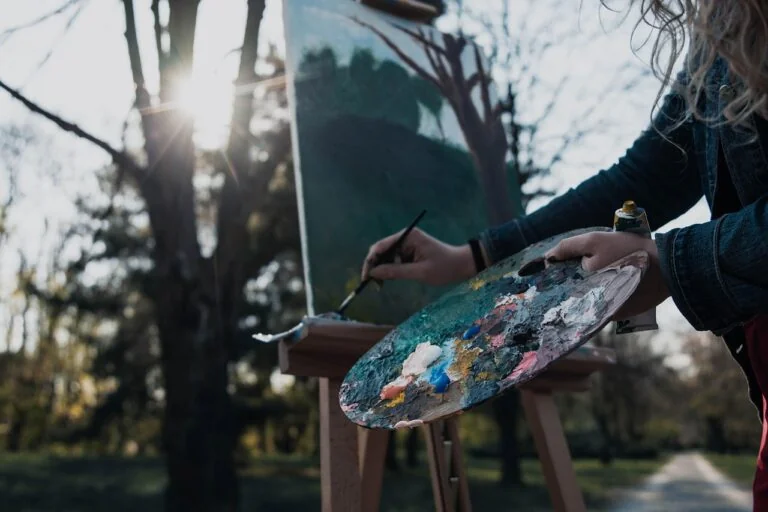
The most popular techniques used for animal portraits today are:
- Oil painting - ideal for people who value tradition and the classics, gives deep colour and texture
- Watercolour - delicate and subtle, perfect for capturing the detail of fur and a gentle gaze
- Digital art - a modern approach that allows full artistic freedom and easy corrections
I work mostly digitally, on a graphics tablet in Procreate. That lets me experiment freely with style and composition, without the stress of having to “get it right the first time”. The client gets a high-resolution file for printing - as a fine-art poster for the wall or in a smaller format for framing.
Why we keep coming back to this after thousands of years
Clients often come to me with a specific story. A dog adopted from a shelter that changed the life of a whole family. A cat that kept someone company for twenty years and has just passed away. A rabbit the kids brought home that turned out to have more character than all the other animals put together. Each of these portraits inherits something from that long tradition - the wish to immortalise a bond that goes beyond an ordinary everyday memory.
Because a photo is one thing - a smartphone takes dozens of them every day. A portrait is something else. A portrait is an act - a decision that this specific dog, this specific cat, this specific creature deserves for me to give it my time and attention. Twenty thousand years ago a person in a cave painted a bison because the bison mattered. Today a parent commissions a dog portrait because the dog mattered. It’s the same impulse, on a completely different scale.
What has changed, and what has stayed
Availability and techniques have changed. From court studios, the portrait moved into the home of an ordinary family. From oil and watercolour, partly onto the graphics tablet and high-quality fine-art print. A pet’s everyday life can also be captured in a less dignified form - on a hand-painted mug that keeps you company with every coffee, or on a postcard sent to grandma.
The way we talk about it has changed too. Once, a hunting dog’s portrait was a declaration of status - “I can afford a purebred hound worthy of Velazquez”. Today, a portrait of a shelter dog is a completely different declaration - “this specific someone matters to me, even though it has no pedigree and doesn’t boost my status”.
What has not changed, however, is the basic motivation. People want to hold on to what they love. Two thousand years ago, Egyptian priests painted sacred cats. Three hundred years ago, aristocrats had their hunting horses painted. Today a mother commissions a portrait of a dog that has just passed away, so that it’s easier for the children to say goodbye. All of this is the same gesture - an acknowledgement that this creature’s presence was real and deserves a form that will endure.
And it seems to me that this is the part of my work I like the most. Not the technique, not aesthetic success, not even client satisfaction - but the fact that I’m in a long chain of people who have painted animals for thousands of years, because animals are worth painting.
Want to commission a portrait of your pet? Write to me - I reply within 48 hours.
More in portrait
All portrait →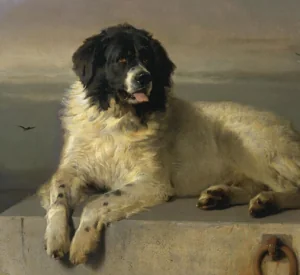
Portrait
Famous artists who painted animals - the tradition of the animal portrait
George Stubbs, Rosa Bonheur, Sir Edwin Landseer - the artists who shaped the tradition of portraying animals. How their work inspires today's pet portraits.
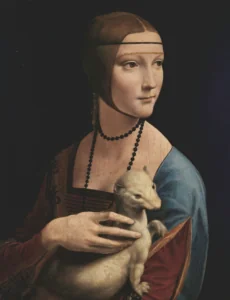
Portrait
Animal portraits across cultures - symbolism and meaning
Lions in Egyptian art, dragons in Chinese, stags in medieval heraldry. How different cultures portrayed animals and what it tells us about their meaning.
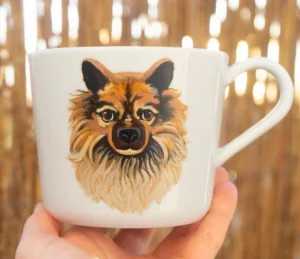
Portrait
Animal portraits - the most popular techniques
Oil, watercolour, digital art - which technique to choose for a pet portrait? A comparison of techniques from the perspective of an artist who works with animal portraits.
Start a project
Got a project? Let's talk.
I make art that stays - with emotion and attention in every project. Children's book illustration delivered worldwide, wedding and B2B event live painting across Poland - every project starts the same way: an inquiry, a conversation, a decision. Write to me directly. The Bujnowłosa studio is me and a decade-plus of practice.