
Illustration · 8 min read
Types of illustration - part II
The second part of the guide to types of illustration - pictograms and icons, book illustration, standalone artistic illustration. Focused on art.
· Anna Karwala
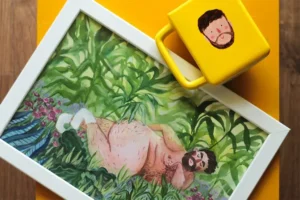
We have part two of the guide to types of illustration. In the first I focused on illustrations where the practical function dominates over expression - photography, realistic illustrations, diagrams. Now I’ll move on to artistic illustration, in which artistic expression goes hand in hand with the practical function - or displaces it completely. This is the territory I work in every day.
Pictograms, icons, signs
I also count pictograms and icons as a type of illustration. Some people will disagree with me - arguing that it’s design, not illustration. But in my view every visual presentation of an idea meant to be recognised is a form of illustration. Only the form is condensed to the maximum.
These elements are characterised by maximum simplification. We encounter them everywhere:
- toilet markings - figure silhouettes reduced to the simplest form
- road signs - a circle, a triangle, a rectangle with minimal content
- icons on websites and in apps - a house, an envelope, a magnifying glass
- workplace safety pictograms - silhouettes with helmets, warning signs
- symbols on packaging - recyclable, wash at 30 degrees
- signs in airports, stations, hospitals
- emoji - the contemporary version of pictograms
They replace a long message and let you take it in in a very short time. A good pictogram is understandable without knowing the language. It’s a very valuable feature in a world of global communication - the “emergency exit” sign has to be understood by a Pole, a Japanese person and a Brazilian alike.
Designing pictograms is a specific art. You have to reduce the image to the minimum, but in a way that keeps the recognisable core. A man and a woman on a toilet door - two circles, two triangles, two different silhouette shapes. That’s enough for the whole world to know which one to enter.
Due to the style of execution, a given illustration can be classified as a pictogram or sign, but it doesn’t have to fulfil a practical function. It can be a simple artistic invention of the author that only “looks” like an icon. Contemporary art readily draws on the aesthetic of icons - artistic posters, T-shirts, stickers imitating the pictogram style but communicating something completely different from classic signs.
The difference between a pictogram and an icon
Although we often use the words interchangeably, there are subtle differences:
A pictogram is a universal sign, culturally understood, often standardised. Road signs, safety markings, symbols on packaging.
An icon is an interface sign, designed for a specific system (an app, a site, a brand). The “settings” icon in iOS is something different from the “settings” icon in Android, though both serve the same function.
A sign is a broader term, covering all graphic symbols fulfilling the function of a message - from a company logo to the international radiation warning sign.
In practice these terms interweave and most people (myself included) use them interchangeably. But theoretically the differences exist.
Book illustration
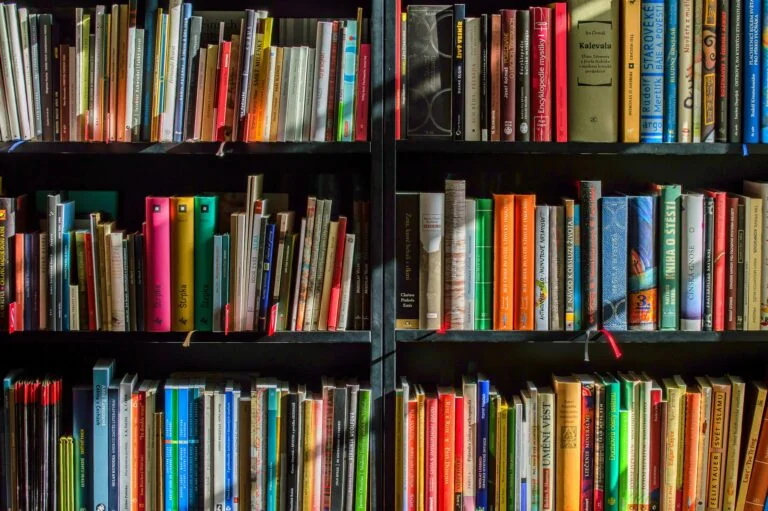
In books, illustrations from the previous categories appear, but here I mean specifically literary illustration - illustration for a poem, for prose, for a fairy tale.
This category is especially creative. The work is based on the text, but is its artistic interpretation. The book illustrator matches the style of the drawings to the character of the text, which is why you can’t say whether realism or simplification will reign here. An educational fairy tale for a 3-year-old and a teen novel require completely different approaches.
What sets book illustration apart
Creating illustrations for books requires:
- careful analysis of the content
- understanding the presented world
- adapting the style to the target group
- aesthetic consistency throughout the book
- collaboration with the author, editor, sometimes the publisher
- knowledge of the specifics of book printing
- the ability to work with the page layout
Illustration in a book plays many roles, but above all it makes the book more visually appealing and supports the narrative. In a children’s book it often tells part of the story itself - a child who can’t yet read follows the plot through the pictures. In a book for adults illustration becomes a complement to the text, an accent, a moment to breathe.
This is my main domain - book illustrations are the projects I work on most often. I start every project with a longer time spent with the text. You can’t illustrate a book you don’t understand well. And to understand it - you have to read it several times, in different moods, at different times of day.
Types of book illustration
Within book illustration itself you can distinguish several subgenres:
Narrative illustration - presents specific scenes from the plot. It dominates in children’s books, where the picture literally shows what’s happening at a given moment of the text.
Atmospheric illustration - doesn’t show a specific scene, but builds a mood. Common in poetry, where a specific scene doesn’t exist, but there’s an emotion to convey.
Symbolic illustration - presents an idea or motif, not a specific action. Used in essay and philosophy books, in metaphorical poetry.
Cover illustration - a separate category, because the cover serves marketing functions, not only narrative ones. It has to sell the book and at the same time not lie about its contents.
Vignette and initial - small illustrations at the start of a chapter or between paragraphs. A tradition reaching back to medieval manuscript illumination.
Illustration in itself
Illustration can also appear on its own. What does it illustrate then? The artist’s thoughts, inspirations, emotions. It doesn’t have to have a practical use.
It’s enough that it pleases the eye as:
- a poster on the wall
- decoration of everyday objects
- a print on a T-shirt
- an illustration on a mug
- a greeting card
- a sticker
- an element of a brand’s visual identity
- an illustration on an album cover, in a music video
- a mural on the wall of a building
In this variant illustration approaches art - but is set apart by its functional intent. A wall poster is meant to please the eye in a specific context (a flat, an office, a commercial space). Gallery art has no such constraints, because it serves no function other than its own existence.
Authorial illustration
The illustrator can also create social and propaganda illustrations - those that warn, support, convey various ideas. Here illustration becomes a tool of activism or social education. Election posters, health campaigns, anti-war posters, ecological illustrations - all of these have a strongly expressed message and at the same time a specific addressee.
This type of illustration requires the artist’s commitment to the subject. You can’t illustrate an idea well if you don’t believe in it. The most famous social posters in history (from the Solidarity posters to contemporary ecological campaigns) were made by artists genuinely interested in the subject.
Press illustration
A separate subcategory that combines authorial illustration with book illustration. An illustration in a newspaper or magazine has a specific article to illustrate (like book illustration), but it also has to express a point of view (like authorial illustration). A heavyweight genre in which some of the world’s most famous illustrators work - from Sempé to Christoph Niemann.
A word about classification
Many books could be written about each of the types of illustration presented. I have to point out that the whole naming and division is my own invention - don’t treat this as a scientific article. I wanted to show you in brief what illustration is and what types it has, based on my professional experience and observation of the market.
The boundaries between these categories are fluid. A social poster can be artistic and pictographic at the same time. An illustration for an adult book can simultaneously be a standalone work of art. A metro map is a technical diagram and at the same time a design icon. A mural on a building wall is authorial illustration, but also an element of urban planning.
The fact that not everything can be unambiguously pigeonholed is a strength of the field, not a weakness. The most interesting work is often created on the boundary of categories - when the illustrator tries to combine the style of one type with the function of another. A children’s book that looks like an art gallery. A social campaign that looks like a fairy tale. A city map that looks like a watercolour.
What this means for those commissioning
If you’re planning to commission an illustration and you’re reading both texts in this series, you’re probably asking: “what’s in it for me?”. A few practical conclusions:
Know what you need before talking to the illustrator. Do you need a diagram (technical illustration) or a mood (authorial illustration)? Do you want something that serves a function, or something that serves an emotion? The clearer you know this, the better the result.
Look for an illustrator specialising in your category. A great children’s book illustrator may not be the best choice for a schematic infographic. A great icon designer may not be able to paint an illustration for a fairy tale. Specialists give better results.
Don’t demand everything at once. Sometimes the client wants the illustration to be artistic, and schematic, and marketing, and atmospheric. This usually leads to an illustration that’s nothing in particular. Decide what’s most important and let the illustrator focus.
Appreciate the variety of the field. Illustration is an enormous world in which many different types of creators work. Not everyone has to paint fairy tales for children. Every specialisation has its value.
A practical decision map
If you’re trying to decide what kind of illustrator to look for, test yourself with a few questions.
Does the project have a plot or narrative? If so - look for a book illustrator with a narrative portfolio. Check whether they can show characters consistently across many scenes.
Is the project meant to be recognisable in milliseconds? If so - you need an icon or pictogram designer. Information design is a different skill from illustrating scenes.
Is the project mainly meant to evoke an emotion? Then you’re looking for an authorial illustrator with a strong individual style. The fit to the mood matters more than technical accuracy.
Is the project meant to promote a brand? You need an illustrator who knows visual identity, not just illustration as such. Illustration in the context of a brand works differently from standalone artistic illustration.
Does the project combine several functions? Then look for a universal illustrator with a broad portfolio. Not everyone can work in many modes - but there are those who like it and choose hybrid projects.
The boundaries are a strength
Returning to the main thought: the boundaries between categories of illustration are fluid, and that’s a good thing. It lets illustrators experiment, combine approaches, create work that doesn’t fit in one box. The best projects often come from exactly this kind of mixing.
For me this boundary is everyday life. I paint mugs (authorial illustration on an everyday object). I illustrate books (narrative illustration). I design icons (technical illustration). I make portraits (on the boundary of authorial and commercial illustration). Each of these projects requires slightly different thinking, but somehow they come together into a coherent professional practice.
Because illustration is not a category - it’s a way of looking at the world. A way in which every thing can be shown, every idea made visible, every emotion captured in a picture. And as long as someone wants to look - illustration will be needed.
How to recognise a good authorial illustrator
If you want to commission an artistic illustration (book, authorial, decorative), a few signals that you’ve found a good specialist.
They have a consistent individual style. The strongest illustrators are recognisable from a single picture. This doesn’t mean they can’t work in different conventions - it means they have their own visual DNA that comes through. You can see this style in the portfolio.
They ask questions about the brief, they don’t start drawing right away. A good illustrator wants to understand the project before making the first decision. If someone is ready to “draw anything” without a brief - that’s not the illustrator.
They show the process, not just the final result. Sketches, alternatives, work stages - this is testimony to professionalism. The magic isn’t that the illustration appears out of thin air. It’s that a thought-out process stands behind it.
They’re aware of references. A good illustrator knows the history of illustration, the world of other illustrators, the context in which they create. This doesn’t mean they copy - it means they know what they’d copy if they wanted to, and consciously move away from it.
They speak openly about their limitations. The best illustrators know what they don’t do well. They don’t want to draw mecha-robots if their style suits delicate watercolours. They don’t take on a project that doesn’t fit their skills. It’s a sign of professionalism, not weakness.
Have a question about illustration or a specific project? Write to me - I reply within 48 hours.
More in illustration
All illustration →
Illustration
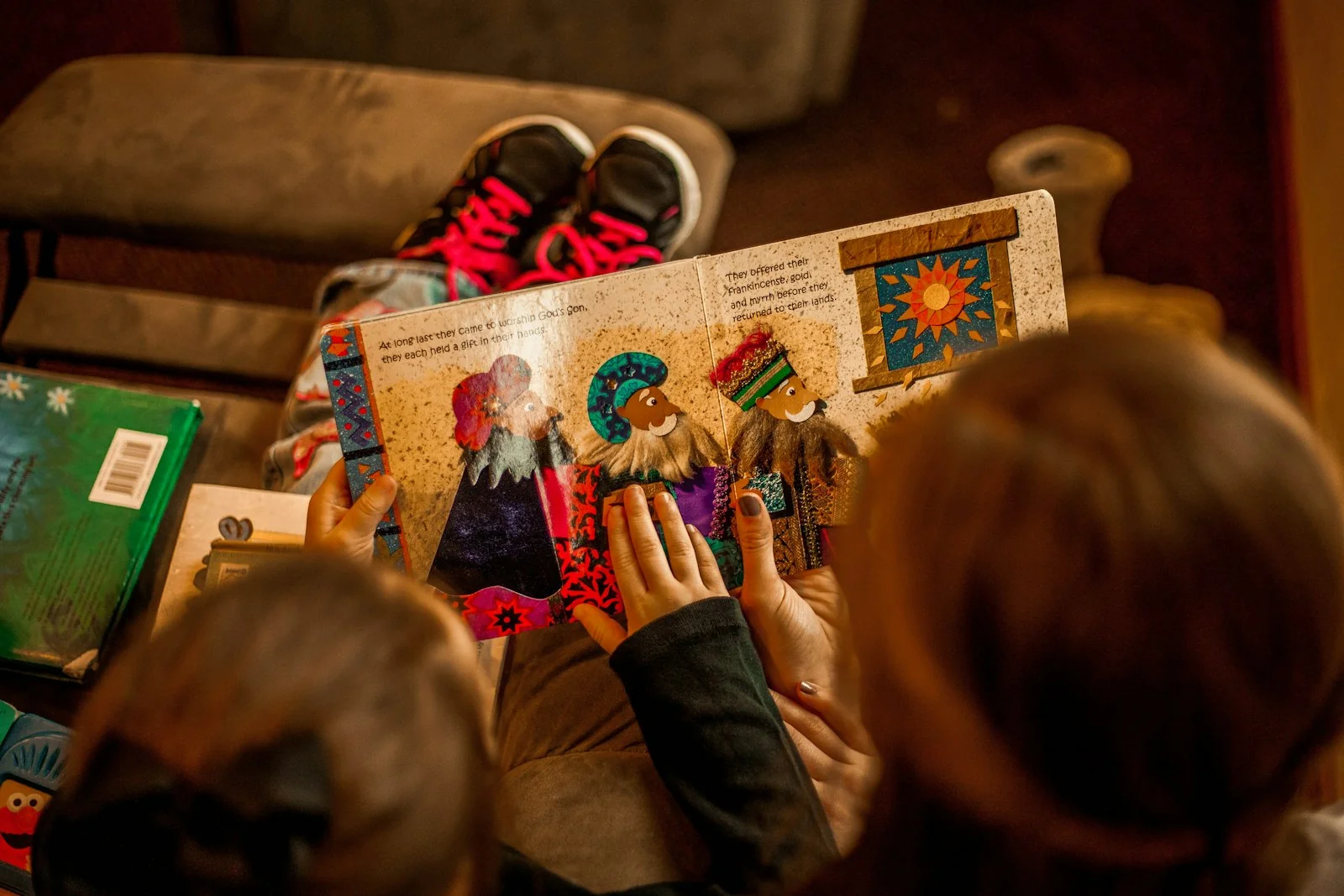
How to publish a children's book - the complete guide
What you need to know to publish a children's book - publisher vs self-publishing, editing, illustrations, print, ISBN, distribution and promotion. Step by step.
Illustration
How to prepare a brief for an illustrator - a guide for authors
The brief is the foundation of working with an illustrator. What it should contain, what to avoid, how to describe characters and scenes - a practical guide for children's book authors.
Illustration
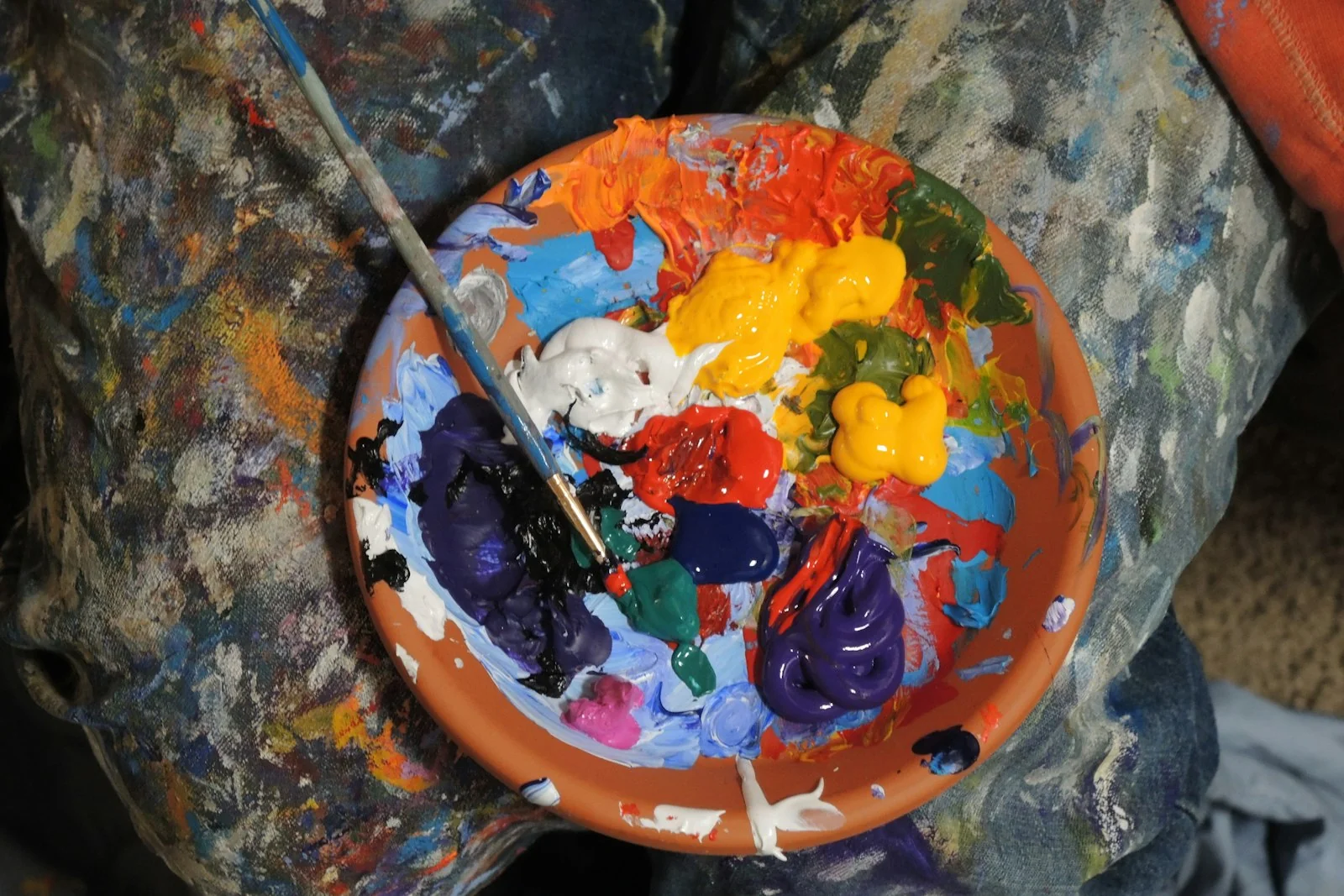
The psychology of colour in children's illustration
How colours affect children's reception of illustrations. Warm and cool tones, contrasts, a palette by age - a practical guide for authors.
Start a project
Got a project? Let's talk.
I make art that stays - with emotion and attention in every project. Children's book illustration delivered worldwide, wedding and B2B event live painting across Poland - every project starts the same way: an inquiry, a conversation, a decision. Write to me directly. The Bujnowłosa studio is me and a decade-plus of practice.