
Illustration · 10 min read
How illustration differs from painting - a guide for beginners
Illustration vs painting - two art forms, two different goals. What connects them, what divides them, where the boundaries blur. A practical guide.
· Anna Karwala
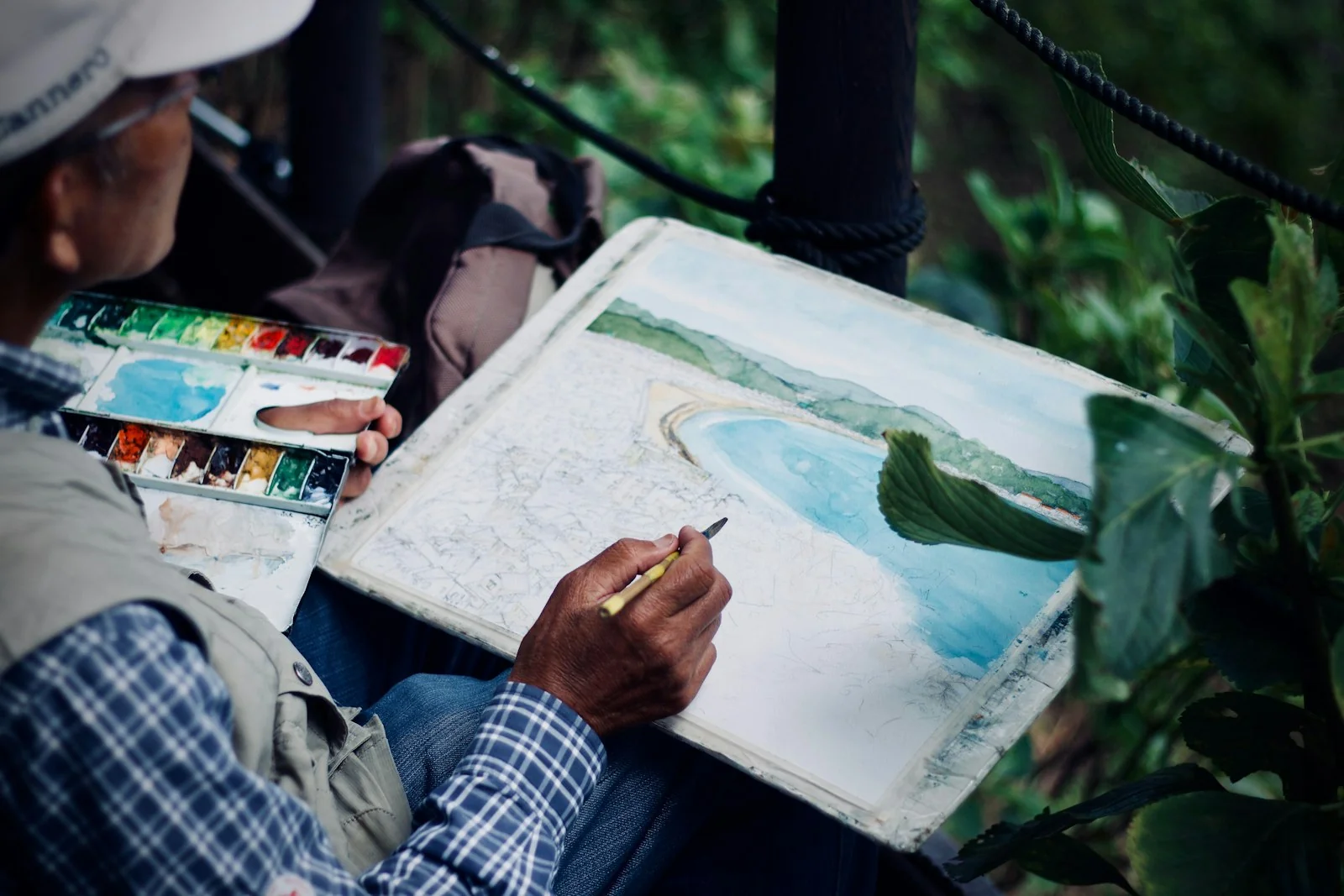
Have you ever wondered why we call some images illustrations and treat others as painting? At first glance the difference may seem academic, but in practice these two forms serve fundamentally different purposes and have distinct functions in our daily lives.
I’ve worked as an illustrator for almost a decade. Every day I meet this question from clients, beginning artists and even parents looking for illustrations for their children’s books. I want to share what I see from the perspective of the profession - and explain what illustration is, and what painting is.
What illustration is
Illustration is an image that has a specific communicative purpose and most often coexists with text or a message. Unlike painting, which can exist for its own sake, illustration always explains, presents or supports a particular concept.
Key features of illustration
A narrative function - every illustration tells a specific story or presents a particular situation. It can be a scene from a fairy tale, an instruction manual, a scientific diagram or a product advert. Illustration is never random - it always has a defined purpose. Telling a story through an image is its fundamental element.
A connection to text or a concept - illustrations are created with a specific project in mind: a book, an article, a campaign, packaging. Their task is to enrich, complement or replace text in conveying information. This close bond with textual or conceptual material clearly distinguishes illustration from an autonomous work of art.
A specific audience - I illustrate with a defined audience in mind. Illustrations for children’s books have a different style and colour palette than medical or technical illustrations. Understanding the target group is key to the success of every project.
A commercial character - most illustrations are created on commission and are meant to fulfil specific business or communicative functions. That doesn’t mean lesser artistic value - it means a different purpose.
What painting is
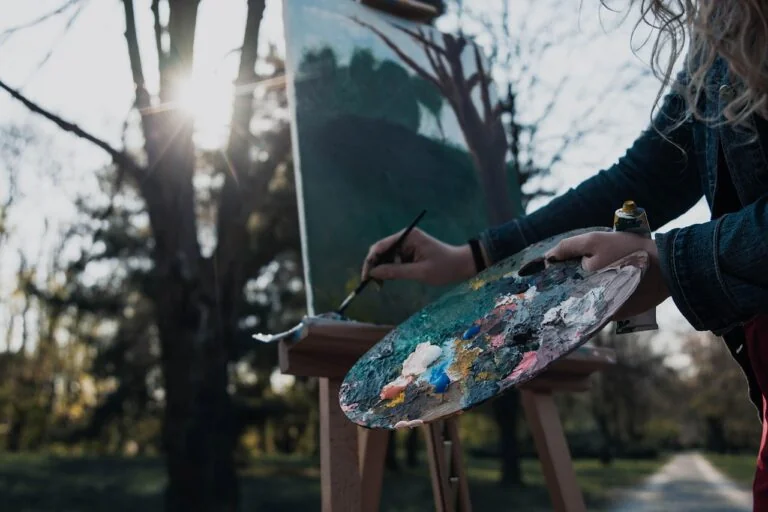
Painting is an art form that can exist independently of any external context. The painter creates first and foremost to express their emotions, artistic vision or philosophical reflection.
The characteristics of painting
Autonomy - a painted work needs no additional context to be understood. It can express abstract ideas, emotions or simply be artistic expression. It exists on its own, independent of text or any specific practical purpose.
Personal expression - the painter above all expresses themselves, their experiences and their way of perceiving the world. It’s a deeply individual approach to creation, where the artist’s worldview is key, not the requirements of an external project.
Open interpretation - painting can be interpreted in many ways by different viewers. There is no single “correct” interpretation. Each viewer receives the work through the prism of their own experiences.
Aesthetic value - the main goal of painting is often to evoke an aesthetic, emotional or intellectual impression in the viewer. The beauty of form becomes the goal, not the means.

Key differences between illustration and painting
Purpose and function
Illustration communicates specific information, supports text, has a practical purpose, solves a communication problem. Painting expresses the author’s feelings, exists for its own sake, has an aesthetic purpose, provokes reflection.
The creative process
When I work on an illustration, I start from the client’s brief. I have to understand the message, the audience, the context. Then I create a concept that best realises these goals. The whole process is planned, structured, aimed at a specific objective.
When I paint for myself - a portrait or a landscape, say - the process is completely different. I start from an emotion or impression I want to express, and I let the image evolve organically. There are no external constraints beyond my own technical abilities.
Audiences and context
Illustration is addressed to a specific group. Illustration for young children differs stylistically from scientific or advertising illustration. Every constraint regarding the audience affects the artistic choices.
Painting reaches a varied public, where everyone interprets it in their own way. The painter doesn’t have to limit themselves to one target group, which gives much greater freedom.
Constraints and creative freedom
Illustration is subject to numerous constraints: the project budget, the client’s preferences, technical specifics (size, format, palette), the target group, the deadline. Painting offers full freedom in choosing the subject, freedom of technique, no time pressure and complete control over the process.
Is illustration a “less valuable” art?
This is a common misconception. Illustration is not a lesser art form than painting - it’s simply a different form of expression with different functions. Many illustrations show remarkable artistic qualities and require enormous technical skill.
Just look at the work of the great historical illustrators:
- Norman Rockwell - his illustrations on the covers of “The Saturday Evening Post” combine technical precision with deep humanism
- Maurice Sendak - the illustrations for “Where the Wild Things Are” are masterpieces of artistic expression
- Arthur Rackham - his illustrations for classic fairy tales set the standards of beauty in illustration art
Their work today is valued no less than works of painting and is found in the world’s most important museums. This is proof that the artistic value of illustration is no smaller - it’s simply directed elsewhere.
When the boundaries blur
In practice the line between the two forms is not always sharp. There are many cases where the two forms intersect.
Narrative painting - some painted works tell specific stories, like the works of Pieter Bruegel the Elder or Paolo Uccello. They have a narrative character, but were created as autonomous works of art, without external guidelines. A narrative function does not eliminate artistic autonomy.
Artistic illustration - especially in premium editions, illustrations show such strong aesthetic qualities that they function simultaneously as works of art. You can create illustrations that fulfil a practical function while retaining remarkable artistic value.
Comics and graphic novels - they combine the narrative function of illustration with the artistic values of painting. They require narrative thinking, precision in communication, and at the same time they express the creator’s artistic vision.
Contemporary applications
Where we encounter illustration
In everyday life illustrations are everywhere:
- publications and magazines, including children’s books
- marketing materials and product packaging
- digital resources - websites, apps, social media
- educational materials and textbooks
- video games, animated films, extended universes
- medical diagrams, scientific visualisations
Where we encounter painting
Painting functions mainly in the sphere of art for art’s sake:
- art galleries - as works for contemplation
- private collections - investments, personal galleries
- public space - murals, installations, street art
- home interiors - decoration, an expression of the owners’ individuality
- museum institutions - historical and contemporary collections
Techniques - similarities and differences
Shared techniques
Both illustrators and painters can work with many techniques:
- watercolour - transparency and fluidity
- oils - depth of colour, layering
- acrylic - versatility, fast drying
- pastels - richness of texture and saturation
- charcoal and pencil - precision, detail
- mixed media
Techniques characteristic of illustration
In the digital age, illustration has developed new technological possibilities:
- digital painting - Procreate, Photoshop, Clip Studio Paint (in my case the tablet and Procreate dominate)
- vector illustration - Adobe Illustrator, ideal for commercial graphics
- digital collage - combining photography and drawn elements
- 3D modelling - for technical, fantasy and architectural illustrations
The difference lies not in the technique itself, but in the approach to its use. The illustrator selects tools for a specific project, taking into account the deadline, budget and client requirements. The painter experiments to express a vision, without these practical constraints.
Illustration in practice - my process
When I illustrate a fairy tale for children, my process looks like this:
- Analysing the text - I read the story carefully, identify key moments, emotional shifts, subtle elements I can enrich visually.
- Developing the characters - I consider how they look, what their personality is, what emotions they express. I sketch many variations until I find the right visual code for each character.
- Adapting the style to the age group - different colours and forms for three-year-olds, more complex details for eight-year-olds.
- Working with the author and publisher - I take their notes and suggestions into account, sometimes discussing a concept that doesn’t match the editor’s vision.
- Final execution - an illustration that tells the story, supports the text and stirs emotion in the youngest reader.
In personal work the process looks completely different - I start from emotion, the work evolves naturally, without external constraints.
How to recognise good illustration
Good illustration is characterised by:
- a clear message - quick understanding of the intent; good illustration needs no extended explanation
- fit to the audience - the style, colours and form match the target group
- harmonious cooperation with the text - it complements, neither overwhelms nor stays in the shadows
- high quality of execution - correct proportions, perspective, composition
- its own character - a recognisable style, an artistic signature
Combining both paths
Many people successfully combine the profession of illustrator with personal painting. In my case commercial illustration provides a stable income and lets me develop technical skills under time pressure. Personal painting gives space for artistic expression and experimentation without constraints. One supports the other - skills gained in illustration help in painting and vice versa, creating an artistic synergy.
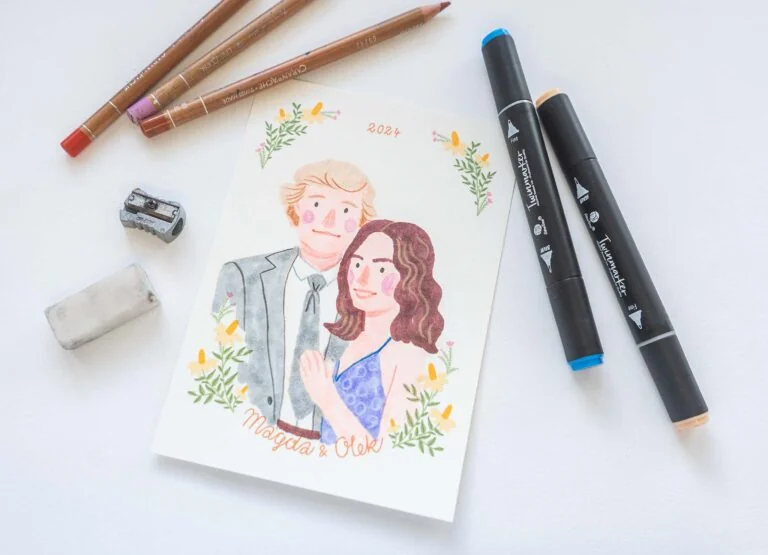
For me both paths teach something different about light, composition and emotion. Some of my work also goes into private interiors in the form of wall posters - an interesting place where illustration begins to function on terms closer to painting.
Summary
The difference between illustration and painting does not indicate a hierarchy of value. They are two equal, though different, forms of artistic expression:
- illustration serves communication, education, practical visual solutions - it’s a functional art that makes our life more understandable and beautiful
- painting serves expression, contemplation, spiritual enrichment - it’s art for art’s sake, which enriches intellectual and emotional life
Both require talent, technical skill and constant development. Both have their place in culture and society. The choice between them is not a matter of “better” or “worse” - it’s about different creative temperaments and different goals.
If you’re wondering about your own path, ask yourself: are you more drawn to solving communication problems through art and working with clients? Or do you prefer full creative freedom and experimentation without external constraints?
And remember - nothing stops you from exploring both paths at once. Art is a journey, not a destination.
Thinking about commissioning an illustration? Write to me - I reply within 48 hours.
More in illustration
All illustration →
Illustration
How to publish a children's book - the complete guide
What you need to know to publish a children's book - publisher vs self-publishing, editing, illustrations, print, ISBN, distribution and promotion. Step by step.
Illustration
How to prepare a brief for an illustrator - a guide for authors
The brief is the foundation of working with an illustrator. What it should contain, what to avoid, how to describe characters and scenes - a practical guide for children's book authors.
Illustration
The psychology of colour in children's illustration
How colours affect children's reception of illustrations. Warm and cool tones, contrasts, a palette by age - a practical guide for authors.
Start a project
Got a project? Let's talk.
I make art that stays - with emotion and attention in every project. Children's book illustration delivered worldwide, wedding and B2B event live painting across Poland - every project starts the same way: an inquiry, a conversation, a decision. Write to me directly. The Bujnowłosa studio is me and a decade-plus of practice.