
Illustration · 7 min read
Illustration is a field of art
Is illustration an art equal to painting? An illustrator's subjective view on why illustration deserves to be called a work of art.
· Anna Karwala
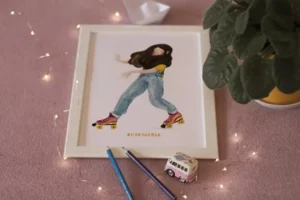
I’m glad to have you in my studio - at least the textual one. I want to give you a closer look at what an illustrator does, and to share a thought that recurs with me regularly: does illustration deserve to be called a field of art? I’ll describe my own experiences, but I’ll also try to broaden the topic with general reflections on art and craft, so that everyone finds something here for themselves.
This is my first blog post and I chose this topic on purpose. Because before we start talking about briefs, processes, techniques or specific projects, I want to say outright where, in my view, illustration stands in the hierarchy of the arts.
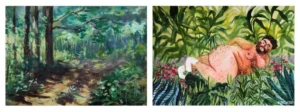
Illustration against the backdrop of art
To begin, I’d like to untangle a seemingly trivial matter - the relationship of illustration to art. I’ve encountered, many times, the value of illustration being diminished against typical painting or drawing. Illustration has this “problem” that it’s hard to assign to a specific field - it’s characterised by complete freedom of technique.
I see this as a great plus. Illustration is independent and refuses to be pigeonholed.
This awareness gives me a lot of freedom in creating. Without pangs of conscience I can grant the title of a work of art both to a careless scribble in the margin and to a huge painting on canvas. The autonomous character of illustration and the impossibility of rigidly classifying it are, for me, a source of artistic freedom, not its absence.
Why freedom of technique is a strength
Painting has its canons, drawing has its own, applied graphics too. Illustration has no single “correct” way - you can do it in pencil, watercolour, oils, on a tablet, in collage, from photographs, in 3D. Anything can be illustration if it serves the purpose and communicates what it’s meant to communicate.
This is a lack of constraints which, to some, seems like a weakness of classification, but in practice is the greatest advantage.
My own journey through art
At the start of my path I painted a lot in the traditional way - realistically, in oils, from life. Which served me very well. With hindsight, though, I consider my current illustrations far more valuable.
I have a great fondness for old landscapes from a few years back. I also see clearly that studying nature gave me solid knowledge about the world, which I now use freely. It taught me:
- how light behaves in different conditions of time of day and weather
- how to choose colours so they build a specific atmosphere
- how to construct space and perspective without errors
- how to observe detail and decide what to leave out
- how to read the proportions of nature and translate them into the work
I no longer need to look at nature to create something - but I keep doing it, because I always happen to discover something new. Observation is, for me, a daily hygiene of the craft.
The education that stays
The knowledge gained in traditional painting is the foundation on which I build my current illustrations. It’s a hallmark of my work - you can see in it a grounding in reality, even when I move toward simplification or stylisation. Without that experience it would be hard for me to know when I’m simplifying consciously and when out of lack of skill. The educational tradition of Polish art academies - like the Jan Matejko Academy of Fine Arts in Krakow - has for generations put emphasis on exactly these foundations.
And what illustration is to me
Honestly - it’s a very hard question, even for me. In general, encyclopedic definitions, the phrase “a graphic complement to text” recurs. To me such an explanation is completely insufficient.
I understand illustration more broadly - as a general illustrating of a thought. Illustration can exist on its own, it doesn’t need text. Its features are above all:
- narrativity - it presents relationships between characters or objects
- descriptiveness - it literally shows what the author wanted to convey
But wait - you could attribute these features to painting too. True. That’s why the difference that really exists is, in my view, the orientation toward reproduction, toward reaching a wide audience.
Illustration goes out to people
Illustration doesn’t hide in galleries - it goes out to people. It likes to be everywhere people are:
- in books on the shelf at home
- on T-shirts worn every day
- on mugs for morning coffee
- on the wrapper of a sweet a child will tear off and throw away
- on product packaging that reaches the shops
- on posters in public space
- on phone screens, in apps, in emails
This democratic quality of the medium stems from its inner nature. Illustration is made to multiply, reproduce, reach everywhere. Every copy of it is fully valid - there’s no single “original” that’s “better”.
A subjective choice
My illustration interprets the world and simplifies it. I focus on showing, as pointedly as possible, something that inspired me - in a completely subjective way. That’s the power of this profession - I have full freedom of interpretation, limited only by my own craft decisions and the needs of a specific project.
Subjectivity is not a flaw - it’s the essence. I leave realistic rendering of the world to photography. Illustration is meant to do something different: to show the world filtered through the prism of authorial sensitivity.
What this means in practice
In practice it means that every illustration I make is my choice. I choose what to emphasise and what to leave out. I choose which colours to use to convey a specific emotion. I choose which way to simplify - toward abstraction, toward fairy-tale, or toward realism.
Some of my work later goes into private interiors as wall posters - and that too is a form of contact between illustration and viewer. An illustration hanging over a desk or over a child’s bed works every day, in small doses - not only during a one-off visit to a gallery.
Why this is art
And that’s why, when someone asks me whether illustration is “real” art, I answer without hesitation: yes. With all the freedom of technique, with all the orientation toward communication, with all the subjectivity of the creator.
It’s art that has a practical purpose - but that doesn’t take away its artistic value. Architecture has a practical purpose too. So does film music. So does the poster. And no serious person questions that these are fields of applied art.
Functional art vs art for art’s sake
You can distinguish two broad categories of art:
- art for art’s sake - exists for itself, serves expression, contemplation, reflection
- functional art - serves a defined purpose, but made with authorial sensitivity
Both are fully valid. Both require talent, craft, years of work. Both can be outstanding or mediocre. The hierarchy that places one above the other is artificial and stems from a specific historical moment, not from a real difference in value.
What’s next on the blog
In the coming posts I’ll write about specifics - what my book illustration process looks like, how to prepare a good brief, what to avoid when commissioning illustrations, which tools are worth knowing. But I wanted to devote this first text to the foundation - my conviction that what I do is art.
Because without that assumption it’s hard to do this work honestly. You can do craft in a craftsmanlike way, but illustration that’s meant to move the reader requires something more. It requires an authorial decision that what I create has meaning. That it has the right to exist beyond the commercial context. That in 10 years this illustration in someone’s book will still hold up - not because it was “made properly”, but because “someone made it with their head and their heart”.
Have a question about my work or a project? Write to me - I reply within 48 hours.
More in illustration
All illustration →
Illustration
How to publish a children's book - the complete guide
What you need to know to publish a children's book - publisher vs self-publishing, editing, illustrations, print, ISBN, distribution and promotion. Step by step.
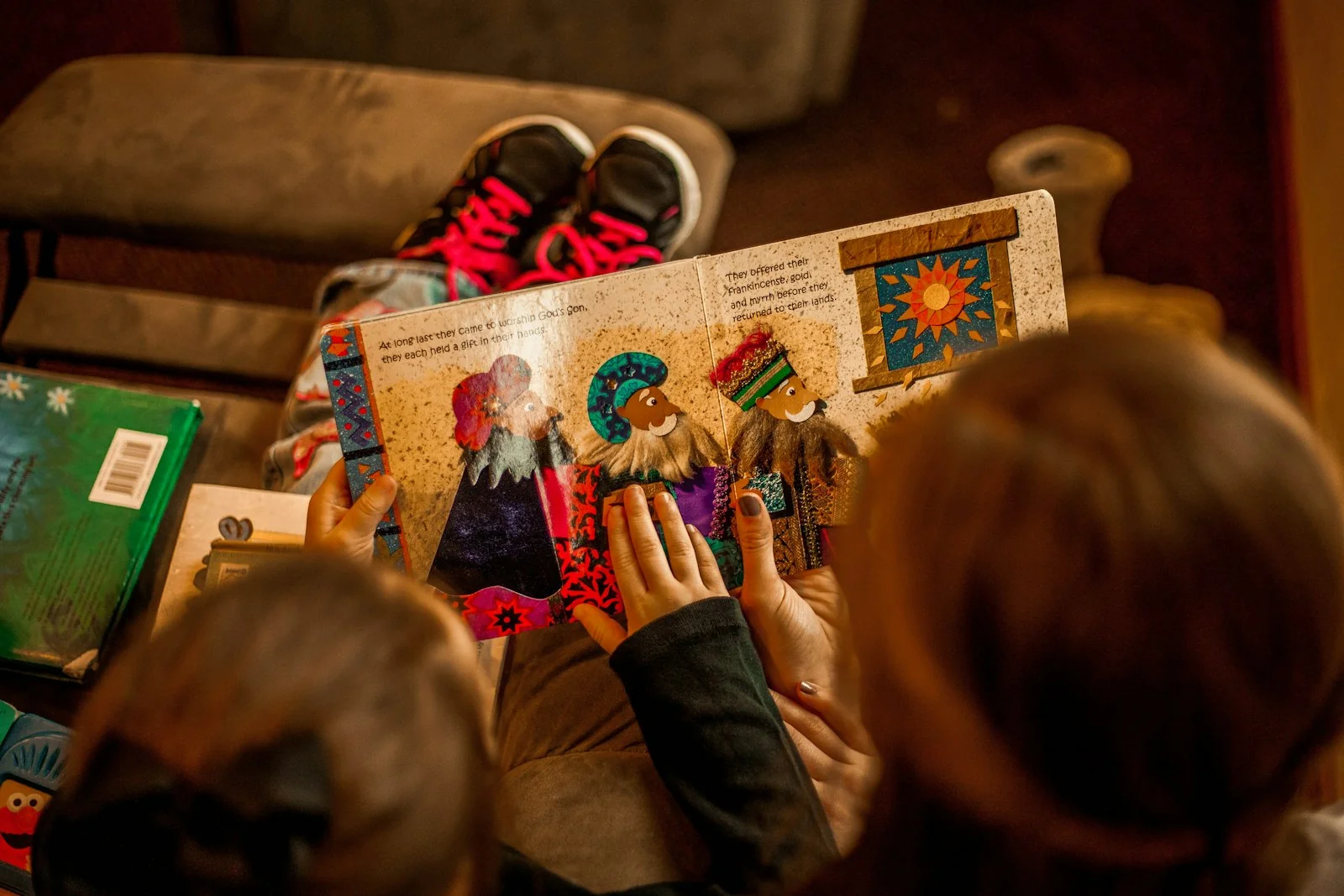
Illustration
How to prepare a brief for an illustrator - a guide for authors
The brief is the foundation of working with an illustrator. What it should contain, what to avoid, how to describe characters and scenes - a practical guide for children's book authors.
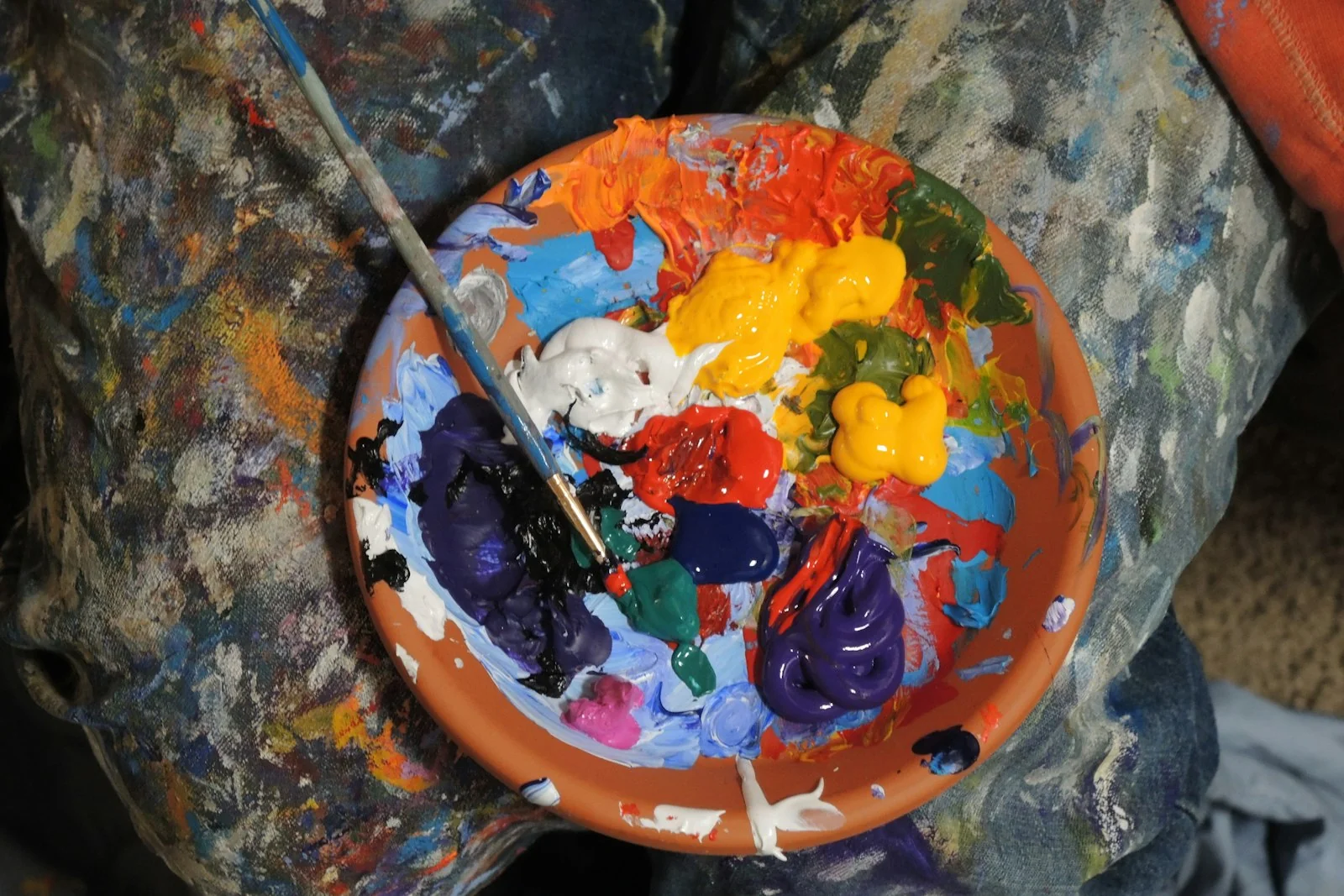
Illustration
The psychology of colour in children's illustration
How colours affect children's reception of illustrations. Warm and cool tones, contrasts, a palette by age - a practical guide for authors.
Start a project
Got a project? Let's talk.
I make art that stays - with emotion and attention in every project. Children's book illustration delivered worldwide, wedding and B2B event live painting across Poland - every project starts the same way: an inquiry, a conversation, a decision. Write to me directly. The Bujnowłosa studio is me and a decade-plus of practice.