
Live painting · 7 min read
Live painting at trade fairs - draw attention and boost interaction
Live painting as a way to set your trade fair stand apart - how it stops visitors, generates leads and gives guests a unique keepsake from a B2B event.
· Anna Karwala
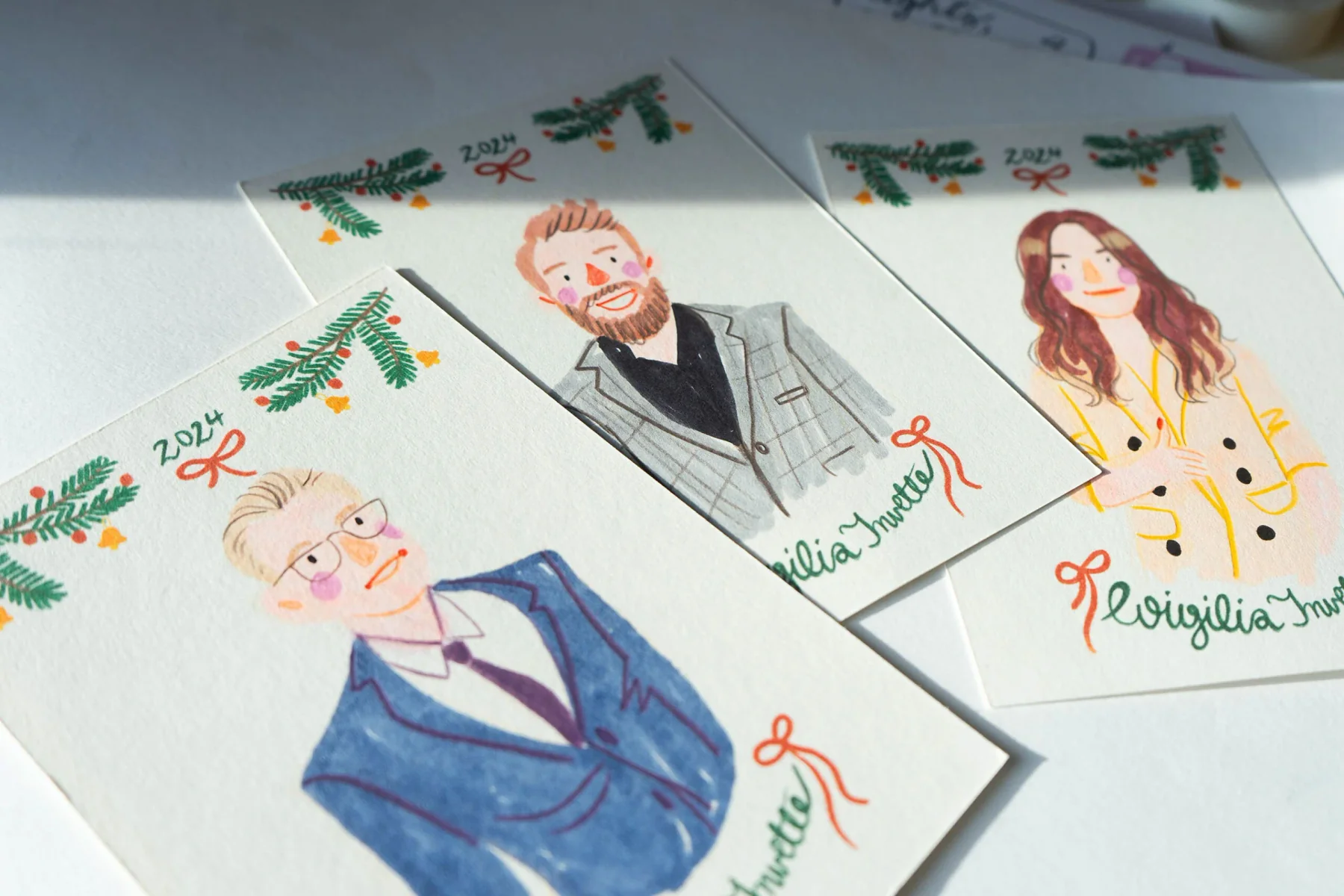
Industry trade fairs are an environment of intense competition for attention. Hundreds of stands, thousands of visitors, every company fighting for three seconds of a glance, a stopped step, a conversation with a passer-by. Standard banners, gadgets and tastings have stopped being enough. Event live painting is an attraction that stops, engages and gives visitors something they won’t take from a competitor’s stand.
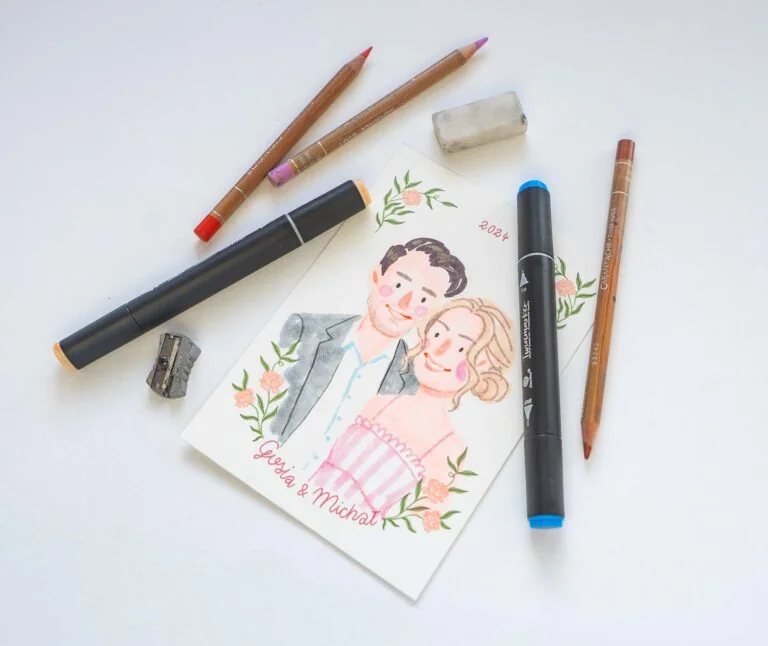
I work as an illustrator creating portraits live, and I regularly appear at trade fairs - from consumer sectors, through cosmetics, to design fairs. In this text I’ll show how this service works in the specifics of a trade fair event within event marketing, how it differs from a product launch or a conference, and how to build it into a lead-generation tool.
The specifics of trade fairs - what works differently here
A stream of visitors, not invited guests
At a product launch you know who’s coming. A guest list, known names, a controlled number of participants. At a trade fair you’re in a different situation - a stream of visitors flows past the stand, and you can’t know when it will be largest, how many people will stop longer, who among them is a real lead.
Live painting copes excellently with this characteristic. An easel with a work in progress, the painting process itself, is a signal: “stop and look”. It creates a magnet that draws visitors without the need for aggressive accosting.
Limited stand space
A trade fair stand is usually 9-30 square metres. Every square metre demands thoughtful use. My station takes up 80x60 cm plus a small buffer around it - it fits without a problem even in a smaller stand, without blocking the flow.
Importantly, an easel with a work in progress also works as a visual element of the stand. From the stand-design perspective it’s two in one - an attraction and a decoration.
Event duration - a whole day, several days
Trade fairs last 1-4 days, each 8-10 hours. That’s much longer than a wedding or a launch. Live painting at a trade fair requires a different calculation - shorter portraits (5-8 minutes per person), more works per day (up to 60-80), sometimes a rotation of the station when I need a break.
Six key benefits for the exhibitor
1. Stopping visitors at the stand
A trade fair is a fight for a second of attention. Visitors pass quickly, the “stop or move on” decision is made on the first glance. An easel, a painter working in concentration, a portrait in progress - that stops people. It’s not a standard sight, and at a fair it attracts.
From my observation, stands with live painting have a clearly higher time-on-site than their neighbours. People come over, watch the process, sometimes stand for 5-10 minutes. That’s the moment when a sales rep has a chance to strike up a conversation.
2. A unique attraction as a keepsake
Standard trade fair gadgets - pens, notebooks, lanyards, chocolates - flood the visitor’s bag. Most end up in the bin within a week. A hand-painted portrait is a different category of keepsake. It goes home, onto a wall, into a visible spot in the office.
From the visitor’s perspective, a portrait is a natural reason to leave their details. A stand that offers “we’ll paint you a portrait, in exchange we’ll ask for a business card” genuinely has a higher rate of effective leads than “take a flyer”.
3. Interaction that builds conversations
Live painting creates a natural networking situation. A visitor waits for their portrait for 8-12 minutes - that’s time in which they can talk to a sales rep. It’s not forced, aggressive selling, but a conversation “alongside” watching the artist’s work.
From the sales department’s point of view it’s extending contact from 30 seconds (typical trade fair) to 10-15 minutes (with live painting). It’s a completely different quality of conversation.
4. Generating content for social media
Visitors are happy to share their portraits on social media - on Instagram, LinkedIn, Facebook. Every such post contains a natural reference to the stand and the brand. Hashtags, tags, photos of the process - all organically.
In addition, you can record timelapses of my work, make stories about the process, broadcast live on the company profile. From the marketing department’s perspective it’s material you don’t buy with advertising.
5. Strengthening the brand’s image as innovative
At industry fairs there are dozens of standard stands. A stand with live painting stands out immediately - it signals “this company does things differently, cares about details, thinks about the customer’s experience”. It builds the brand’s visual identity in the minds of the industry.
After the fair, company reps talk among themselves - “were you at stand X? There was a painter, I got a portrait”. It’s word of mouth that works more strongly than dozens of flyers.
6. A broad spectrum of recipients
The attraction works universally - younger visitors, older ones, men, women, decision-makers, junior specialists. Everyone reacts positively to the prospect of receiving a hand-painted portrait. It isn’t an attraction “for a certain demographic”, it’s an attraction that resonates broadly.
The work process at trade fairs
Consultation in advance
We meet 4-6 weeks before the fair. We talk about the brand, the visual identity, the marketing goals of the presence at the event. We set whether I paint everyone interested, or in exchange for leads (contacts), or perhaps selected decision-makers. It’s a key moment, because the “who do we paint for” strategy affects the number of portraits and the flow of the stand.
Setting up the station at the fair
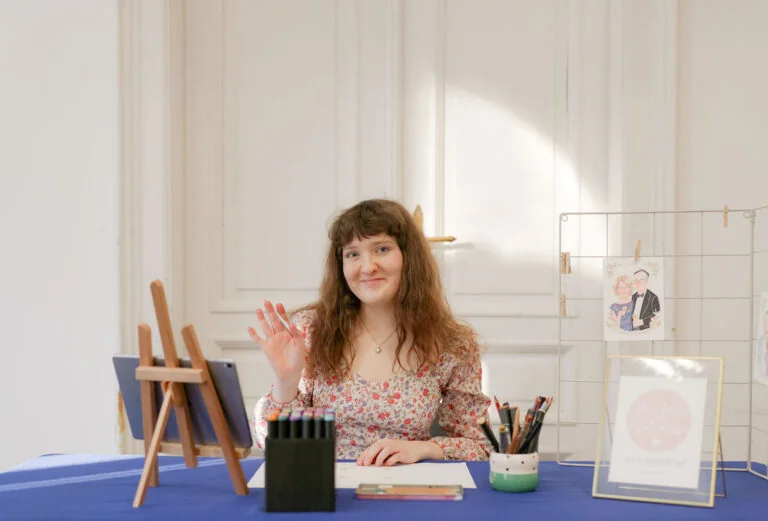
I arrive 90 minutes before the stand opens. I set up an 80x60 cm table, the easel, a printer. I place the station in a visible spot of the stand - usually close to the product display zone, but so as not to block the main flow. I require one power socket and good lighting.
Working during the fair
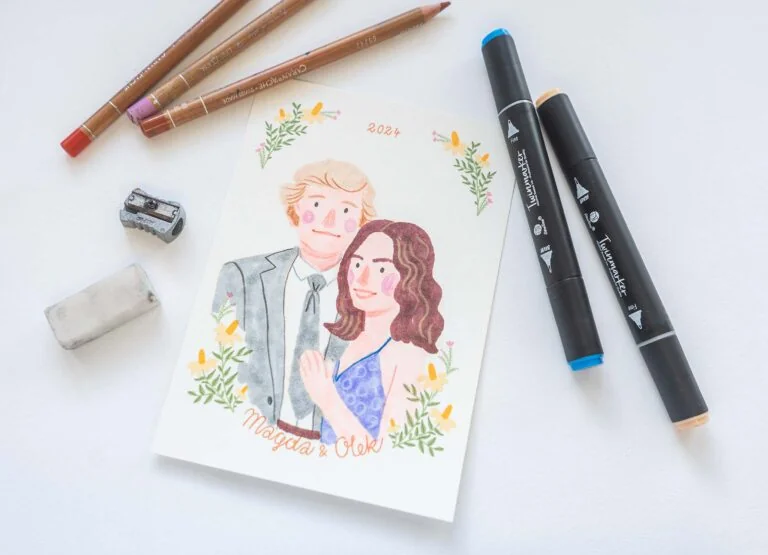
As standard I work 6-8 hours a day with breaks. Portraits at trade fairs are a little shorter than at launches - 5-8 minutes instead of 8-12 - which lets me serve more visitors. Over a trade fair day, 40-60 portraits are created. I work with the stand reps so they can direct the flow - who signs up, who’s waiting, who’s already got a portrait.
Handing over the keepsakes
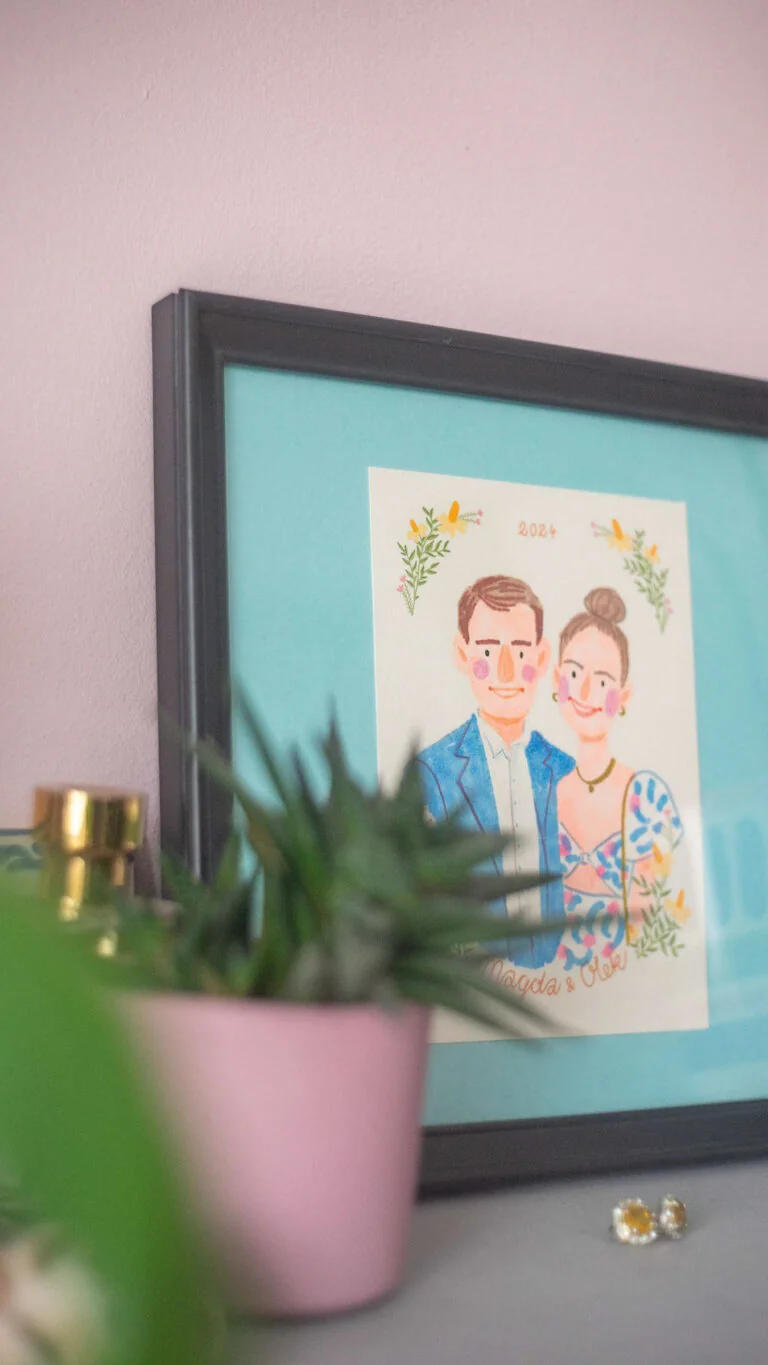
I print the finished portrait on the spot and hand it to the visitor in an elegant passe-partout with the stand’s subtle signature. A5 format is popular at trade fairs - it suits a suitcase, is easy to carry, but still presents well at home.
Pricing live painting at trade fairs
The quote is individual. It depends on:
- the number of trade fair days
- the number of working hours per day
- the planned number of portraits
- the degree of integration with the brand’s identity
- extras - larger formats, frames, calligraphic dedications
- travel and any accommodation (for multi-day fairs out of town)
- the rights to use the portraits in the brand’s materials after the fair
We start every enquiry with a short consultation - I understand the brand’s goal, and we choose the scope of work.
The “portrait in exchange for a lead” strategy
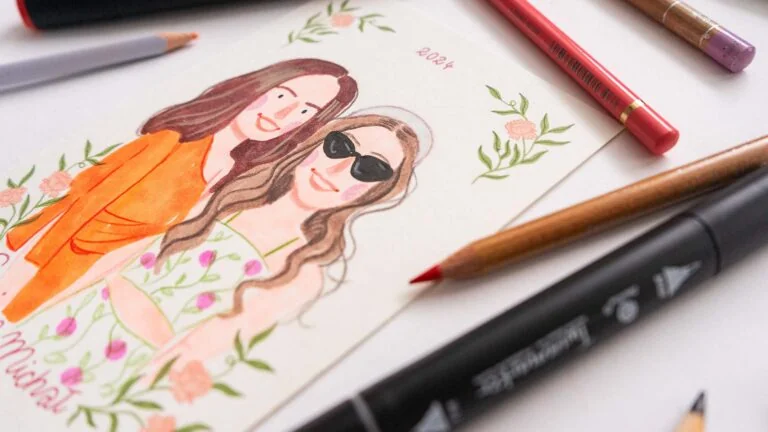
The most effective scheme I see with clients is exchanging a portrait for a contact. A visitor comes to the stand, leaves their details (on a contact card or an app), and in exchange I paint them a portrait. The data goes to the brand’s CRM, the portrait goes to the visitor’s home.
This solution works better than the classic “take a flyer” for a few reasons:
- the visitor gets concrete value in exchange for their data
- a longer conversation strikes up with a sales rep during the wait
- the quality of the contact is higher - it’s not a random business card, but a deliberate exchange
- the portrait in the visitor’s home works as advertising for the brand for months to come
What clients tell me after trade fairs
Most often I get feedback along the lines of “you were right that it works differently than gadgets”. Specifically: a larger number of better-quality leads, a longer average conversation time with visitors, a significantly greater presence on social media after the event, frequent questions from competitors “where did you get this painter from”.
From the visitors’ perspective - they get something they don’t have from other stands. It builds memory of the brand for longer than a gadget, better than a flyer, more strongly than a tasting. An investment in live painting at a trade fair is an investment in the quality of contact with visitors.
Planning a trade fair presence with an artistic element? Write to me - I reply within 48 hours.
More in live painting
All live painting →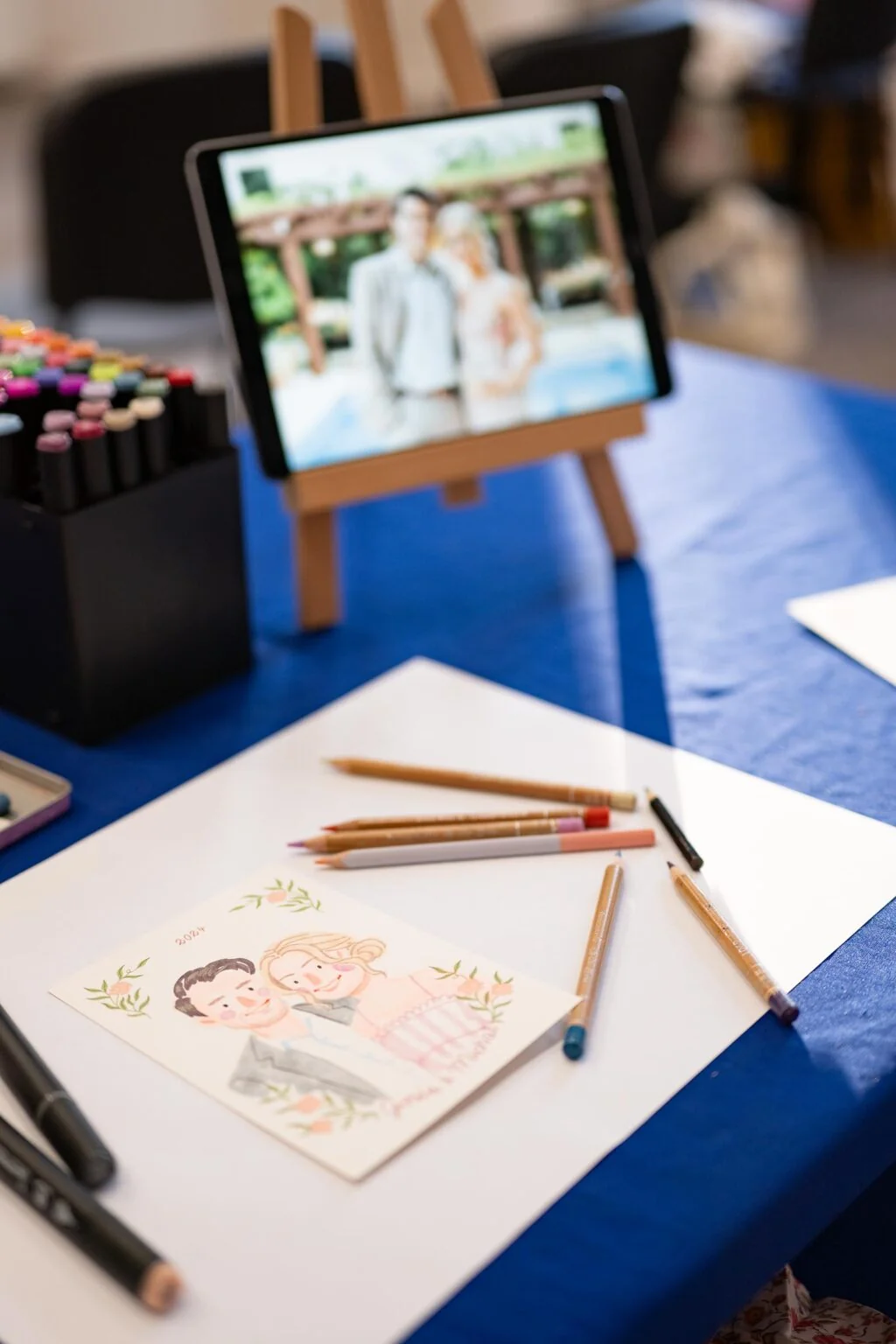
Live painting
Live painting at a wedding in Warszawa - an artistic attraction in the heart of Poland
Live painting at a wedding in Warszawa means hand-painted guest portraits created live. See how this attraction fits into a capital-city wedding.
Live painting
Wedding live painting or a wedding bartender, a drink bar at the wedding?
A drink bar is taste, live painting is an image. I compare both wedding attractions in terms of the keepsake's permanence, interaction and impact on the atmosphere.
Live painting
Wedding live painting or a fireworks show at the wedding?
A fireworks show lasts 15 minutes, a portrait stays for years. I compare both wedding attractions in terms of permanence, emotion, costs and their effect on guests.
Start a project
Got a project? Let's talk.
I make art that stays - with emotion and attention in every project. Children's book illustration delivered worldwide, wedding and B2B event live painting across Poland - every project starts the same way: an inquiry, a conversation, a decision. Write to me directly. The Bujnowłosa studio is me and a decade-plus of practice.