
Live painting · 7 min read
Live painting at conferences - a novel way to enrich your event
Live painting as a conference attraction - how it engages participants during breaks, builds networking and gives the organiser a brand remembered for a long time.
· Anna Karwala
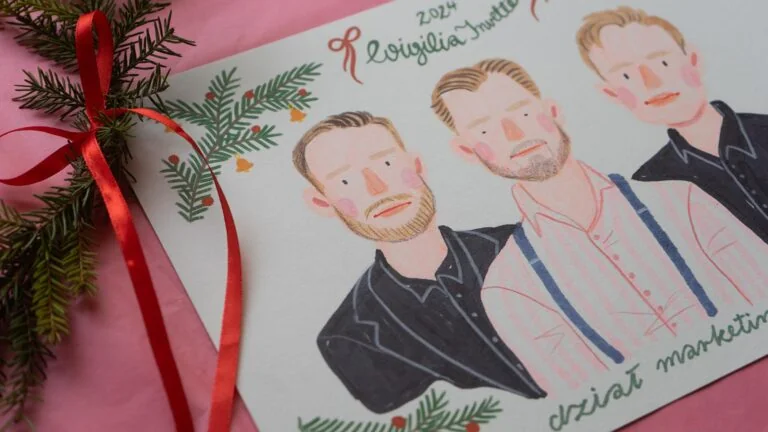
An industry conference is a specific event format - an intensive programme of talks, coffee breaks, networking. Participants spend most of the time sitting in the halls, and the breaks are usually dominated by the “coffee, cookie, small talk, back to the talk” pattern. Event live painting is an attraction that enriches these breaks and gives participants a concrete reason to stop in the networking zone.
I work as an illustrator creating portraits live, and I regularly appear at conferences - from industry technology ones, through marketing, to medical. In this text I’ll show how live painting fits the specifics of the conference format, how it differs from a product launch or a trade fair, and what the organiser and participants get.
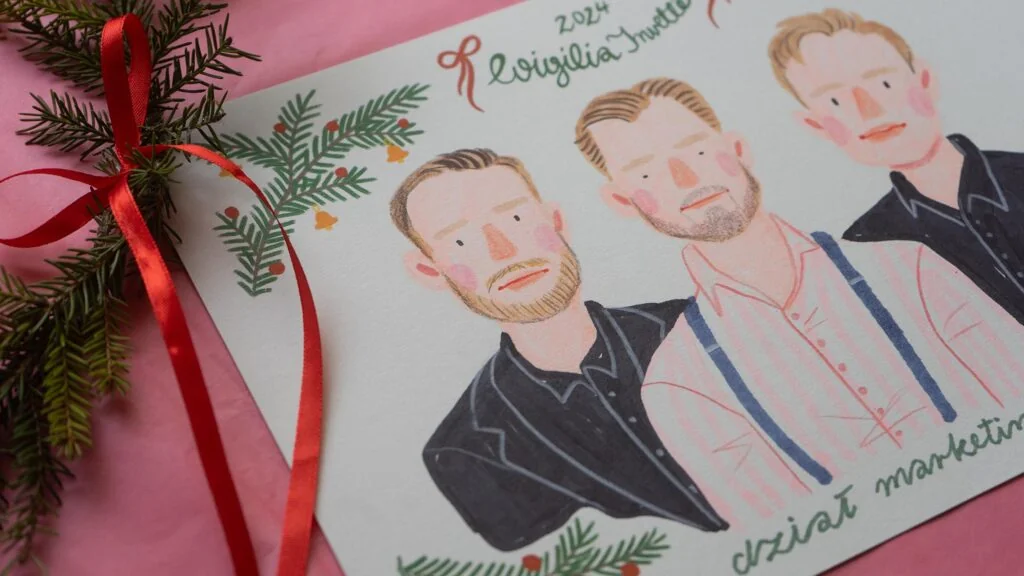
The character of a conference - what works differently here
The rhythm of the conference day
A standard conference is a block of talks of 45-90 minutes, then a break of 20-30 minutes for coffee and networking, talks again, lunch, more talks, a panel discussion, evening networking. Live painting at a conference has to fit this rhythm - I work mainly during the breaks and in the networking zones, I don’t compete with the talks for attention.
It’s completely different from a wedding or a product launch, where I work continuously for 4-6 hours. At a conference the work is pulsed - an intensive 30 minutes, then quiet, an intensive 30 minutes again. The approach has to be matched to that.
Participants in learning mode
A conference is an event where participants are in “I learn, I network, I look for business value” mode. Unlike a product launch (the “brand celebration” mode) or a trade fair (the “I buy, I sell” mode). Live painting at a conference builds a break from the intensive processing of information - it gives a moment of respite, an aesthetic pause.
From my observation, conference participants most appreciate my corner precisely in the breaks between the most intensive blocks of talks. They come over, get their portrait, and while they wait they talk to other participants. It serves as a “centre of gravity” in the networking zone.
The duration of a conference
Conferences most often last 1-2 days, with 6-8 hours of active programme per day. Live painting standardly works 3-5 hours a day - concentrated mainly in the breaks, lunch and before the evening networking dinner.
Five key benefits for the organiser
1. Setting the conference apart in the industry
Industry conferences are increasingly resembling one another - the same organising agencies, the same locations, the same formats. An organiser who adds an artistic element to the programme signals “our event has more than talks, we care about the participant’s experience”.
In practice, participants talk among themselves - and about the event after it ends - differently when there was live painting. “Remember conference X? There was a painter there, I got a portrait.” It’s word of mouth that builds the conference’s brand in the industry for years.
2. Engaging participants during breaks
A classic conference break is coffee, a cookie, a quick chat, checking email. Participants often reach for their phone because they don’t know what else to do. Live painting creates an alternative - an easel, the painting process, the chance to be portrayed.
It extends the time spent in the networking zone. Participants stay in the coffee hall because they’re waiting for their portrait, because they’re watching the work, because they’re talking to others at my easel. From the organiser’s perspective it’s a greater intensity of networking between the talks.
3. Generating keepsakes with concrete value
Standard conference gadgets (pens, notebooks, T-shirts) get lost in the participant’s bag. A conference portrait is a different category of keepsake - personal, artistic, actually hung in the office or at home.
From the organiser’s perspective it’s a long-term trace of the conference’s brand. The portrait hangs for years, recalling the event every time someone walks into the participant’s office. It’s advertising you can’t buy with banners.
4. Material for social media and the post-event report
The process of painting portraits is attractive photo and video content. You can make timelapses, live broadcasts, posts with the finished portraits of participants. It all goes onto social media with the natural tag of the conference.
After the event I send digital versions of all the portraits to the organiser - as material for the post-event report, the summary, the promotional campaigns of the next edition. It’s a bonus that organisers usually appreciate only after the fact.
5. Strengthening networking
Live painting creates a natural topic for conversation. Conference participants don’t always know how to strike up a conversation with a stranger - my easel becomes a pretext. “Have you been over to the painter yet?” It’s a trivial situation, but it genuinely makes networking easier.
From my observation, business conversations strike up at my easel that wouldn’t have happened otherwise. People exchange business cards while waiting for their portrait. It’s a bonus the organiser doesn’t expect before the event.
The conference day process
Consultation in advance
We meet 4-8 weeks before the conference. We talk about the event programme, the organiser’s visual identity, the marketing goals. We set the work schedule for the conference - when I paint, when I have a break, where the station is placed. The earlier, the easier it is to fit around the programme of talks.
Setting up the station
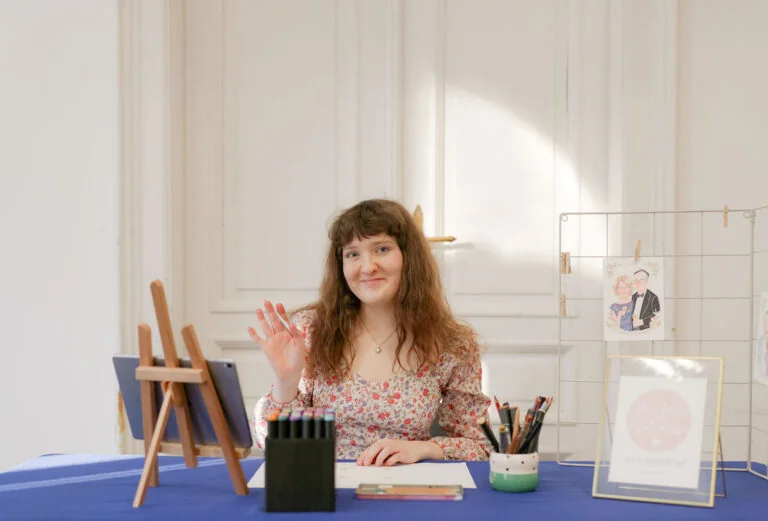
I arrive 90 minutes before the conference opens. I set up the station in the networking zone - usually next to the coffee tables, in a visible spot, but one that doesn’t compete with the main foyer. I require one power socket and good lighting (conference halls often have dimmed light, which makes the work harder).
Working during the breaks
I paint mainly during the coffee breaks (20-30 minutes), at lunch (60-90 minutes) and before the evening dinner. During the talks I take a break - a portrait started before a talk I finish after it ends. The pace - 5-7 portraits per break, 15-25 portraits in total per conference day.
I keep in touch with the conference moderator so they can inform participants about the attraction - when to come over, how to sign up, whether I can do double portraits. Without that information, some participants don’t know they’re invited.
Handing over the keepsakes
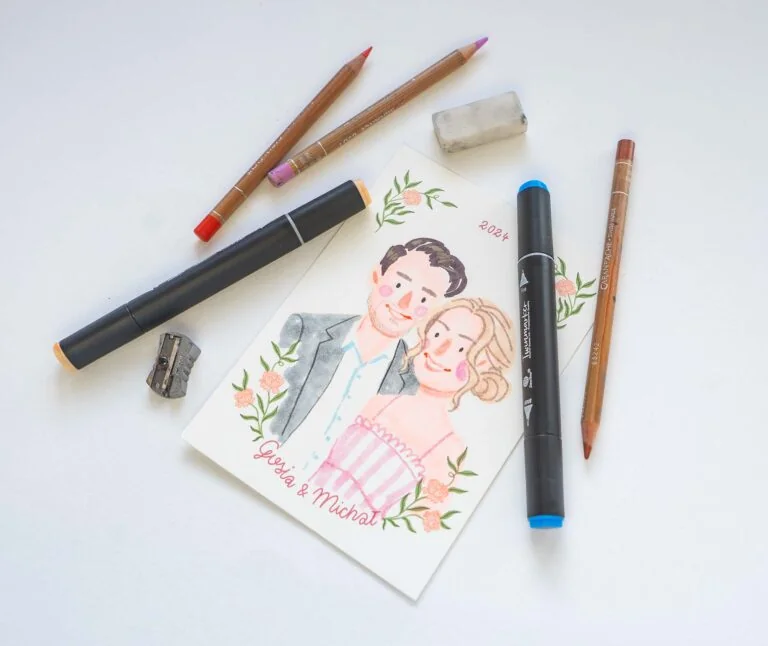
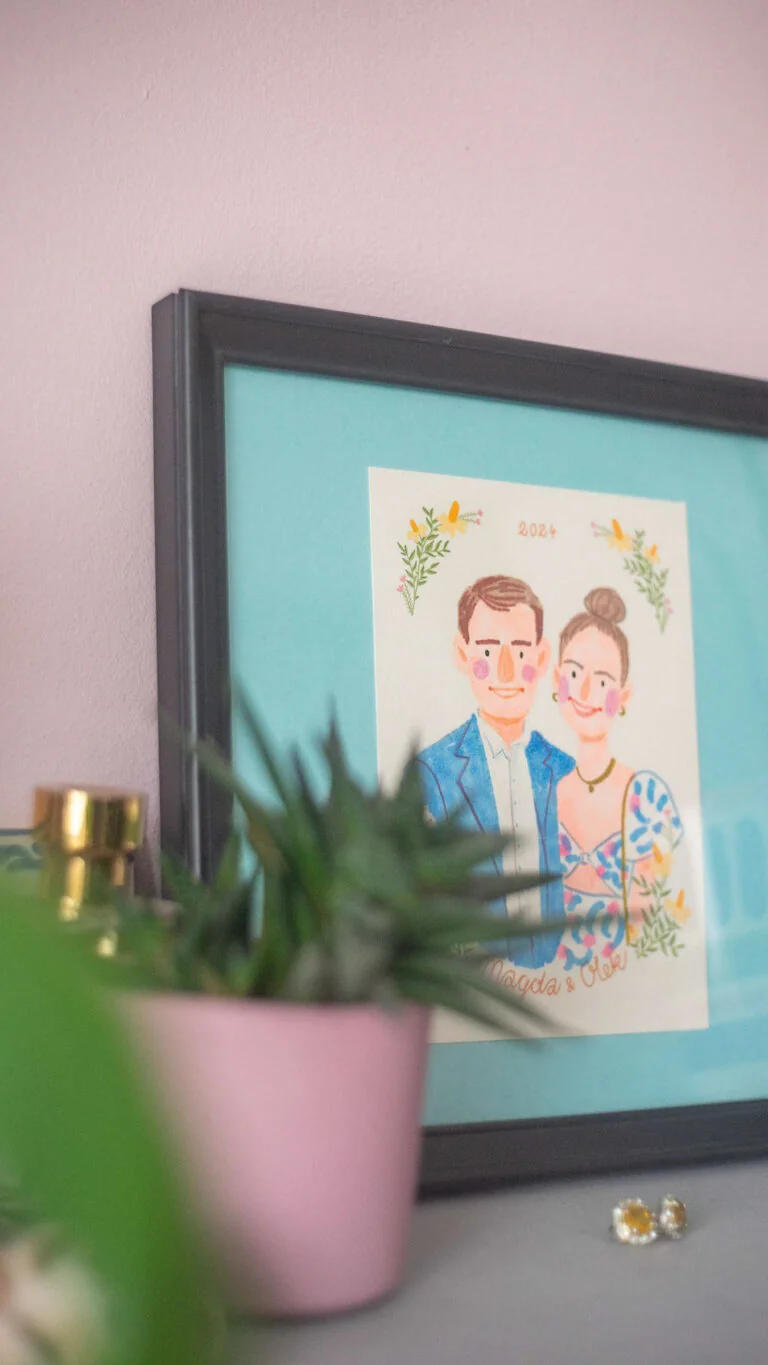
I print the finished portrait on the spot and hand it to the participant in an elegant passe-partout with the organiser’s subtle signature. A5 format is the most practical at conferences - it fits in a bag or backpack, is easy to carry, and presents well at home or in the office.
Pricing live painting at conferences
The quote is individual. It depends on:
- the number of conference days
- the number of working hours per day (tied to the programme of talks)
- the planned number of portraits
- the degree of integration with the organiser’s identity
- extras - larger formats for VIPs, dedications, frames
- travel and any accommodation
- the rights to use the portraits in post-event materials
We start every enquiry with a consultation - I understand the conference’s goal, and we choose the scope of work.
Typical conference scenarios
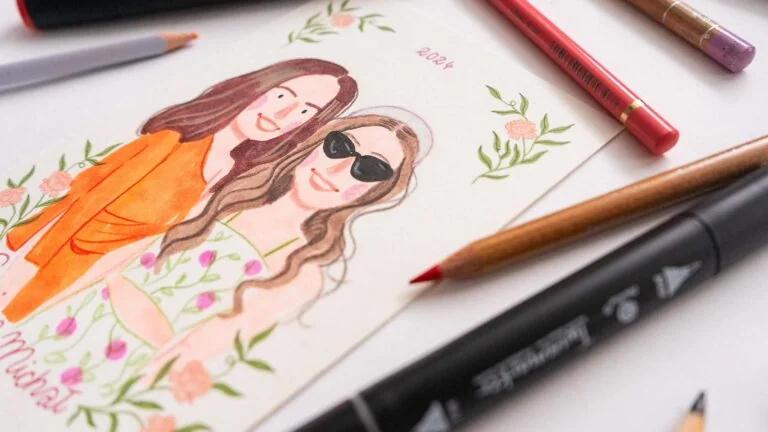
In my practice I see several recurring formats of live painting at conferences:
A one-day industry conference. I work 4-5 hours, across 3 coffee breaks and lunch. 15-20 portraits are created. They go mainly to speakers, sponsors and selected VIP participants. It’s the choice for organisers with a limited budget.
A two-day conference with a networking dinner. I work two days of 4-5 hours each, plus 2-3 hours during the evening dinner. 30-50 portraits are created. They go to most of the active participants. It’s the full format, in which live painting builds the trace of the event strongly.
A conference with a VIP focus. I paint only selected participants - speakers, top sponsors, journalists. A smaller number of portraits (10-15), but each very refined, in a larger format, with a dedication. It’s the choice for premium conferences, where individual treatment of key guests matters.
What the organiser and participants get
From the organiser’s perspective, live painting is an investment in atmosphere, networking and the trace left by the event. After the conference, participants talk about “that painter”, which stays in their minds for months. In future editions the organiser can return to this attraction as a signature of their conference.
From the participant’s perspective it’s something non-obvious, a positive surprise. The conference portrait ends up on the desk at work or on a wall at home, working as an element of memory, a reminder of the event, of contact with specific people. It’s a long-term effect that standard conference gadgets don’t give.
Why more and more conferences choose this attraction
In recent years I’ve seen a clear rise in enquiries from conference organisers. The reason is simple - classic attractions (a banner photo wall, a celebrity host, gadgets) have become saturated. A new generation of events is looking for something that truly stays in participants’ memory.
Live painting fits that need. It’s non-obvious enough to build a story. It’s aesthetic enough not to compete with the substance of the talks. And it’s practical enough that the organiser has no major logistical problems with it - one table, one socket, one person. A small investment, a big return in the form of participants’ memories.
Planning a conference with an artistic element? Write to me - I reply within 48 hours.
More in live painting
All live painting →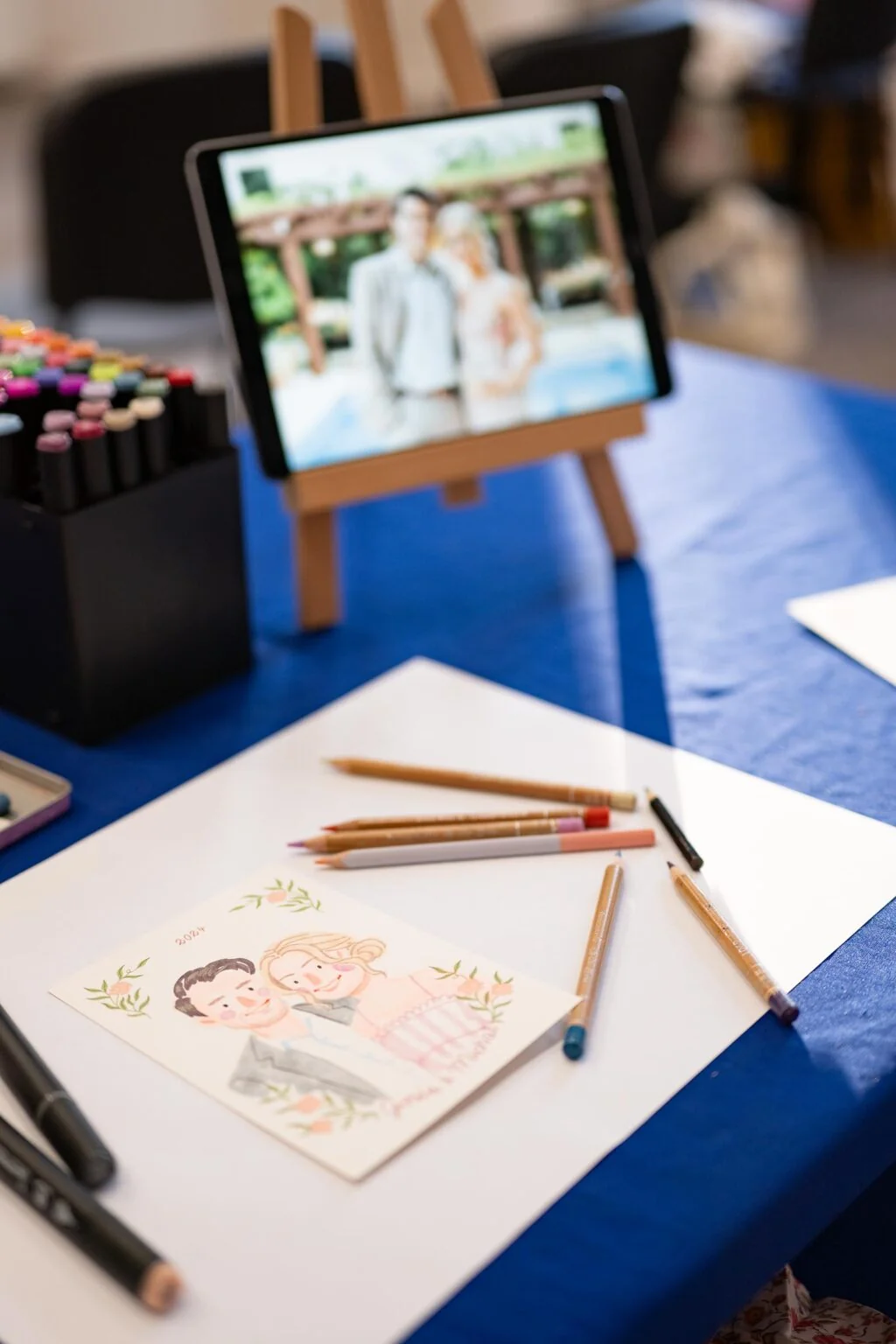
Live painting
Live painting at a wedding in Warszawa - an artistic attraction in the heart of Poland
Live painting at a wedding in Warszawa means hand-painted guest portraits created live. See how this attraction fits into a capital-city wedding.
Live painting
Wedding live painting or a wedding bartender, a drink bar at the wedding?
A drink bar is taste, live painting is an image. I compare both wedding attractions in terms of the keepsake's permanence, interaction and impact on the atmosphere.
Live painting
Wedding live painting or a fireworks show at the wedding?
A fireworks show lasts 15 minutes, a portrait stays for years. I compare both wedding attractions in terms of permanence, emotion, costs and their effect on guests.
Start a project
Got a project? Let's talk.
I make art that stays - with emotion and attention in every project. Children's book illustration delivered worldwide, wedding and B2B event live painting across Poland - every project starts the same way: an inquiry, a conversation, a decision. Write to me directly. The Bujnowłosa studio is me and a decade-plus of practice.